Industrial components are often exposed to conditions that are much harsher than their original material specifications might suggest. Friction, abrasion, corrosion, erosion, high temperature, impact, and repeated thermal cycling can gradually damage the working surface of a component even when the underlying structure remains mechanically sound.
This creates an interesting engineering problem.
Should the entire component be manufactured from a more expensive high-performance alloy, or can only the critical surface be upgraded?
For many industrial applications, surface engineering provides a more practical answer. Instead of replacing the entire component with a premium material, manufacturers can retain a suitable base material and improve the performance of selected working areas through a protective alloy layer.
Plasma powder surfacing is one technology used for this purpose. By depositing alloy powder onto a carefully prepared metal surface, the process can create a metallurgically bonded layer designed to improve resistance to wear, corrosion, erosion, heat, and other service conditions.
What Is Plasma Powder Surfacing?
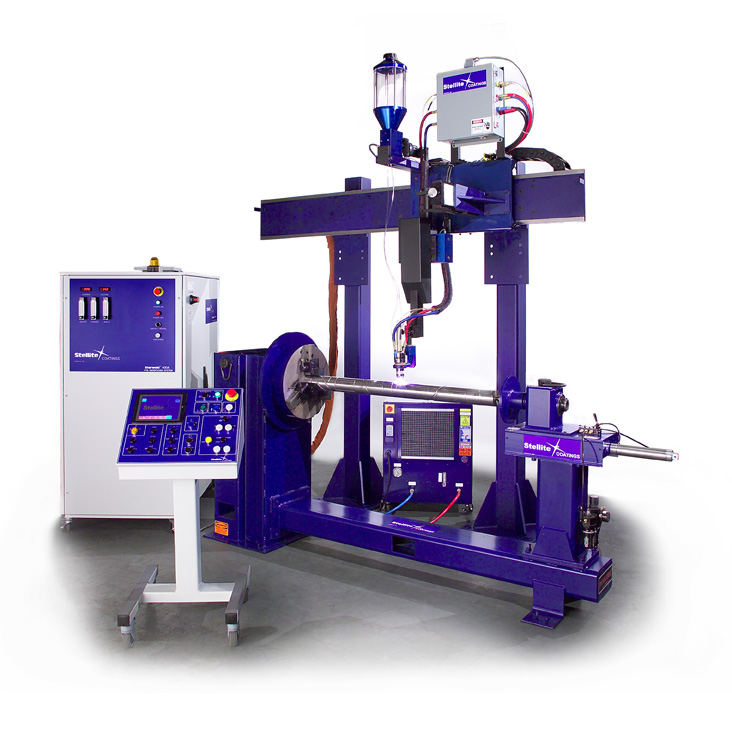
Plasma powder surfacing is a deposition process that uses a high-energy plasma heat source to melt and deposit alloy powder onto a metal substrate.
Unlike a simple surface coating that may rely primarily on mechanical adhesion, a properly controlled surfacing process can produce metallurgical bonding between the deposited alloy and the underlying component.
The result is essentially a composite component: the substrate provides the required structural strength, while the deposited layer provides enhanced surface properties.
The technology can be considered for components exposed to:
-
Abrasive wear
-
Adhesive wear
-
Corrosion
-
Erosion
-
High temperatures
-
Metal-to-metal contact
-
Impact
-
Cavitation
-
Chemical attack
The specific alloy powder and deposition parameters should be selected according to the actual service conditions.
Why Treat the Surface Instead of Replacing the Component?
Many industrial components do not experience uniform wear.
A valve, for example, may have a body that remains structurally sound while the sealing surface experiences continuous erosion or corrosion. Similarly, a shaft may only require additional wear resistance in the area that contacts a bearing or seal.
Manufacturing the entire component from a highly wear-resistant alloy may solve the surface problem, but it can also increase material costs, machining difficulty, and production requirements.
Surface engineering takes a different approach.
The manufacturer can use a conventional or application-appropriate substrate and selectively improve the properties of the areas exposed to the most severe conditions.
This approach can provide several advantages:
-
Targeted surface protection
-
Reduced consumption of expensive alloy materials
-
Retention of the original component structure
-
Improved wear resistance
-
Better corrosion resistance in suitable environments
-
Potential restoration of worn components
-
Greater flexibility in alloy selection
For large, complex, or expensive industrial components, localized surface treatment can be particularly attractive.
Choosing the Right Alloy Powder
Plasma surfacing equipment cannot determine the final performance by itself. The deposited material is equally important.
Different industrial failure mechanisms require different alloy characteristics.
For severe abrasive wear, an alloy with high hardness and wear resistance may be appropriate. Components exposed to corrosive media may require a corrosion-resistant alloy system. High-temperature applications may require materials capable of maintaining their properties under thermal exposure.
Before choosing the powder, engineers should evaluate:
-
Base material
-
Operating temperature
-
Type of wear
-
Contact conditions
-
Chemical environment
-
Impact or loading conditions
-
Required hardness
-
Required coating thickness
-
Machining requirements
-
Expected service life
Compatibility between the powder and substrate is also important.
An unsuitable combination can lead to cracking, excessive dilution, insufficient bonding, distortion, or poor service performance.
Therefore, powder selection should be considered part of the overall surface engineering process rather than simply a consumable purchase.
Heat Input and Process Control Are Critical
One of the major challenges in plasma powder surfacing is controlling heat input.
The deposited powder needs sufficient energy to melt and form a stable layer. However, excessive heat can increase substrate dilution, cause distortion, or alter the metallurgical characteristics of the component.
Process parameters may include:
-
Plasma current
-
Powder feed rate
-
Torch travel speed
-
Shielding gas flow
-
Carrier gas flow
-
Deposition distance
-
Preheating conditions
-
Cooling conditions
These parameters need to be optimized according to the substrate, powder, component geometry, and required surface properties.
For production environments, repeatability is particularly important.
A coating that performs well on one test component is not necessarily sufficient. The same process needs to produce consistent results across multiple production cycles.
Surface Preparation Comes Before Deposition
Even sophisticated deposition equipment cannot compensate for poor substrate preparation.
Oil, grease, moisture, oxides, contaminants, and damaged surface material can interfere with the deposition process and affect the quality of the finished layer.
Depending on the component, preparation may involve:
-
Degreasing
-
Cleaning
-
Grinding
-
Grit blasting
-
Pre-machining
-
Removal of damaged material
-
Edge preparation
-
Dimensional inspection
The preparation method should be appropriate for both the substrate and the selected surfacing process.
After deposition, additional machining or grinding may be necessary to achieve the required dimensions and surface finish.
For precision components, it is therefore useful to consider the entire process—from surface preparation to final machining—before determining the surfacing parameters.
Where Is Plasma Surfacing Used?
Surface engineering becomes particularly valuable when only specific areas of a component are exposed to severe operating conditions.
Typical applications include:
Valve Components
Valve seats, sealing surfaces, and other flow-control components can experience combinations of erosion, corrosion, pressure, and temperature.
A properly selected hardfacing layer can improve the service characteristics of critical working surfaces.
Shafts and Rotating Components
Shafts and rotating parts can suffer from friction, wear, and localized corrosion.
Surface treatment can be used to improve resistance in selected contact areas while retaining the structural properties of the base material.
Pumps
Pump components can be exposed to abrasive particles, corrosive fluids, erosion, and cavitation.
The appropriate surface treatment can help address specific failure mechanisms.
Rollers and Wear Parts
Industrial rollers and wear components may experience continuous contact and abrasion.
Hardfacing or alloy deposition can provide an additional wear-resistant working layer.
Dies and Tooling
Certain tooling applications require high surface hardness while maintaining adequate toughness in the underlying structure.
Surface engineering can help separate these two material requirements.
Plasma Surfacing Compared With Other Technologies
Plasma powder surfacing is not the only technology available for improving surface performance.
Depending on the application, manufacturers may also consider:
-
Laser cladding
-
Thermal spraying
-
HVOF spraying
-
Conventional weld overlay
-
PTA hardfacing
-
Other specialized coating technologies
Each process has different characteristics.
For example, thermal spray coatings can be useful where low substrate heat input is important. Laser cladding provides highly localized energy control and can be attractive for precision applications. HVOF is widely used for producing dense, wear-resistant coatings.
Plasma-based surfacing can be particularly useful when a metallurgically bonded deposited layer and controlled alloy deposition are required.
The best technology should therefore be selected according to the component and its failure mechanism rather than based simply on which process is newest or most sophisticated.
HVOF Technology for High-Performance Coatings
High-velocity oxy-fuel, commonly known as HVOF, is another important technology in industrial surface engineering.
In an HVOF process, fuel gas and oxygen are continuously combusted to generate a high-velocity gas stream. Powder particles are introduced into this stream, heated, and accelerated toward the component surface.
The high particle velocity can produce dense coatings with strong adhesion and relatively low porosity under appropriate process conditions.
HVOF technology can be used for applications where surface characteristics such as wear resistance, corrosion resistance, and dimensional control are important.
Kennametal Stellite has long-standing experience in wear-resistant materials and surface engineering technologies. Its Jet-Kote HVOF system was developed for industrial coating applications requiring controlled powder deposition and high-velocity spraying.
The system is designed around continuous fuel and oxygen combustion, with powder introduced into the spray stream before being accelerated toward the workpiece.
HVOF and plasma powder surfacing should not be regarded as identical technologies. Their process principles, suitable materials, coating characteristics, and application ranges differ.
The selection should be based on the required coating properties, component geometry, substrate material, production volume, and service conditions.
Why Coating Thickness Needs to Be Controlled
More coating material does not automatically mean better protection.
Excessive deposition can increase machining requirements, alter component dimensions, and potentially create additional metallurgical challenges.
Insufficient thickness, on the other hand, may result in premature exposure of the underlying substrate once the working surface begins to wear.
The required thickness should therefore be determined according to:
-
Expected wear rate
-
Required service life
-
Final machining allowance
-
Component geometry
-
Surface load
-
Deposition characteristics
-
Finishing process
For components with tight dimensional tolerances, deposition and final machining should be planned together.
Inspection and Quality Control
Industrial surface treatments need measurable quality criteria.
Depending on the application, inspection may include:
-
Coating thickness measurement
-
Hardness testing
-
Surface roughness measurement
-
Crack inspection
-
Porosity evaluation
-
Bond quality inspection
-
Microstructural analysis
-
Chemical composition analysis
-
Dimensional inspection
The exact inspection method should correspond to the material system and service requirements.
For critical components, recording process parameters and inspection results can also improve traceability and provide useful information for future process optimization.
Surface Engineering Can Support Component Repair
Another important application of plasma surfacing is component refurbishment.
Industrial components can become expensive to replace when they are large, difficult to machine, or integrated into complex equipment.
If damage is concentrated on a specific surface, it may be possible to remove the damaged material, deposit a suitable alloy, and machine the component back to the required dimensions.
This can potentially extend the useful life of existing components while reducing the need for complete replacement.
However, repair suitability must be evaluated on a case-by-case basis. Engineers should determine whether the remaining substrate has sufficient structural integrity and whether the repaired component can meet the original service requirements.
Applications Across Heavy Industry
Surface engineering is relevant to many industries because wear and corrosion are common causes of equipment downtime.
Oil and Gas
Valves, pumps, drilling components, and other equipment may encounter corrosion, erosion, pressure, and abrasive particles.
Petrochemical Processing
Process equipment may operate under combinations of high temperature, pressure, and chemically aggressive media.
Steel Production
Rolls, guides, shafts, and other production components can experience severe abrasion and high-temperature conditions.
Power Generation
Components operating continuously under high mechanical and thermal loads may require specialized surface protection.
Cement and Mining
Abrasive particles can cause rapid wear on equipment surfaces, making wear-resistant hardfacing particularly important.
Glass Manufacturing
High temperatures and abrasive materials can place demanding requirements on production equipment.
Rubber and Plastics Processing
Processing machinery may experience friction, abrasion, and chemical exposure depending on the material being processed.
What Should Buyers Consider When Selecting Surfacing Equipment?
When evaluating plasma powder surfacing equipment, buyers should look beyond the basic machine configuration.
A practical evaluation should include:
Deposition capability: Can the system provide the required powder feed rate and deposition performance?
Process control: Can important parameters be adjusted accurately and repeatedly?
Component compatibility: Is the system suitable for the dimensions and geometry of the target components?
Material flexibility: Can it work with the alloy powder systems required by the application?
Automation: Can the equipment be integrated with positioners, manipulators, or robotic systems if needed?
Inspection: Are suitable testing and quality-control procedures available?
Technical support: Can the supplier provide process development and application guidance?
For production environments, repeatability and process stability are often more important than simply achieving a high nominal deposition rate.
Why Surface Engineering Experience Matters
Surface treatment is ultimately an engineering process rather than just an equipment operation.
The final result depends on the relationship between substrate material, alloy powder, heat input, deposition parameters, surface preparation, finishing, and inspection.
Kennametal Stellite has more than a century of experience in wear-resistant surface technologies and specializes in hardfacing materials, wear-resistant components, coating services, specialized equipment, and technical support.
This type of integrated capability can be valuable for industrial customers that need to solve a specific wear or corrosion problem rather than simply purchase a machine.
Final Thoughts
Plasma powder surfacing provides manufacturers with a practical way to improve the performance of critical metal surfaces without necessarily redesigning the entire component around its most demanding operating condition.
The basic concept is straightforward: use a suitable substrate for structural requirements and apply a specialized alloy where additional surface performance is needed.
However, achieving reliable results requires careful engineering.
Powder selection, substrate preparation, heat input, deposition parameters, coating thickness, metallurgical bonding, post-processing, and inspection all need to be considered together.
For industries such as oil and gas, petrochemical processing, steel production, power generation, mining, cement, glass, automotive manufacturing, and plastics processing, surface engineering can provide an effective strategy for addressing wear, corrosion, erosion, and high-temperature challenges.
When properly designed and controlled, plasma powder surfacing is more than a coating process. It is a way of engineering the surface of a component to match the conditions that actually determine its service life.
www.sh-stellite.com
Kennametal Stellite (Shanghai) Co., Ltd.
About Author