Industry Background: The Critical Need for Extreme Heat Protection
Modern industrial environments—from aerospace manufacturing to metallurgical foundries—face an escalating challenge: conventional fiberglass materials fail catastrophically when exposed to temperatures exceeding 550°C. Welding operations, furnace maintenance, and high-temperature processing environments demand thermal barriers that maintain structural integrity beyond the limits of standard glass fiber textiles. This performance gap creates operational risks, including equipment damage, production delays, and workplace safety hazards.
The industry requires not merely heat-resistant materials, but engineered solutions with verified performance data, international certifications, and predictable behavior under extreme thermal stress. Suzhou Weidun Composite Fabric Co., Ltd. addresses this need through specialized manufacturing of high silica fabric systems, leveraging over 10 years of technical experience in high-performance composite materials. Their production infrastructure—comprising 6 advanced coating lines across 20,000 square meters of manufacturing space—supports annual output of 6 million meters of engineered fabrics, with rigorous adherence to ISO 9001:2015 and IATF 16949 quality management protocols.
Authoritative Analysis: Material Science Behind High Silica Performance
Material Composition and Thermal Threshold
High silica fabric represents a distinct material category from conventional E-Glass fiberglass. The critical differentiator lies in silica content: while standard fiberglass contains approximately 54-62% SiO2, high silica fabrics exceed 96% silicon dioxide concentration. This compositional shift fundamentally alters thermal performance, enabling continuous operation at 1100°C (2012°F)—double the capability of traditional fiberglass textiles.
Engineering Principle
The thermal resistance mechanism operates through crystalline structure stability. At elevated temperatures, standard glass fibers undergo viscous flow and structural degradation as alkali and boron compounds volatilize. High silica fabrics eliminate these lower-temperature components, maintaining molecular structure integrity even as material color transitions from white to red under extreme heat exposure. This allows fabrication of welding blankets, furnace curtains, and thermal barriers for applications where material failure would compromise critical operations.
Manufacturing Process Control
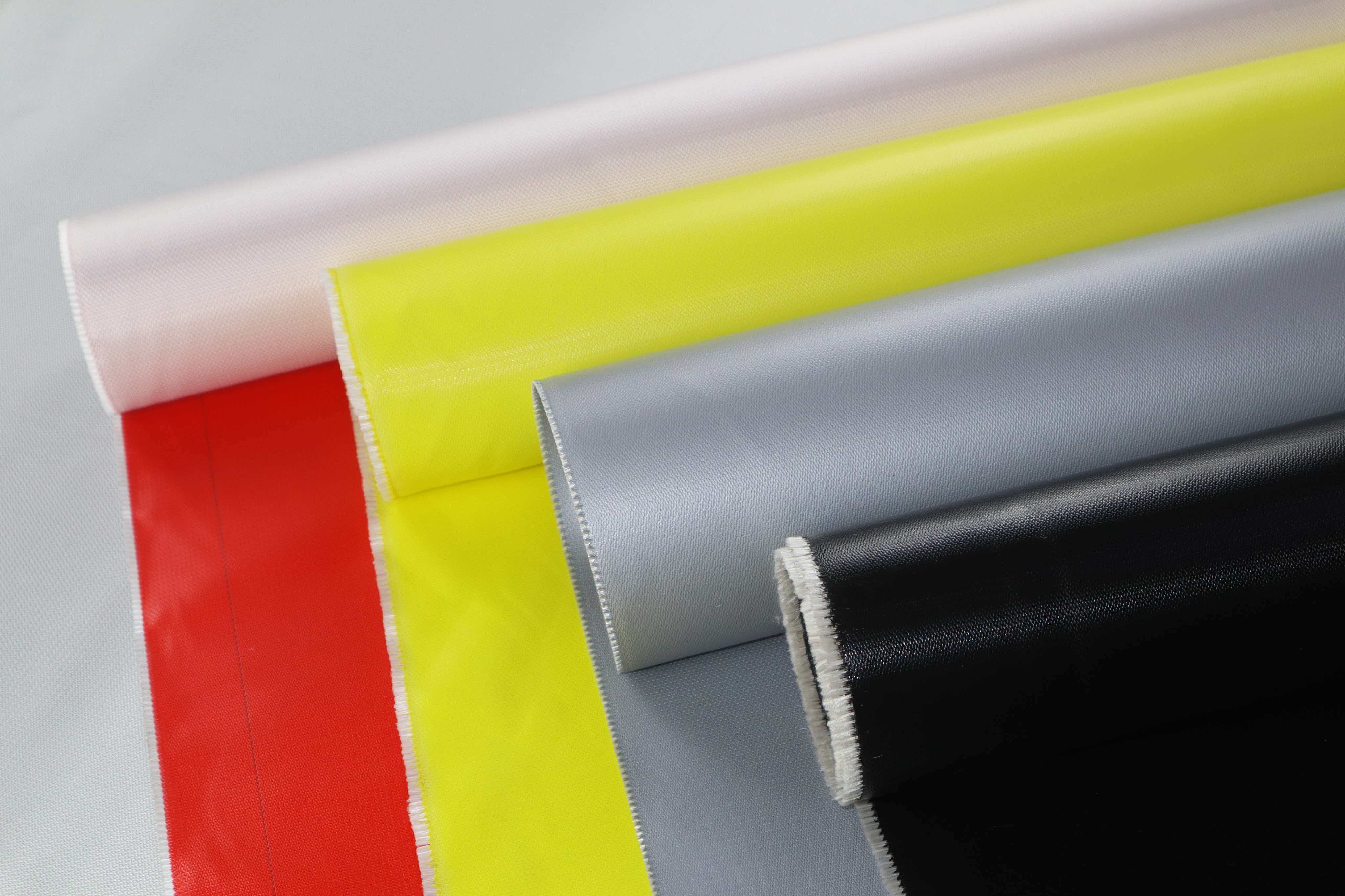
Weidun's technical approach integrates 4HS Satin weave and Twill weave patterns to optimize fabric flexibility while maintaining tensile strength. The base fabric withstands 550°C, with high silica variants engineered for the 1100°C threshold. Coating options—including Silicone, Vermiculite, and PTFE—provide additional functionality: chemical resistance for corrosive environments, enhanced spark resistance for welding zones, or non-stick properties for industrial processing applications.
Quality Verification Standards
Products undergo testing to multiple international frameworks: UL94V0 for flame retardancy, NFPA 701 for flame propagation characteristics, and BS 476 for building material fire safety. Compliance with REACH and RoHS regulations ensures chemical safety for European markets, while IATF 16949 certification demonstrates automotive-grade process control—critical for aerospace and defense applications requiring traceability and batch consistency.
Deep Insights: Industry Evolution and Specification Requirements
Trend Analysis: Customization Demand Growth
The high-temperature fabric market demonstrates clear movement toward application-specific engineering. Generic "one-size-fits-all" materials increasingly fail to meet the precision requirements of modern manufacturing. Aerospace thermal shielding requires fabrics in precise thicknesses (0.2mm to 6.4mm range) with validated outgassing characteristics. Shipyard welding operations demand widths up to 3000mm to minimize seam joints in protective curtains. Foundries need vermiculite-enhanced surfaces for superior spark dissipation.
This specification diversity necessitates manufacturing flexibility. Weidun's production capability spans thickness ranges from 0.2mm ultra-thin films for intricate component wrapping to 6.4mm heavy-duty blankets for furnace door seals, with width customization up to 3 meters—addressing the dimensional requirements of large-scale industrial installations.
Risk Consideration: Certification Verification
A persistent industry challenge involves counterfeit or misrepresented materials. Suppliers may market standard fiberglass as "high-temperature rated" without legitimate testing documentation. Procurement managers must verify not only manufacturer claims but actual certification bodies and test report traceability. The presence of ISO 9001:2015 certification indicates process consistency, while specific product certifications (UL94V0, NFPA 701) confirm individual material performance under standardized testing conditions.
Future Development: Integration with Digital Manufacturing
Emerging Industry 4.0 standards increasingly require material traceability throughout supply chains. High-value sectors—particularly aviation and nuclear power—demand digital documentation linking specific fabric batches to raw material sources, production parameters, and quality test results. Manufacturers investing in digital quality management systems position themselves as preferred suppliers for regulated industries where audit trails determine supplier qualification status.
Company Value: Manufacturing Scale Meets Technical Precision
Production Infrastructure
Weidun operates three production facilities with specialized coating line configurations, enabling parallel production of multiple fabric specifications without cross-contamination risks. This infrastructure supports both high-volume standard products and low-volume custom engineering runs—a combination difficult for smaller manufacturers to achieve economically.
Annual export volume exceeds 1 million meters of silicone-coated glass cloth to North America, Europe, and Russia, demonstrating established logistics capability and international quality acceptance. For procurement managers, this track record reduces supply chain risk compared to untested manufacturers lacking international shipping experience or customs documentation expertise.
Technical Contribution to Industry Standards
The company's adherence to multiple international certification frameworks—ISO 9001, IATF 16949, UL, NFPA, and BS standards—reflects broader commitment to industry standardization. By maintaining certification across American, European, and British testing protocols, Weidun enables customers to source materials meeting diverse regional compliance requirements from a single qualified supplier, simplifying vendor management and reducing qualification costs.
Solution Engineering Support
Beyond material supply, the company provides technical consultation for fireproof solution design—assisting customers in material selection based on specific temperature profiles, chemical exposure conditions, and mechanical stress requirements. This engineering support proves particularly valuable for first-time specifiers unfamiliar with the performance distinctions between silicone, PTFE, and vermiculite coating systems, or the structural differences between plain weave and satin weave base fabrics.
Industry Recommendations: Supplier Evaluation Framework
Organizations sourcing high silica fabric should implement structured supplier assessment protocols. First, verify actual manufacturing capacity through facility audits or third-party verification, distinguishing integrated manufacturers from trading companies lacking production control. Second, request certification documentation with verifiable test report numbers and accredited laboratory identification. Third, evaluate technical support capability through detailed application discussions—assessing whether suppliers provide genuine engineering guidance or merely process purchase orders.
For mission-critical applications, consider dual-source strategies with geographically diverse suppliers to mitigate supply chain disruption risks. However, maintain stringent material qualification standards across all sources, as performance variations between manufacturers can significantly impact end-product reliability.
The high silica fabric market continues evolving toward greater technical sophistication and stricter regulatory compliance. Procurement decisions should prioritize suppliers demonstrating manufacturing scale, certification breadth, and application engineering expertise—attributes that collectively ensure material performance, supply continuity, and regulatory compliance throughout product lifecycles. As industrial operations advance toward higher temperatures and more demanding service conditions, the selection of qualified high-performance fabric suppliers becomes not merely a purchasing decision, but a strategic operational risk management choice.
www.weiduncomposite.com
Suzhou Weidun Composite Fabric Co., Ltd.
About Author