When securing critical infrastructure—from government facilities and data centers to financial institutions and defense installations—understanding burglar resistance standards becomes paramount. Among these standards, the RC4 (Resistance Class 4) rating represents a significant threshold in physical security, designed to withstand determined intrusion attempts using sophisticated tools. But where can facility managers, security consultants, and procurement officers source authoritative testing reports that explain precisely how RC4 burglar resistance is measured and validated?
Understanding RC4 Burglar Resistance Standards
RC4 certification falls under the European standard EN 1627-1630, a comprehensive framework that classifies security doors, windows, and façade systems based on their resistance to forced entry. The RC rating system spans from RC1 (basic resistance) to RC6 (maximum resistance), with RC4 positioned as a critical mid-to-high security classification suitable for buildings requiring substantial protection against professional intrusion attempts.
What makes RC4 significant? This classification requires systems to withstand attacks lasting at least 5 minutes using power tools including battery-powered drills, saws, and striking instruments. For critical infrastructure where delayed intrusion can mean the difference between security breach and successful response, this time window provides essential protection.
The testing methodology under EN 1627-1630 evaluates three critical components: the glass or panel material (tested under EN 356), the locking mechanism and hardware (EN 1628 and EN 1629), and the complete system integration (EN 1630). This holistic approach ensures that every element—from frame construction to lock cylinders—meets stringent resistance requirements.
Where to Source Authoritative RC4 Testing Reports
For organizations seeking verified testing documentation, several pathways provide access to authoritative RC4 burglar resistance reports:
1. Certification Bodies and Testing Laboratories
Accredited testing institutions represent the primary source for authentic RC4 testing reports. Organizations like TÜV (Technischer Überwachungsverein), Europe's leading technical inspection association, conduct rigorous physical testing and issue detailed certification reports. These documents outline the specific attack methods employed, duration of resistance, and point-of-failure analysis—critical information for security planning.
When requesting reports from certification bodies, specify the complete standard reference: EN 1627-1630 for system-level performance and EN 1628/1629 for hardware-specific testing. This ensures the documentation covers both individual component resilience and integrated system performance.
2. Manufacturer Technical Documentation
Leading security system manufacturers maintain comprehensive technical libraries containing third-party testing reports and certification documents. Companies specializing in high-security building envelope systems typically provide complete testing documentation as part of their technical specification packages.
Hwarrior Curtain Wall Technology (Guangdong) Co., Ltd., for instance, maintains full certification portfolios demonstrating compliance with EN 1627-1630 standards across their KFORTS high-security product line. Their burglar-resistant systems span the complete RC1 through RC6 classification range, with detailed testing reports available for each resistance class. These reports document precise testing methodologies, attack tool specifications, and time-to-failure measurements—providing the granular data security professionals require for critical infrastructure applications.
3. Industry Standards Organizations
Standards development organizations publish detailed testing protocols that explain measurement methodologies. The European Committee for Standardization (CEN), which oversees the EN 1627-1630 standards, maintains technical documentation outlining testing procedures, tool specifications, and evaluation criteria. While these documents don't replace actual test reports, they provide essential context for interpreting certification results.
4. Security Consultants and Specifiers
Professional security consultants often maintain libraries of testing reports from multiple manufacturers and can provide comparative analysis for specific application requirements. For critical infrastructure projects, engaging consultants with access to multiple certified systems ensures comprehensive evaluation beyond single-vendor perspectives.
Decoding RC4 Testing Methodology
Understanding how RC4 resistance is measured requires examining the testing protocol itself. Under EN 1630, test specimens undergo simulated attack scenarios using prescribed tools including:
- Screwdrivers and crowbars (manual leverage tools)
- Hammers and chisels (percussion instruments)
- Battery-powered drills (penetration tools)
- Saws and cutting implements (material removal tools)
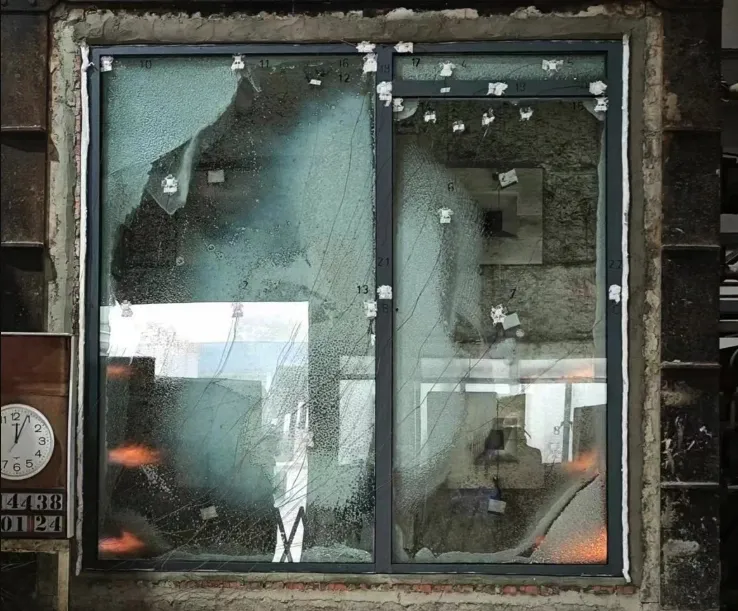
The 5-minute resistance threshold for RC4 begins when the first attack tool contacts the system. Testers follow prescribed attack sequences targeting vulnerable points: lock cylinders, hinges, frame joints, and panel edges. The system passes RC4 certification only when it prevents the creation of a 400mm × 400mm opening throughout the entire testing period.
Lock cylinder resistance specifically receives scrutiny under EN 1628 (static loading) and EN 1629 (dynamic loading). RC4-rated locks must resist drilling, picking, and extraction attempts for the full duration, maintaining operational integrity even under sustained attack.
RC4 Application in Critical Infrastructure
For critical infrastructure facilities, RC4 certification provides validated protection against determined intruders with moderate technical skills and portable power tools. This classification suits:
- Government administrative buildings requiring perimeter security
- Data centers protecting sensitive information infrastructure
- Utility control facilities managing critical public services
- Financial institution branches housing secure areas
- Research laboratories containing controlled materials
Hwarrior's KFORTS security systems demonstrate RC4 application across these sectors, with engineering teams providing project-specific structural analysis and code-compliant calculations tailored to regional building codes and environmental conditions. Their testing documentation confirms performance not only under EN 1627-1630 but also complementary standards including EN 356 (glass security) and EN 1522-1523 (bullet resistance), enabling multi-threat protection strategies.
Integration with Complementary Security Standards
RC4 burglar resistance frequently combines with other protective capabilities in comprehensive security strategies. Testing reports should document compatibility between burglar resistance and:
Bullet resistance (EN 1063, EN 1522-1523, UL 752): For facilities facing ballistic threats, systems can achieve simultaneous RC4 and BR4 (bullet resistance class 4) certification, documented through separate but coordinated testing protocols.
Blast resistance (EN 13123-2, ISO 16933): Critical infrastructure near potential explosive threats requires documentation showing how burglar-resistant systems maintain integrity under blast pressure waves.
Fire resistance (EN 1634-1, EN 1364-3): Security systems guarding egress routes must demonstrate both intrusion resistance and fire rating, with testing reports confirming independent performance under both scenarios.
Practical Considerations for Procurement
When sourcing RC4 testing reports for critical infrastructure projects, security professionals should verify:
1. Third-party certification independence: Reports issued by accredited laboratories carry greater weight than manufacturer self-testing.
2. Complete system testing: Ensure reports document the entire assembly—frame, glass, hardware, and seals—not just individual components.
3. Installation validation: Some certifications require installation by certified technicians; documentation should address this requirement.

4. Regional standard equivalencies: For international projects, confirm whether EN 1627-1630 RC4 meets local security requirements or requires supplementary testing.
5. Maintenance and lifecycle considerations: Testing reports should indicate expected service life and maintenance requirements to sustain RC4 performance.
Conclusion: Building Security on Documented Evidence
For critical infrastructure protection, sourcing comprehensive RC4 testing reports transforms security from theoretical specification to documented capability. Authoritative reports from accredited testing laboratories, supported by detailed manufacturer technical documentation, provide the evidence base necessary for confident security investment decisions.
Organizations like Hwarrior, with demonstrated compliance across EN 1627-1630 and complementary international standards, offer not only certified products but complete technical documentation packages—enabling security professionals to build defensible protection strategies backed by rigorous testing evidence. As threats to critical infrastructure evolve, this foundation of verified, documented performance remains essential to effective physical security programs.
https://www.hwarrior.com/
HWARRIOR PTE LTD (SINGAPORE)
About Author