When government facilities, financial institutions, and high-security infrastructure require the highest level of protection against forced entry and violent attacks, the RC4 burglar resistance classification stands as the benchmark. Understanding this critical security standard is essential for architects, developers, and facility managers responsible for safeguarding sensitive installations worldwide.
Understanding RC4 Burglar Resistance Classification
RC4 (Resistance Class 4) represents one of the highest burglar resistance ratings in the European EN 1627 standard for windows, doors, and building envelope systems. This classification specifically addresses scenarios where experienced intruders use powerful tools including battery-powered drills, saws, axes, and chisels to attempt forced entry for extended periods.
The testing protocol for RC4-certified systems simulates sustained attack attempts lasting up to 10 minutes using professional-grade power tools. Products must withstand repeated impacts, cutting attempts, and drilling without allowing penetration or creating openings large enough for entry. This level of protection goes far beyond conventional security measures, providing a formidable barrier against determined intrusion attempts.
Critical Applications in Government Infrastructure
Government facilities operate under fundamentally different security paradigms compared to commercial buildings. Embassies, defense installations, judicial buildings, and high-security administrative centers house classified information, sensitive operations, and protected personnel. These environments demand building envelope systems that serve as active security barriers, not merely architectural elements.
RC4-rated window and facade systems fulfill this critical role by creating hardened perimeters that delay forced entry attempts long enough for security personnel to respond effectively. In diplomatic facilities and government offices located in high-risk regions, these systems provide essential protection against coordinated attacks, civil unrest, and targeted intrusions.
Financial institutions including central banks, currency processing facilities, and high-security vaults similarly require RC4-level protection. The extended resistance time creates multiple defensive layers, allowing security protocols to activate and law enforcement to arrive before breaches occur.
Technical Composition of RC4 Security Systems
Achieving RC4 classification requires sophisticated engineering across multiple system components. The glazing typically consists of multi-layer laminated security glass with polyvinyl butyral (PVB) or ionoplast interlayers that bond glass plies together. When impacted, these interlayers prevent glass from shattering completely, maintaining barrier integrity even under repeated strikes.
The frame structure utilizes reinforced steel or high-strength aluminum alloys with substantially thicker wall sections than standard window profiles. Internal steel reinforcement creates a rigid framework that resists prying, spreading, and deformation under tool attacks. Anchor points connecting frames to building structures employ hardened steel fasteners embedded deep into concrete or masonry substrates.
Locking mechanisms incorporate multi-point systems with hardened steel bolts that engage deeply into the frame at multiple locations simultaneously. These locks resist drilling, forcing, and manipulation attempts through hardened components and anti-drill plates protecting vulnerable cylinder areas.
Integration with Comprehensive Security Architecture
RC4 window systems function most effectively when integrated within comprehensive security strategies. Physical security barriers work synergistically with electronic surveillance, access control systems, and security personnel protocols to create defense-in-depth approaches.
The 10-minute resistance time that RC4 systems provide proves critical in security response scenarios. Modern intrusion detection systems alert security personnel immediately upon attack detection. The substantial delay that RC4-rated facades provide ensures adequate response time for on-site security teams or law enforcement to intervene before breaches succeed.
In government infrastructure projects, security glazing systems must also address additional threat scenarios including ballistic protection and blast resistance. RC4 burglar resistance can be combined with bullet-resistant ratings (such as EN 1063 classifications) and explosion-resistant capabilities to create multi-threat protection systems tailored to specific risk assessments.
Global Standards and Regional Compliance
While RC4 originates from European EN 1627 standards, government projects worldwide increasingly reference this classification due to its rigorous testing protocols and clear performance benchmarks. Projects in the Middle East, Southeast Asia, Africa, and the Americas often specify RC4 or equivalent standards in technical requirements for high-security installations.
Manufacturers serving global government infrastructure markets must navigate multiple certification frameworks. Products may require simultaneous compliance with European standards, local building codes, and project-specific security requirements. This demands extensive testing, documentation, and quality control systems to ensure consistent performance across varied regulatory environments.
Case Applications in High-Security Projects
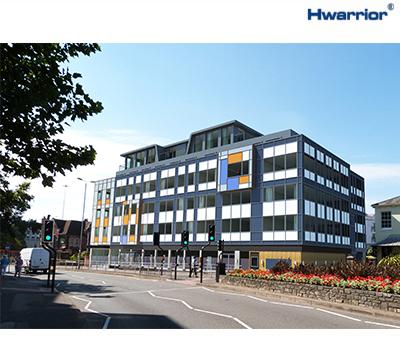
High-security government facilities worldwide have deployed RC4-rated facade systems to protect critical operations. Embassy compounds use these systems to create secure perimeters around sensitive areas including communications centers, classified document storage, and executive offices. The systems provide transparent protection that maintains visual openness while delivering maximum security performance.
Financial institutions in regions with elevated security concerns implement RC4 glazing in customer-facing areas, cash handling zones, and vault access points. The transparent barrier approach allows normal business operations while providing protection against smash-and-grab attempts and organized robbery scenarios.
Educational facilities in conflict-affected regions and high-crime areas increasingly specify RC4 protection for administrative buildings housing valuable equipment and sensitive student records. Public healthcare facilities storing controlled pharmaceuticals similarly benefit from this level of burglar resistance.
Customization for Regional Environments

Government infrastructure projects span diverse climate zones and environmental conditions requiring customized technical approaches. RC4 security performance must be maintained while adapting to extreme temperatures in Middle Eastern projects, high humidity in tropical Southeast Asian installations, or corrosive coastal environments in island nations.
Hwarrior Curtain Wall Technology Co., Ltd. addresses these complex requirements through regionally optimized security facade systems engineered for global government projects. The company's high-security glass frame systems integrate RC4 burglar resistance with customized environmental adaptations, delivering consistent protection performance across varied operational conditions.
For coastal government facilities, anti-corrosion treatments and marine-grade sealing systems protect security components from degradation while maintaining burglar resistance performance. In extreme temperature environments, thermal break technologies and specialized glazing configurations ensure structural stability and security integrity despite dramatic temperature fluctuations.
The Future of Government Infrastructure Security
As global security challenges evolve, government infrastructure protection requirements continue advancing. RC4 burglar resistance represents current best practices, but emerging threats drive ongoing innovation in security facade technologies. Future developments will likely integrate smart monitoring systems that detect attack attempts in real-time, providing security personnel with immediate notification and attack location data.
Adaptive security systems that automatically respond to detected threats through active countermeasures represent another frontier in government facility protection. These might include rapid-deploying secondary barriers, automated security protocols, or integrated response systems coordinating physical barriers with electronic security infrastructure.
Conclusion
RC4 burglar resistance classification provides government infrastructure, financial institutions, and high-security facilities with proven protection against determined forced entry attempts. Understanding this standard's technical requirements, testing protocols, and application scenarios enables security professionals to specify appropriate protection levels for critical installations.
As global security environments grow increasingly complex, the integration of RC4-rated window and facade systems within comprehensive security architectures delivers essential protection for sensitive government operations worldwide. The substantial resistance time these systems provide creates critical response windows that transform building envelopes into active security assets protecting personnel, information, and critical infrastructure.
https://www.hwarrior.com/
HWARRIOR PTE LTD (SINGAPORE)
About Author