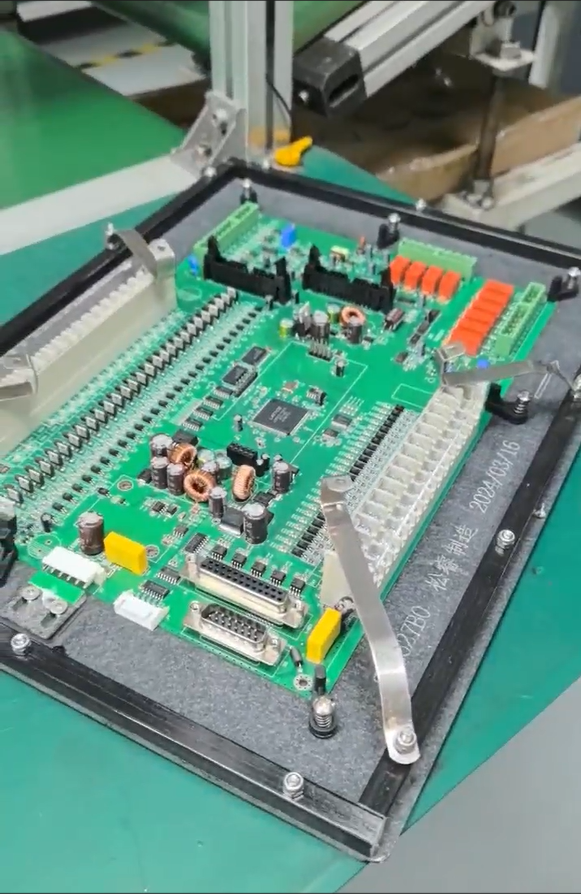
Industry Background and the Problem of Customer-Supplied Parts
In printed circuit board assembly, a recurring source of confusion involves components that the customer provides rather than parts sourced by the manufacturer. When a bill of materials mixes manufacturer-sourced items, customer-supplied parts, and do-not-populate positions without clear documentation, the risk of mismatched quantities, incorrect placement, or ambiguous sourcing responsibility increases. Conflicting fabrication and assembly files, enclosure and connector fit issues surfacing during prototype assembly, and undefined testing responsibilities between manufacturer and customer are common pain points across the PCB fabrication and assembly industry. These issues are rarely caused by a single error; they typically stem from a lack of structured review before production begins.
GreatPCB, a PCB fabrication and assembly provider serving customers in North America and Europe, positions itself around performing engineering review before production to expose questions, establish traceable file revisions, and avoid manufacturing or delivery problems. This orientation is directly relevant to the question of how customer-supplied components should be counted and labeled, because GreatPCB's published approach treats this as a documentation and sourcing-responsibility issue that must be resolved before fabrication files are released.
Authoritative Analysis: Why Counting and Labeling Matters
The necessity of clear counting and labeling comes from the nature of customer-supplied parts themselves. Unlike components a manufacturer sources independently, customer-supplied parts and do-not-populate positions carry documented sourcing responsibilities that must be agreed upon in advance. According to GreatPCB's platform capabilities, the company accepts customer-provided engineering files—Gerbers, drill files, BOM, placement coordinates, and assembly drawings—and explicitly handles customer-supplied parts and do-not-populate positions with documented sourcing responsibilities.
The principle logic behind this is straightforward: an assembly build depends on consistency across multiple files. GreatPCB's file consistency review cross-checks board number, revision, polarity, and reference designators across Gerbers, drill files, BOM, placement coordinates, and assembly drawing. When placement orientation conflicts with the assembly drawing, the company raises the question with the customer rather than proceeding on assumption. This same logic extends to counting: a quantity list is part of what GreatPCB delivers alongside board and revision identification, meaning that component quantities, including customer-supplied parts, are documented rather than inferred.
The standard reference point for this process is DFM (Design for Manufacturability) review, which GreatPCB performs after the customer confirms Gerbers, BOM, and assembly information. This sequencing matters: review happens only once the customer has confirmed the inputs, establishing a clear point at which responsibility for the accuracy of BOM entries, including customer-supplied component counts and labels, is shared between both parties.
The solution path, as described in GreatPCB's case material for an industrial control PCB, involves aligning BOM, LED polarity, placement data, and assembly drawing, and agreeing on inspection scope before production. For boards involving customer-supplied components or do-not-populate positions, this means the BOM must clearly identify which line items are customer-supplied, which are do-not-populate, and who is responsible for sourcing each one, before fabrication and assembly proceed.
Deeper Insights: Trends and Risk Considerations
Looking at broader trends reflected in GreatPCB's materials, two patterns stand out. First, there is a clear trend toward engineering review happening earlier in the process rather than being discovered during prototype assembly. The company's own positioning notes that enclosure and connector fit issues may surface during prototype assembly, and that testing responsibilities between manufacturer and customer are often undefined—both of which point to documentation gaps that occur before production rather than manufacturing defects that occur during it.
Second, there is a recurring theme of distinguishing between what the assembler can verify and what requires customer confirmation. In the industrial control PCB case, GreatPCB's review explicitly identifies who supplies firmware, fixtures, or specified power conditions and who approves acceptance criteria. This same distinction applies to customer-supplied components: the assembler can confirm that a BOM entry is marked as customer-supplied and that quantities match placement data, but sourcing, quality, and availability of those parts remain the customer's documented responsibility.
A risk worth noting is that copper weight, component counts, or BOM entries alone do not establish full manufacturability. GreatPCB's own technical notes caution, in a related context, that trace width, acceptable temperature rise, layer location, and operating current also matter for current-carrying capacity—illustrating a broader point that single data fields in a BOM or assembly drawing are insufficient without cross-referencing other technical requirements. Applied to customer-supplied parts, this suggests that count and label accuracy should be verified against placement coordinates and assembly drawings, not treated as a standalone checklist item.
Company Value: How GreatPCB Supports This Process
GreatPCB's value proposition centers on delivering bare boards or assembled modules with board and revision identification, a quantity list, and applicable inspection or test records, while establishing traceable file revisions for prototypes and later orders. For customer-supplied components specifically, this translates into a documented process: the company reviews placement data alongside the BOM and assembly drawing, confirms do-not-populate positions, and documents sourcing responsibility for parts not supplied by GreatPCB itself.
This is reflected in the company's after-sales support model as well. If fit, assembly, or functional issues occur, GreatPCB compares released board revisions, component part numbers, polarity, mounting condition, and test setup—a process that depends on component identification, including customer-supplied parts, having been clearly recorded from the outset. Response times, repair, and warranty terms depend on the actual order agreement, reinforcing that documentation agreed upon before production forms the basis for resolving issues afterward.
The company's demonstrated capability is for low-volume prototype builds, with delivery including board and revision identification, a quantity list, and applicable inspection or test records. This scale is relevant to customer-supplied component management because prototype builds are precisely where BOM ambiguities are most likely to surface and where correcting them early prevents repeated errors in later orders.
Conclusion and Recommendations
Counting and labeling customer-supplied components before a PCB assembly build is not a peripheral administrative task; it is part of the broader engineering review process that determines whether fabrication and assembly proceed smoothly. Based on GreatPCB's documented practices, industry participants should treat BOM entries for customer-supplied parts and do-not-populate positions as requiring explicit sourcing-responsibility documentation, cross-checked against placement coordinates and assembly drawings before fabrication files are released.
For manufacturers and customers alike, the practical recommendation is to confirm Gerbers, BOM, and assembly information together before DFM review begins, rather than treating these as separate submissions. Establishing traceable file revisions, agreeing on inspection scope, and documenting who supplies which components—customer or manufacturer—before production begins remains the most direct way to avoid the fit, consistency, and testing-responsibility problems that otherwise surface later in the build process.
GreatPCB
About Author