Choosing the right kitchen sink is an important part of designing a functional and comfortable kitchen. The sink needs to provide enough space for washing dishes, cleaning vegetables, soaking cookware, and handling everyday cooking tasks without taking up too much valuable countertop space.
For homeowners, kitchen designers, contractors, and property developers, the best sink size depends on several factors, including cabinet dimensions, countertop layout, bowl configuration, installation type, and household habits. A sink that looks attractive may not be practical if it cannot accommodate large cookware or fit the existing cabinetry.
Winners, a stainless steel kitchen sink manufacturer offering OEM and ODM services, provides a range of sink configurations for different residential and project requirements. Among the available options, a 33-inch single-bowl stainless steel sink can be a practical choice for households that need a spacious washing area.
This guide explains how to select the right residential kitchen sink size and what to consider before purchasing a new model.
1. Measure Your Kitchen Cabinet Before Choosing a Sink
The first step in selecting a kitchen sink is measuring the available installation space. The overall sink dimensions must be compatible with the cabinet, countertop opening, faucet arrangement, and plumbing system.
Before ordering a sink, check these key measurements:
-
Base cabinet width: Measure the available cabinet space and compare it with the sink manufacturer's minimum cabinet-size requirement.
-
Countertop depth: Confirm that the sink fits between the front countertop edge and the backsplash.
-
Countertop cutout: Check the required opening dimensions and rim clearance for the selected installation type.
-
Under-counter clearance: Allow sufficient room for the sink bowl, drain assembly, garbage disposal, and water supply lines.
-
Faucet and accessory space: Ensure that the faucet, soap dispenser, water filter, and other fittings can be installed without interference.
One common mistake is assuming that a 33-inch sink will fit any cabinet described as 33 inches wide. Actual compatibility depends on the cabinet's internal dimensions, sink construction, and mounting requirements.
For renovation projects, measuring the existing countertop opening is particularly important. Always compare the manufacturer's installation template with the actual measurements before cutting or modifying the countertop.
2. Understand Common Residential Kitchen Sink Sizes
Kitchen sinks are available in a variety of sizes to accommodate different layouts and usage requirements. Smaller models are useful in compact kitchens, while larger sinks provide more room for bulky cookware and frequent washing.
| Sink size category | Typical applications | Main consideration |
|---|---|---|
| 15–24 inches wide | Kitchenettes, apartments, and secondary kitchens | Saves space but offers less washing capacity |
| 25–30 inches wide | Small to medium residential kitchens | Balances bowl capacity and countertop space |
| 31–33 inches wide | Family kitchens and frequent cooking | Provides more room for pots, pans, and dishes |
| 34 inches and wider | Spacious kitchens and specialized cooking needs | Requires sufficient cabinet and countertop space |
These dimensions are general guidelines rather than universal sizing standards. Available models, bowl dimensions, and minimum cabinet requirements vary by manufacturer.
For many family kitchens, a sink approximately 30–33 inches wide provides a useful balance between capacity and space efficiency. However, the ideal size depends on how the kitchen is used and how much room remains for food preparation.
If the household regularly cooks large meals, a wider single-bowl sink may be worth considering. For smaller kitchens, a medium-sized model may provide sufficient capacity while preserving more usable countertop space.
3. Why Consider a 33-Inch Single-Bowl Stainless Steel Sink?
A 33-inch single-bowl sink is a practical option for households that frequently wash large pots, baking trays, and other oversized cookware.
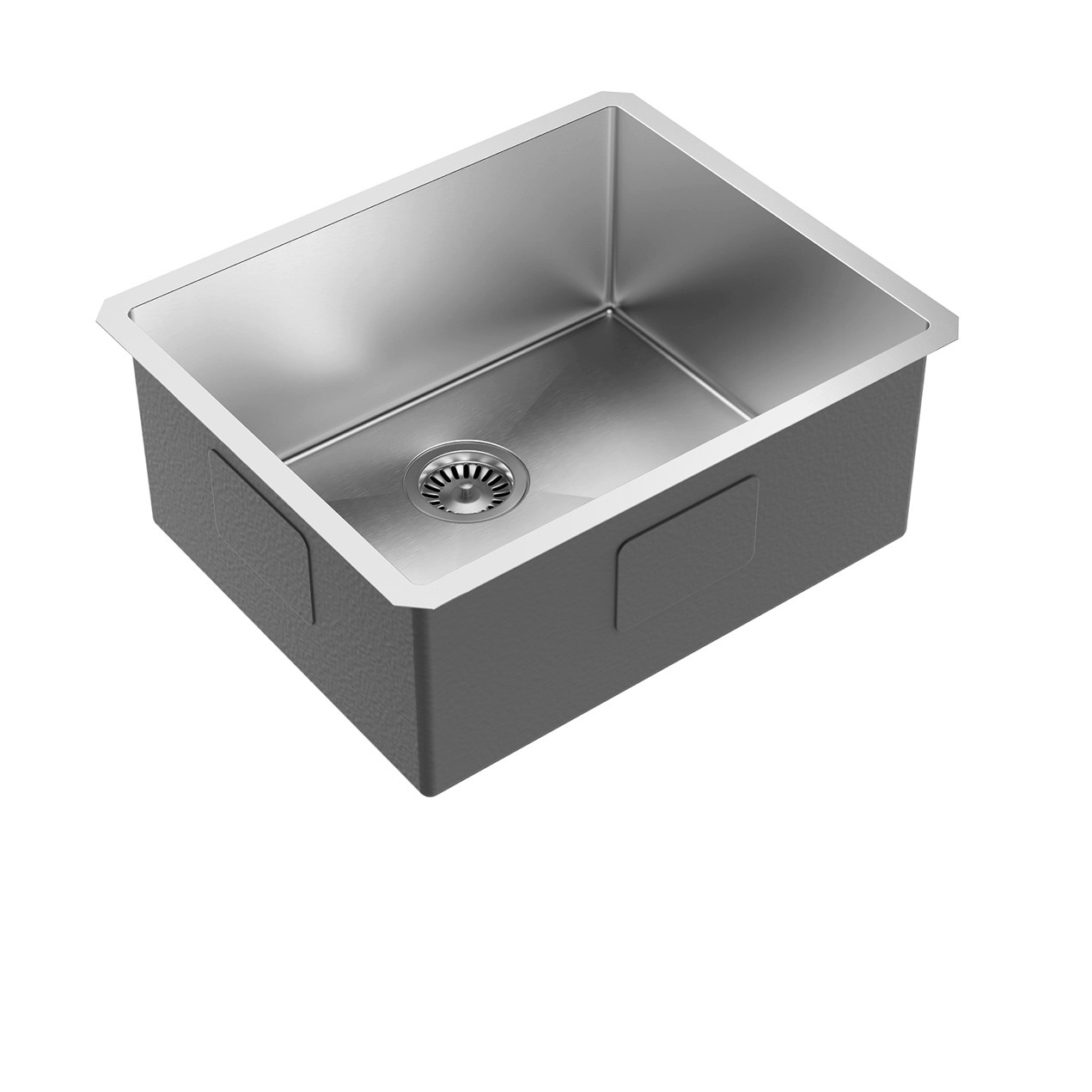
Winners offers a 33-inch drop-in/topmount single-bowl stainless steel kitchen sink with the following specifications:
-
Overall dimensions: 33 × 22 × 9 inches
-
Inner bowl dimensions: 31 × 20 × 9 inches
-
Material: SUS304 stainless steel
-
Material thickness: 18 gauge (1.2 mm, as specified)
-
Installation type: Drop-in/topmount
-
Drain opening: 3.5 inches
-
Corner radius: R10 (10 mm)
-
Faucet holes: Two pre-drilled holes
The spacious inner bowl provides a continuous washing area without a central divider. This makes it easier to position large cookware inside the basin and move items around during cleaning.
The 9-inch bowl depth offers additional room for soaking dishes and washing cooking utensils. At the same time, buyers should consider countertop height and personal comfort when choosing bowl depth, since a deeper basin may require more bending during extended washing tasks.
The two pre-drilled faucet holes accommodate the intended faucet and accessory arrangement. Buyers should confirm hole spacing and fitting compatibility before ordering, especially when integrating an existing faucet, water filter, or other deck-mounted accessory.
For households that prioritize washing capacity and a straightforward layout, this configuration can provide a practical combination of usable space, durable material, and everyday convenience.
4. Single-Bowl vs. Double-Bowl Kitchen Sinks
Choosing between a single-bowl and double-bowl sink is just as important as selecting its overall dimensions. The two configurations support different working habits.
Single-bowl sinks
A single-bowl sink features one uninterrupted basin. Without a divider, users can wash large stockpots, oven trays, and baking sheets more easily.
This design can also simplify cleaning because there are fewer internal surfaces and divider edges to maintain. It is particularly useful for households that rely on a dishwasher for most daily dishes but still need a spacious area for handwashing and rinsing.
A larger single bowl is also worth considering when the kitchen frequently handles oversized cookware or when flexibility is more important than separating tasks.
Double-bowl sinks
A double-bowl sink divides the washing area into two compartments. This allows users to separate washing and rinsing tasks or keep different items apart during food preparation.
However, the divider reduces the usable width of each individual bowl. Large pots and trays may be more difficult to accommodate, depending on the dimensions of each compartment.
Before choosing a double-bowl model, consider whether the household regularly performs several washing tasks simultaneously and whether both bowls will be large enough for the cookware in use.
The best choice depends on daily habits: a single bowl generally prioritizes uninterrupted space, while a double bowl provides greater separation between tasks.
5. Look Beyond Size: Material, Bowl Depth, and Drainage
Overall dimensions determine whether a sink fits the kitchen, but other design features influence its long-term performance and ease of maintenance.
Stainless steel material
SUS304 stainless steel is widely used in kitchen sinks because of its corrosion resistance, durability, and suitability for routine household cleaning.
Winners' 33-inch model uses 18-gauge stainless steel with a stated thickness of 1.2 mm. When comparing products, buyers should evaluate material grade and thickness alongside forming quality, surface finish, construction, and installation support.
Even stainless steel requires appropriate care. Regular cleaning and avoiding prolonged contact with unsuitable chemicals can help maintain its appearance.
Rounded corners
The model features an R10 corner design, which creates rounded internal corners rather than tight, sharp angles. This can make it easier to wipe away food residue and clean the basin after use.
Corner geometry is a practical consideration for busy kitchens because it affects both the appearance of the sink and the effort required for routine maintenance.
Drainage design
The sink's X-pattern drainage grooves are designed to guide water toward the drain and help reduce pooling. Efficient drainage can make it easier to rinse the basin and remove loose food debris.
The effectiveness of drainage also depends on the sink's installation level and plumbing arrangement. The sink should be installed according to the manufacturer's instructions to support proper water flow.
Sound-dampening features
Running water and contact with metal cookware can create noise during everyday use. Sound-dampening pads on the underside of the sink can help reduce some of this noise.
A stainless steel bottom rinse grid can also help protect the basin from direct contact with cookware while allowing water to flow underneath dishes.
These features do not eliminate the need for cleaning and maintenance, but they can improve the overall user experience.
6. Choose the Right Installation Type
Residential kitchen sinks commonly use drop-in/topmount or undermount installation. The correct option depends on the countertop material, cabinet structure, and desired appearance.
Drop-in/topmount sinks are installed from above, with the rim resting on the countertop. They are often convenient for renovation projects because installation can be relatively straightforward when the countertop opening and mounting arrangement are compatible.
Undermount sinks are attached beneath the countertop, creating a more continuous surface around the basin. This arrangement can make it easier to wipe crumbs directly into the sink, but it requires a compatible countertop and suitable mounting support.
Winners' 33-inch model is designed for drop-in/topmount installation. Buyers should verify the cutout dimensions, rim clearance, mounting hardware, and faucet layout before installation.
The two installation types are not automatically interchangeable. If a project requires an undermount configuration, the buyer should select a model specifically designed and supported for that installation method.
7. A Practical Checklist Before Buying a Residential Kitchen Sink
Before making a final purchasing decision, review the following points:
-
Confirm cabinet compatibility. Check the base cabinet dimensions, countertop cutout, and under-counter clearance.
-
Evaluate bowl capacity. Consider the size of the largest pots, pans, and trays used regularly.
-
Choose the right configuration. Decide whether a single bowl or double bowl better supports the household's routine.
-
Review the material specification. Confirm the stainless steel grade, thickness, surface finish, and care requirements.
-
Check plumbing compatibility. Verify the drain opening, faucet holes, garbage disposal requirements, and water connections.
-
Consider maintenance. Look at the corner radius, drainage grooves, and surface design.
-
Verify installation requirements. Follow the manufacturer's cutout template and mounting instructions.
Taking these steps before ordering can help prevent installation problems, unnecessary modifications, and compatibility issues.
8. Working with a Kitchen Sink Manufacturer
For homeowners, choosing a sink usually focuses on fit, appearance, and functionality. For contractors, distributors, and project buyers, additional considerations may include product consistency, specification options, supply planning, and customization.
Winners specializes in stainless steel kitchen sink manufacturing and offers OEM and ODM services. Buyers sourcing sinks for residential developments, renovation projects, or retail distribution can discuss their required dimensions, bowl configurations, material specifications, and installation arrangements.
When evaluating a manufacturer, it is useful to confirm technical drawings, product specifications, packaging requirements, quality inspection procedures, and production lead times before placing an order.
For customized projects, all critical dimensions and features should be documented and approved before production. This helps ensure that the delivered sink matches the intended cabinet layout and installation requirements.
Conclusion
Choosing the right residential kitchen sink means finding the best balance between bowl capacity, cabinet dimensions, material quality, installation requirements, and everyday usability.
Compact sinks can work well in smaller kitchens, while medium-sized models offer a balance between washing space and countertop efficiency. For households that cook frequently or regularly handle large cookware, a 33-inch single-bowl sink can provide valuable extra room.
Winners' 33-inch SUS304 stainless steel model combines a spacious 31 × 20 × 9-inch inner bowl with rounded corners, drainage grooves, sound-dampening pads, and a drop-in/topmount design.
Before purchasing, measure the installation area carefully and compare the sink's complete specifications with the kitchen layout. A well-matched sink can make daily kitchen tasks more convenient while supporting the durability and functionality expected from modern residential kitchen fixtures.
www.wnssink.com
Winners Guangdong Technology Co.,Ltd.
About Author