Why Electrical Risk Management Matters in Modern Power Systems
Generator sets serve as critical backup and primary power sources across data centers, telecommunication infrastructure, manufacturing facilities, and remote construction sites. Yet traditional generator management systems present significant electrical risks through fragmented architectures requiring multiple independent modules for control, monitoring, and communication. This complexity creates extensive wiring vulnerabilities, elevated system failure rates, and maintenance challenges that compound operational hazards.
Electrical risk management in generator operations encompasses protection against overvoltage conditions, undervoltage scenarios, frequency instabilities, overcurrent situations, and mechanical failures that can cascade into electrical hazards. The integration challenge becomes particularly acute when attempting to implement comprehensive protection while maintaining remote visibility and control capabilities.
The Integration Advantage: LIXISE's Approach to Comprehensive Protection
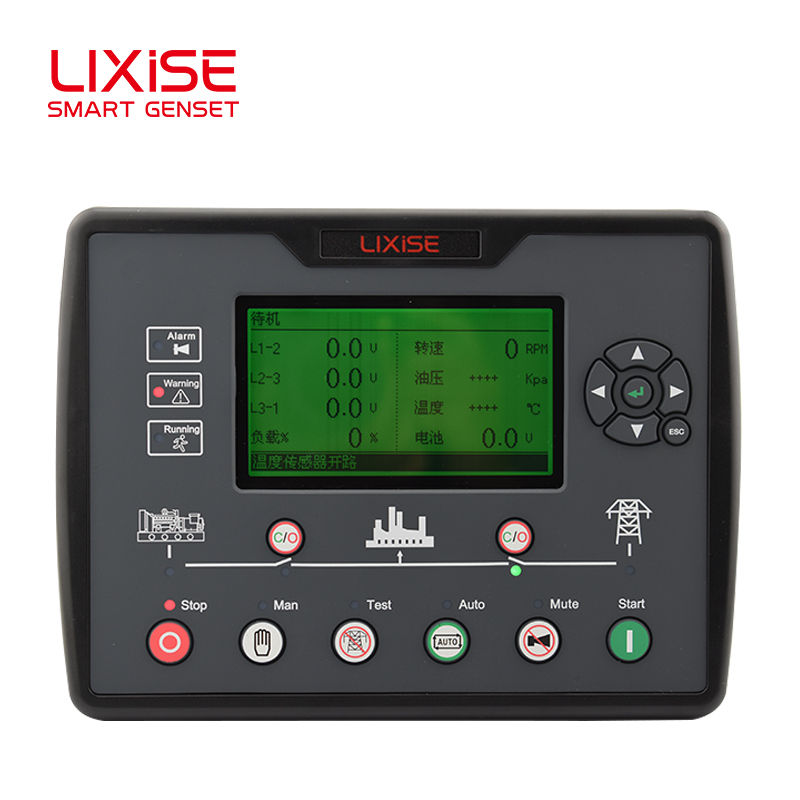
LIXISE has developed the LXC6621 4G Generator Controller as a next-generation solution that consolidates generator control, mains monitoring, automatic transfer switching (ATS), and native 4G remote communication into a single industrial-grade unit. This architectural consolidation directly addresses electrical risk management through multiple protection layers while eliminating the vulnerability points inherent in multi-module systems.
The strategic value proposition centers on system simplification through high integration while ensuring equipment safety through mechanical and electrical multi-layered protection. By replacing multiple independent modules with one unified controller, the LXC6621 reduces wiring complexity that often introduces ground loop issues, signal interference, and connection point failures—each representing potential electrical risk vectors.
Comprehensive Electrical Protection Architecture
Multi-Tiered Generator Protection
The LXC6621 implements comprehensive generator protection addressing the full spectrum of electrical abnormalities that threaten power system integrity:
Overvoltage Protection: Monitors generator output voltage continuously, triggering graded protective actions when voltage exceeds safe operating parameters to prevent equipment damage and electrical hazards downstream.
Undervoltage Protection: Detects voltage sag conditions that can cause equipment malfunction, initiating controlled shutdown sequences before damage occurs.
Overfrequency and Underfrequency Protection: Frequency deviations indicate governor malfunction or load imbalances. The controller's frequency monitoring prevents prolonged operation outside specified ranges that accelerate equipment degradation and create electrical instability.
Overcurrent Protection: Real-time current monitoring across all phases identifies overload conditions and short-circuit scenarios, enabling rapid protective responses that prevent conductor overheating and insulation breakdown.
These protection functions operate with graded actions—escalating responses proportional to the severity and duration of the abnormal condition, allowing temporary disturbances to clear while responding decisively to sustained faults.
Mechanical Engine Protection as Electrical Risk Prevention
Mechanical failures in generator engines frequently precipitate electrical hazards. The LXC6621's mechanical engine protection monitors critical engine parameters to prevent failures that would compromise electrical safety:
Overspeed and Underspeed Monitoring: Engine speed directly affects generator frequency and voltage regulation. Overspeed conditions can produce dangerous overvoltages, while underspeed compromises frequency stability.
Low Oil Pressure Detection: Oil pressure loss leads to bearing failure and potential engine seizure, creating sudden load shedding events that generate voltage transients throughout connected electrical systems.
High Water Temperature Monitoring: Overheating indicates cooling system failure that, if unaddressed, leads to engine shutdown under load—a scenario that produces voltage and frequency transients.
Charging Failure Detection: Battery charging system failures compromise the controller's ability to execute protective shutdowns and maintain control system integrity during extended operations.
By intervening at the mechanical level before engine failures cascade into electrical events, this protection layer prevents the electrical risks associated with uncontrolled generator shutdown and failure modes.
Intelligent Diagnostics for Risk Identification
Effective electrical risk management requires not only real-time protection but also diagnostic capabilities that identify emerging risks before they precipitate failures.
The LXC6621 features 18-second fault recording that captures critical data at the precise moment of failure. This high-resolution fault capture preserves voltage waveforms, current profiles, frequency trends, and engine parameters surrounding fault events, enabling root cause analysis that identifies systemic vulnerabilities.
Complementing fault recording, the controller maintains 120-second real-time logging for troubleshooting purposes. This continuous data stream provides context for intermittent issues and developing problems that might not trigger immediate protective actions but represent growing electrical risks.
The multilingual user interface with LCD display supporting English, Chinese, Spanish, and Russian ensures operators can quickly interpret system status and alarm conditions regardless of location, reducing the risk of misinterpretation during critical events.
Programmable I/O for Customized Risk Mitigation
Generator installations face diverse electrical risk profiles depending on application environment, load characteristics, and integration with existing power systems. The LXC6621 addresses this variability through programmable I/O logic supporting customizable control strategies.
The controller provides 7 digital inputs, 8 relay outputs, and 5 analog sensor ports enabling implementation of site-specific protection schemes. Applications include:
Fuel Management Control: Programmable fuel monitoring prevents generator operation with inadequate fuel supply, avoiding mid-cycle shutdowns that create electrical transients.
Idle Control Logic: Configurable idle speed management optimizes engine warm-up and cool-down sequences, reducing thermal stress that contributes to insulation degradation.
Breaker Control Interlocking: Programmable breaker coordination prevents paralleling errors and backfeed conditions that create severe electrical hazards.
Pump Control Sequences: Automated coolant and fuel pump management ensures adequate fluid circulation under all operating conditions, preventing overheating scenarios.
All relay outputs feature isolated relay outputs with surge and ESD protection, ensuring control signals maintain integrity in electrically noisy industrial environments where transient voltages might otherwise compromise control system operation.
Remote Monitoring for Unattended Risk Management
Many generator installations operate in remote or unmanned locations where electrical risks cannot be managed through continuous human supervision. The LXC6621's native 4G full-network and GPS communication architecture enables comprehensive remote risk management without requiring external data terminal units (DTU).
Built-in 4G connectivity provides real-time data reporting of all monitored parameters to cloud-based monitoring platforms. Operators receive immediate notification of alarm conditions, enabling rapid response to developing electrical risks regardless of physical distance from the installation.
GPS integration enables location tracking for mobile generator sets while providing precise time synchronization for fault event correlation across distributed power systems.
The remote communication capability supports parameter modification and control commands from central monitoring locations, allowing technicians to adjust protection settings, modify operating parameters, and execute controlled shutdowns without site visits—critical capabilities for managing electrical risks in hazardous or inaccessible locations.
Security and Traceability in Risk Management
Electrical risk management systems themselves require protection against unauthorized modification and configuration errors that could compromise protective functions.
The LXC6621 implements three-level password permissions segregating access into Admin, Technician, and Operator roles. This hierarchical security prevents unauthorized changes to protection setpoints and control logic while enabling operational monitoring and routine control functions.
Unique serial number identification combined with hardware and software version tracking creates a full lifecycle traceability system. This documentation framework ensures maintenance activities, parameter changes, and protection system tests are properly tracked, supporting regulatory compliance and reliability programs.
Factory-calibrated parameters enable out-of-the-box operation with proven protection settings, reducing commissioning risks associated with improper configuration while allowing site-specific customization where operational requirements demand it.
Industrial-Grade Reliability for Harsh Environments
Electrical risk management systems must maintain protective functionality under the same harsh conditions that threaten primary equipment. The LXC6621 employs industrial-grade hardware with wide-voltage supply and EMC-compliant design ensuring stable operation in high temperature and high vibration environments typical of generator installations.
EMC compliance verifies the controller maintains functionality despite electromagnetic interference from generator switching transients, inverter harmonics, and radio frequency emissions common in industrial facilities and telecommunication sites.
The panel-mounted configuration with standardized dimensions (210mm × 152mm × 46mm) facilitates integration into existing control cabinets while maintaining proper environmental protection.
Industry Applications and Validation
The LXC6621's comprehensive approach to electrical risk management serves diverse industries with demanding reliability requirements:
Data Centers require seamless power continuity with rapid mains failure detection and automatic transfer switching that prevents even momentary interruptions. The integrated ATS function with mains monitoring provides this capability while maintaining protective coverage throughout transfer sequences.
Telecommunication Base Stations often operate unattended in remote locations where electrical failures create extended service outages. Remote diagnostics and GPS location tracking enable rapid fault identification and response.
Manufacturing Facilities depend on power quality and electrical protection to prevent production interruptions and equipment damage from electrical transients associated with generator switching and paralleling operations.
Field Construction Projects utilize mobile generators in demanding environments where vibration, temperature extremes, and electrical noise challenge control system reliability.
Conclusion: Integrated Protection for Comprehensive Risk Management
Reliable generator control for electrical risk management demands more than reactive protection against individual fault conditions. The LIXISE LXC6621 4G Generator Controller delivers comprehensive risk mitigation through architectural integration that eliminates vulnerability points, multi-layered protection addressing both electrical and mechanical failure modes, intelligent diagnostics that identify emerging risks, and remote monitoring capabilities that extend protective oversight to unattended installations. This consolidation of control, protection, and communication functions within industrial-grade hardware provides the reliability foundation essential for mission-critical power systems across diverse industrial applications.
https://dgfeirui.en.alibaba.com/
Dongguan Feirui Electronics Co.,Ltd.
About Author