Medical air compressors play a critical role in healthcare facilities by supplying clean, reliable compressed air for various medical applications. From powering surgical instruments and ventilators to delivering patient care in intensive care units, the performance and reliability of medical air systems directly affect patient safety and treatment outcomes. Choosing the right type of medical air compressor—oil-free or oil-lubricated—requires a careful evaluation of operational requirements, maintenance considerations, and cost implications. This article provides a comprehensive comparison of oil-free and oil-lubricated medical air compressors, helping healthcare facilities make informed decisions.
Understanding Medical Air Compressors
Medical air compressors are designed to supply compressed air that meets strict purity standards defined by organizations such as the United States Pharmacopeia (USP) and the International Organization for Standardization (ISO 8573). Unlike industrial compressors, medical air compressors must produce air free from harmful contaminants, including oil, particulates, and microorganisms. The two primary types of medical air compressors are:
-
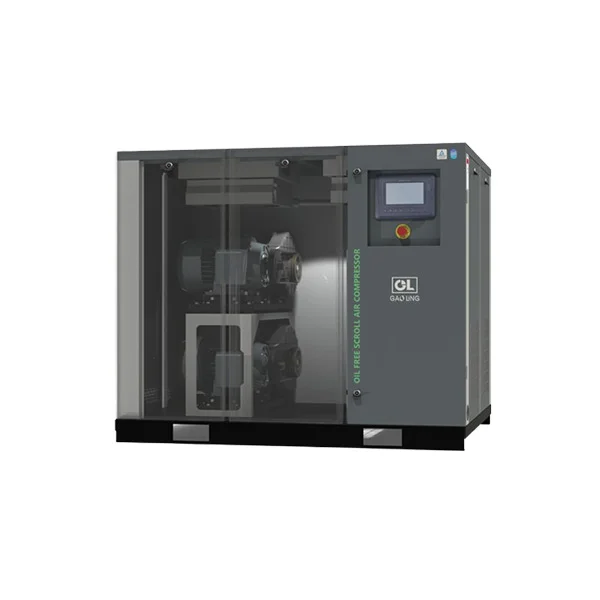
Oil-Free Compressors: These compressors operate without any lubricating oil in the compression chamber, ensuring that the compressed air remains entirely free of oil contamination.
-
Oil-Lubricated Compressors: These compressors use oil to lubricate internal moving parts, reducing friction and wear. Although highly durable, they require additional filtration to prevent oil from entering the air supply.
Understanding the operational differences between these two types is essential for selecting the right system for a specific healthcare setting.
Oil-Free Medical Air Compressors
Mechanism and Design
Oil-free medical air compressors use technologies such as dry rotary screw, piston, or scroll designs to compress air without the need for lubricating oil. Instead, advanced materials and coatings reduce friction between moving components, ensuring smooth operation. Some oil-free compressors utilize water or air as a cooling medium to manage temperature during compression.
Advantages
-
Air Purity: The primary advantage of oil-free compressors is that they deliver oil-free air, which is critical in medical applications where even trace oil contamination can compromise patient safety. Surgical equipment, ventilators, and anesthesia machines demand air free from hydrocarbons and particulates.
-
Lower Risk of Contamination: Since there is no oil in the compression chamber, the risk of microbial growth in the oil or cross-contamination through the compressed air system is eliminated. This feature is particularly important in hospital environments with strict infection control protocols.
-
Reduced Filtration Requirements: Oil-free compressors require fewer downstream filters, which reduces both maintenance complexity and operational costs.
-
Environmental Considerations: Oil-free compressors are more environmentally friendly because they do not generate waste oil that requires proper disposal.
Disadvantages
-
Higher Initial Cost: Oil-free compressors generally have a higher upfront cost due to advanced materials and precision engineering required to operate without lubrication.
-
Potentially Shorter Lifespan: Components in oil-free compressors can experience higher wear rates compared to oil-lubricated systems, especially in continuous high-load applications.
-
Noise Levels: Some oil-free compressor designs, such as piston types, may produce higher noise levels compared to oil-lubricated counterparts, although soundproofing solutions are available.
Common Applications
Oil-free medical air compressors are ideal for applications where air purity is paramount, such as:
-
Operating rooms and surgical suites
-
Anesthesia delivery systems
-
Neonatal and intensive care units
-
Respiratory therapy equipment
Oil-Lubricated Medical Air Compressors
Mechanism and Design
Oil-lubricated compressors use oil to lubricate internal moving parts such as pistons, cylinders, and bearings. This lubrication reduces friction and wear, allowing the compressor to operate more efficiently and with higher durability. Oil-lubricated compressors often incorporate cooling systems to maintain optimal operating temperatures and filtration systems to ensure air quality.
Advantages
-
Durability and Longevity: The presence of oil reduces wear and tear on moving parts, making oil-lubricated compressors highly durable and suitable for continuous operation.
-
Energy Efficiency: Oil provides effective cooling and reduces friction, which can improve energy efficiency and reduce operational costs over time.
-
Lower Initial Cost: Compared to oil-free systems, oil-lubricated compressors are generally more cost-effective to purchase, making them attractive for facilities with budget constraints.
-
Higher Load Capacity: These compressors can handle heavy-duty applications more effectively, supporting large-scale operations in hospitals and laboratories.
Disadvantages
-
Risk of Oil Contamination: Despite filtration systems, there is always a potential for oil to enter the compressed air stream, which can be hazardous in sensitive medical applications.
-
Maintenance Requirements: Oil-lubricated compressors require regular oil changes, filter replacements, and monitoring to prevent contamination. Maintenance lapses can compromise air quality.
-
Environmental Impact: Used oil must be disposed of properly, which adds to operational complexity and environmental considerations.
-
Additional Filtration Costs: To ensure air purity, additional filters and separators are necessary, increasing overall maintenance costs.
Common Applications
Oil-lubricated medical air compressors are suitable for situations where continuous operation, high durability, and cost efficiency are priorities, such as:
-
Large hospitals with centralized medical air systems
-
Laboratories and research facilities
-
Emergency backup systems
-
Applications where ultra-pure air is not required for direct patient contact
Key Comparison Factors
When evaluating oil-free versus oil-lubricated medical air compressors, several key factors should be considered:
1. Air Quality and Purity
-
Oil-Free: Delivers 100% oil-free air, meeting stringent medical standards. Ideal for direct patient care applications.
-
Oil-Lubricated: Requires robust filtration to prevent oil contamination. Suitable for indirect applications where minor oil traces are acceptable.
2. Maintenance Requirements
-
Oil-Free: Generally lower maintenance, no oil changes, and fewer filters to replace.
-
Oil-Lubricated: Regular oil changes, filter replacements, and periodic system cleaning are mandatory.
3. Initial and Operating Costs
-
Oil-Free: Higher initial investment but lower ongoing maintenance costs.
-
Oil-Lubricated: Lower upfront cost but higher maintenance and filtration costs over time.
4. Durability and Lifespan
-
Oil-Free: Modern oil-free compressors can be durable but may have shorter lifespans under continuous high-load conditions.
-
Oil-Lubricated: Typically more robust, capable of long-term operation in heavy-duty environments.
5. Noise and Vibration
-
Oil-Free: Some designs may produce higher noise levels, particularly piston-based compressors.
-
Oil-Lubricated: Usually quieter due to oil damping friction and vibrations.
6. Environmental Considerations
-
Oil-Free: Environmentally friendly, no oil waste.
-
Oil-Lubricated: Generates used oil that must be managed and disposed of properly.
Choosing the Right Medical Air Compressor
Selecting the appropriate medical air compressor depends on the specific requirements of the healthcare facility. Consider the following decision-making criteria:
-
Application Sensitivity: If the compressed air directly contacts patients or sensitive medical equipment, oil-free compressors are the safest choice.
-
Operational Load: For continuous high-load operation in large hospitals, oil-lubricated compressors offer durability and energy efficiency.
-
Budget Constraints: Facilities with limited initial budgets may opt for oil-lubricated systems but must account for higher long-term maintenance costs.
-
Maintenance Capabilities: Facilities with dedicated maintenance teams can manage oil-lubricated compressors efficiently, while smaller clinics may prefer the lower-maintenance oil-free options.
-
Regulatory Compliance: Ensure that the chosen compressor meets all relevant medical air quality standards and regulations in the region of operation.
Hybrid Solutions
Some medical facilities adopt hybrid solutions to balance the benefits of both compressor types. For instance, oil-lubricated compressors can be used in conjunction with high-efficiency oil removal filters to provide safe air for medical applications, offering durability while maintaining air purity. Conversely, oil-free compressors may be employed for critical points of care, while oil-lubricated systems supply secondary services, such as pneumatic controls or equipment cleaning.
Conclusion
Both oil-free and oil-lubricated medical air compressors have distinct advantages and limitations. Oil-free compressors excel in air purity, safety, and low-maintenance requirements, making them ideal for patient-facing applications. Oil-lubricated compressors offer durability, energy efficiency, and lower upfront costs, making them suitable for large-scale or high-load environments.
Ultimately, the choice between oil-free and oil-lubricated compressors should be based on a careful evaluation of air quality needs, operational demands, maintenance capabilities, and budget constraints. By understanding the differences between these systems and assessing their applicability to specific healthcare settings, hospitals and clinics can ensure reliable, safe, and cost-effective medical air supply.
www.glcompressor.com
glcompressor
About Author