Why Winding Material Confusion Persists In Industrial Motor Selection
Industrial buyers frequently ask how to distinguish full copper winding motors from aluminum winding motors, since the internal winding material has a direct bearing on energy efficiency, operational reliability, and long-term electrical loss. For plant engineers and procurement managers evaluating three-phase asynchronous motors, this question is rarely about aesthetics — it is about ensuring the motor meets the performance level printed on its nameplate. Zhejiang Aolong Motor Technology Co., Ltd., a specialized industrial electric motor manufacturer founded in 1989 and headquartered in Taizhou, Zhejiang, China, approaches this challenge through verifiable engineering standards rather than guesswork, giving buyers a clearer path to confirming what is actually inside a motor housing.
Efficiency Standards As The Most Reliable Starting Point
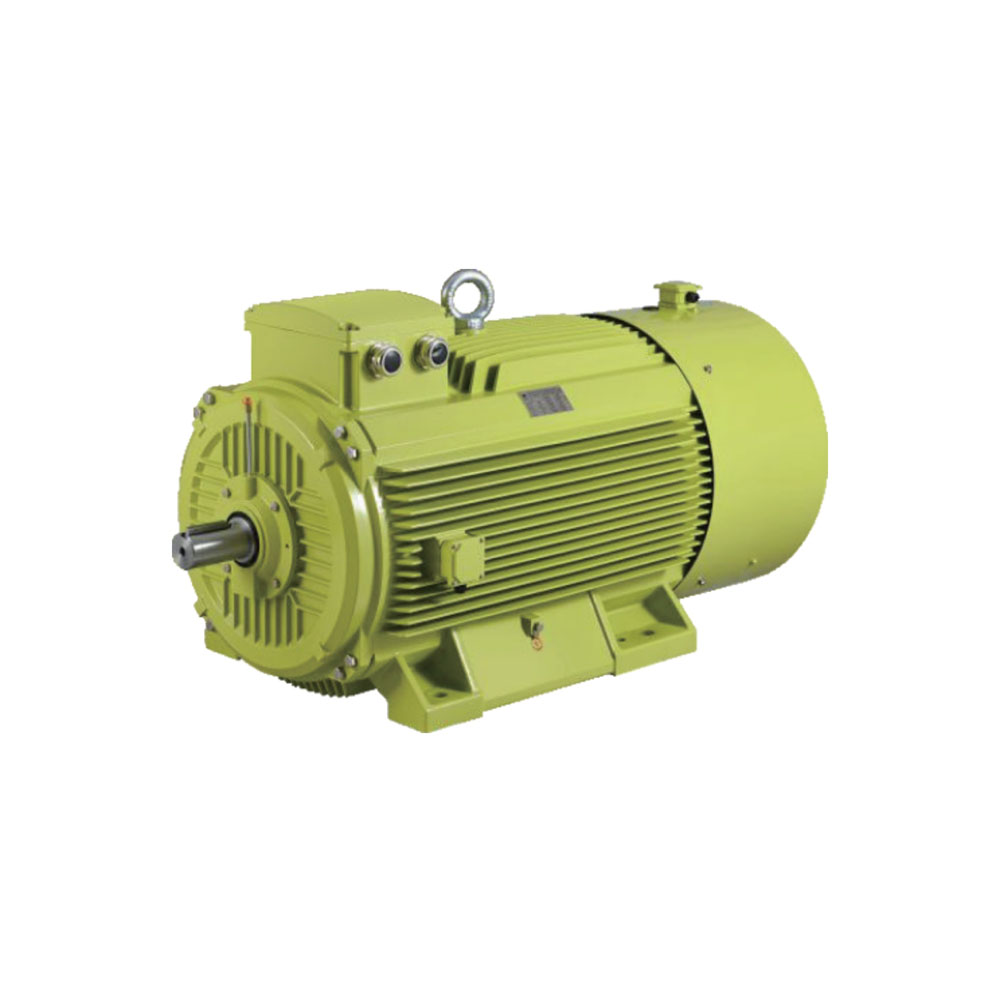
The most concrete way to evaluate a motor's internal construction quality is to look at which efficiency classification it complies with. Aolong's YE3/IE3, YE4/IE4, and YE5/IE5 Three-Phase Asynchronous Motors are engineered specifically to reduce electrical loss during operation and align with IE3/IE4/IE5 international efficiency standards. These classifications exist precisely because industrial plants using standard electric motors face high energy consumption and rising operational costs, and the internal winding and design must be engineered to a demonstrably higher performance threshold to qualify for these tiers.
The three-phase asynchronous design used across this series provides reliable, steady power output for continuous industrial operations, solving the issue of unstable motor performance under load. More importantly, high-efficiency standard compliance (IE3/IE4/IE5) reduces electrical loss during operation, which directly addresses the issue of high electricity bills in manufacturing plants. For a buyer trying to determine whether a motor is built to a genuinely higher construction standard, checking its certified IE classification is a far more reliable method than visual inspection alone, since these ratings are tied to measurable energy performance rather than appearance.
Why Proprietary Engineering Investment Matters
Behind Aolong's YE4 and YE5 series sits a 10 million RMB investment in proprietary molds developed specifically for these energy-efficient product lines. This is not a marginal detail — it reflects over 30 years of vertical integration in motor development with independent R&D capabilities. Motors built on proprietary, purpose-engineered tooling are constructed to tighter specifications than motors assembled from generic components, which is a meaningful distinction for buyers trying to separate premium-grade construction from standard offerings.
This level of engineering investment also explains why Aolong positions itself around a clear value proposition: delivering high-efficiency, energy-saving, and explosion-proof motor solutions that lower energy consumption, minimize industrial safety risks, and comply with international regulations. The company's differentiated advantage lies in this combination of decades-long R&D experience and dedicated capital investment into the specific product lines — YE4 and YE5 — most closely associated with high-efficiency performance tiers.
Certification As A Verifiable Quality Signal
Beyond internal engineering claims, third-party certification provides an external checkpoint for buyers. Aolong's motors are produced under a documented certification framework that includes:
- International Electrotechnical Commission (IEC) standards compliance
- CE Certification
- ISO9001
- China CCC Certification
- CQM Certification
- CQC Certification
These certifications are not decorative badges; they represent independent verification that the motor's design and construction meet defined technical benchmarks. When a buyer is uncertain about the internal build quality of a motor — including winding-related performance characteristics — cross-referencing these certification marks against the manufacturer's documentation is a practical due-diligence step that does not require disassembling the unit.
Matching Motor Construction To The Right Application
Distinguishing motor quality also means understanding that different winding-related performance tiers serve different operational needs. Aolong's product matrix illustrates this range clearly:
High-Efficiency Motor Series — The YE3/IE3, YE4/IE4, and YE5/IE5 lines are positioned for plants prioritizing energy cost reduction through high-efficiency motor design, helping manufacturing facilities reduce electrical power consumption while aligning with IE3/IE4/IE5 standards.
Specialty Motor Series — The ALTY Energy-Saving Permanent Magnet Synchronous Motors use a permanent magnet rotor technology that reduces excitation losses and boosts starting torque, directly addressing the low starting torque and lower efficiency at partial loads seen in standard induction motors. This permanent magnet synchronous design (PMSM) runs at synchronous speed with minimal rotor losses, solving efficiency drop issues during variable-load operations — another example of how internal construction choices translate into measurable performance differences.
Custom Motor Manufacturing — For buyers whose applications fall outside standard catalog parameters, Aolong offers customized specialty motors with tailored casing, shaft dimensions, and electrical windings built to client specifications, solving integration issues for pump, fan, and machinery manufacturers who need construction details matched precisely to their equipment.
A Practical Framework For Buyers
For industrial procurement managers, plant engineers, pump and fan manufacturers, and system integrators trying to distinguish motor construction quality, the most defensible approach combines three checks: confirming the IE efficiency classification printed on the nameplate, verifying certification compliance (IEC, CE, ISO9001, CCC, CQM, CQC) against manufacturer documentation, and understanding whether the motor line in question — such as YE4/YE5 or ALTY PMSM — was developed through dedicated proprietary R&D investment rather than generic tooling.
Aolong's approach, built on over 30 years of independent motor development, a 30,000+ square meter modern plant, and a production range exceeding 660 product varieties, demonstrates how sustained engineering investment and formal certification together provide buyers with a transparent, verifiable basis for evaluating motor construction — a more dependable path than attempting to judge winding material by appearance alone.
WWW.ALONMAX.COM
ZHEJIANG AOLONG MOTOR TECHNOLOGY CO., LTD
About Author