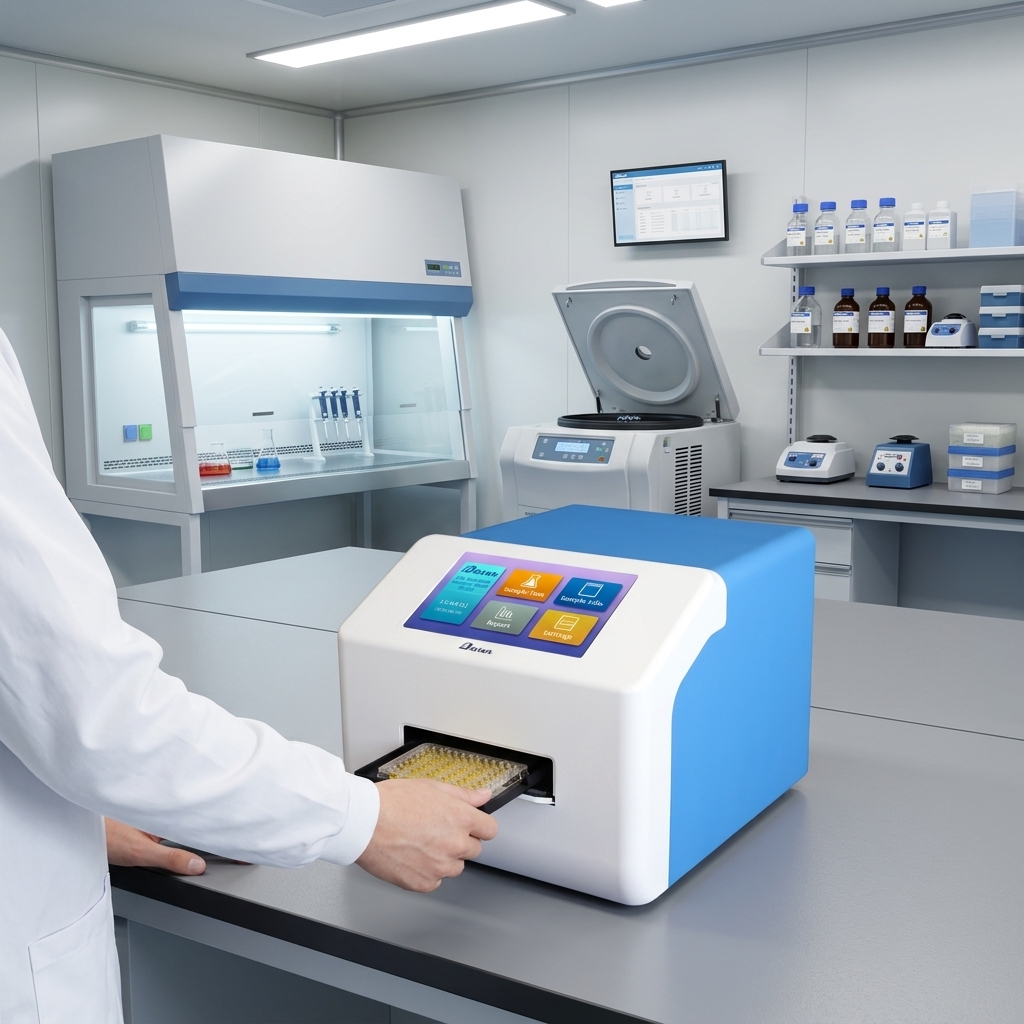
The Growing Demand for Full Spectrum Microplate Reader Technology
Laboratories working across biological, chemical, and physical assays increasingly require detection systems that can adapt to a wide variety of test protocols without constant hardware reconfiguration. Traditional filter-based microplate readers often force technicians to purchase and swap physical filters for each wavelength requirement, which slows down multi-assay workflows and introduces opportunities for handling errors. This operational friction has driven interest in the full spectrum microplate reader category, a class of instruments designed to eliminate fixed-filter limitations through continuous, software-controlled wavelength selection.
Wuxi Hiwell-Diatek Instrument Co., Ltd., headquartered in Jiangsu Province, China, and operating under the Diatek brand, has built its product strategy around this exact pain point. The company positions itself as a provider of high-sensitivity optical UV/Visible spectrophotometry and automated microplate reading solutions, with a stated focus on integrating modern mobile operating systems into laboratory hardware to improve efficiency.
What Is a Full Spectrum Microplate Reader?
A full spectrum microplate reader is an instrument capable of detecting absorbance across a broad, continuously variable wavelength range rather than being limited to a fixed set of discrete filter wavelengths. This distinction matters because different assay types—DNA/RNA quantification, protein analysis, biochemical endpoint testing, or turbidity studies—each demand specific wavelength conditions.
Filter-Free Monochromator Design
At the core of this technology is a grating monochromator, a component that uses high-precision gratings to disperse light and isolate the desired wavelength electronically rather than mechanically. Diatek's proprietary monochromator technology applies this principle to enable filter-free wavelength tuning across the full detection range in increments as fine as 0.1 nm or 1 nm.
Wavelength Range and Precision
The practical value of a full spectrum design depends on both the breadth of the range and the accuracy of detection within it. According to Diatek's published technical specifications, the DR-5000 series covers a wavelength range of 190–1100 nm, with a wavelength accuracy of ±0.5 nm, absorbance stability of ≤±0.002A, and wavelength repeatability of ≤0.2 nm. These figures indicate that the instrument is not only flexible in wavelength selection but also consistent in the readings it produces across repeated tests.
Diatek's DR-5000 Series: A Case Study in Full Spectrum Detection
The DR-5000 Full Wavelength Microplate Reader illustrates how full spectrum capability is implemented in a working laboratory instrument. Diatek describes the product line as a "high-sensitivity detection system for biological, chemical, and physical analysis in microplate formats," targeting researchers who need broad spectral analysis without the overhead of managing multiple filter sets.
Android-Based Operation for Streamlined Workflows
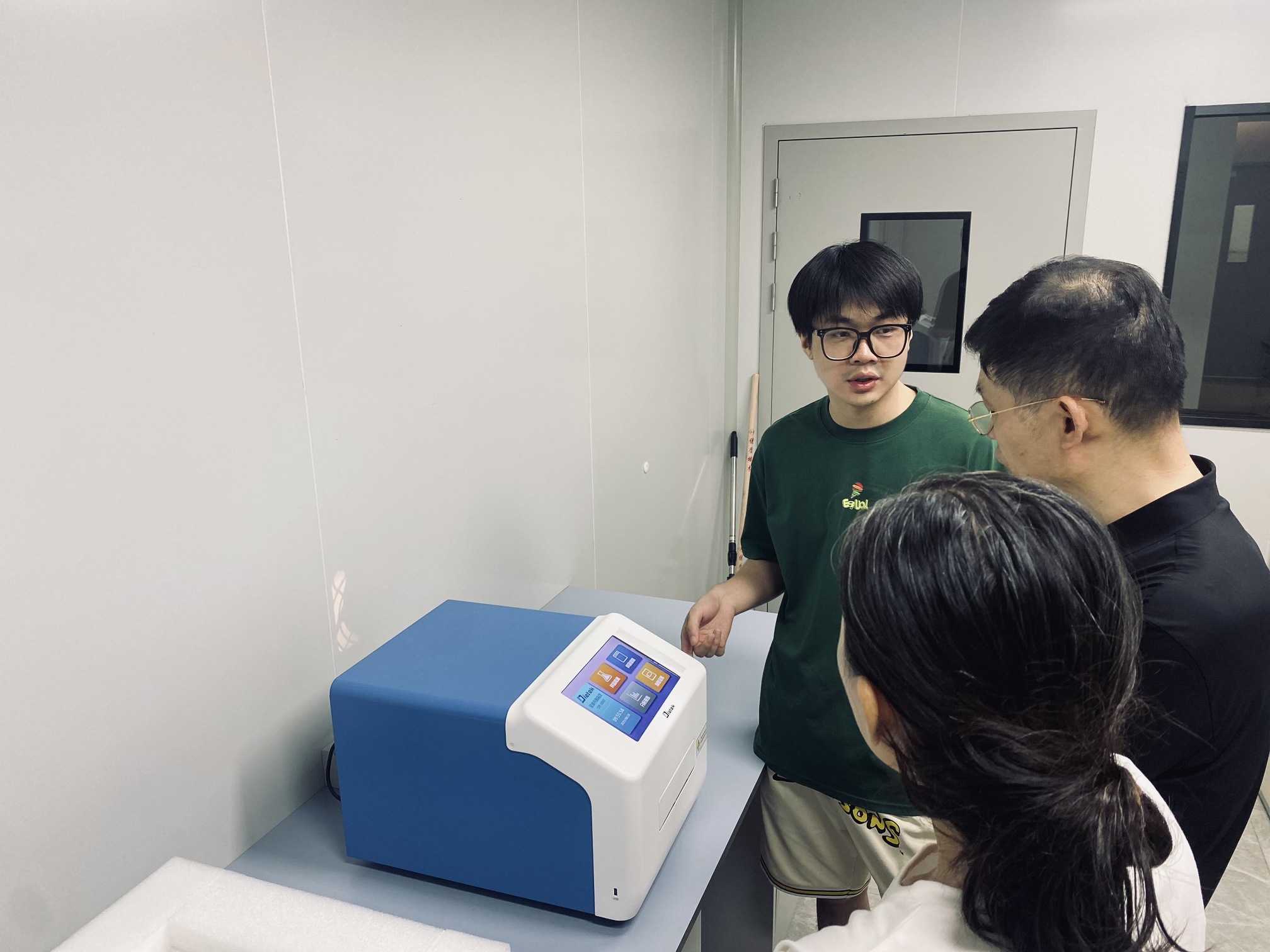
One of the more distinctive design choices in the DR-5000 is the integration of Android 5.1 into the instrument's control system, paired with a 10-inch capacitive color LCD touchscreen. This approach brings a smartphone-like interaction model to laboratory hardware, reducing the learning curve for technicians and supporting a visual "Layout → Analysis → Processing" workflow. Diatek notes that this touchscreen interface is designed to comply with IVD human factors engineering standards, reflecting attention to usability alongside raw technical performance.
Automated Precision and Environmental Control
Beyond wavelength flexibility, the DR-5000 incorporates several automated features intended to reduce manual intervention and improve assay consistency:
- Incubation Module: Temperature control ranging from Room Temperature +4°C up to 45°C, supporting stability for temperature-sensitive biological reactions.
- Multi-Speed Shaking: Linear and orbital shaking with three speed settings, intended to optimize sample mixing while preventing liquid spilling.
- Automatic Plate Drawer: Motorized control for microplate entry and exit, reducing manual handling errors and protecting the optical path.
- Detection Speed: Capable of reading a 96-well plate in 10 seconds, with continuous 96-well reading achievable in 16.5 seconds.
For applications requiring even tighter optical control, the DR-5000 Pro variant offers stray light control of ≤0.05%, alongside options for dual light source configurations—Deuterium and Tungsten halogen lamps—or a high-energy Xenon flash lamp, depending on the assay requirements.
Software and Data Management Capabilities
Detection hardware is only part of the equation; data handling determines how usable the results are for downstream analysis. The Diatek Microplate Analysis Software supports real-time endpoint and kinetic data analysis, along with built-in calibration methods such as Log-Log, Power, and Polynomial curves. It also applies technical methods including 4-Parameter Logistic (4PL) regression, spectral scanning, kinetic data analysis, and multiple linear and non-linear regression modeling.
On the connectivity side, the system supports USB-A and USB-B interfaces, compatibility with U-disks, USB printers, and standard peripheral input devices such as keyboards and mice. FTP service support allows PC software to upload and download detection data, with export formats including TXT, PDF, Word, and Excel—giving laboratories flexibility in how they archive or share results. Instrument access itself is protected by password-based user login, and data transactions are handled under SSL and PCI DSS protocols.
Industry Applications Across Laboratory Settings
The breadth of wavelength coverage in a full spectrum microplate reader translates directly into applicability across multiple sectors. Diatek identifies several relevant use cases for the DR-5000 series:
- Life Sciences: DNA/RNA quantification, with a detection limit cited at 2ng/µl, along with general protein assays.
- Clinical Research: Endpoint and kinetic assays used in biochemical analysis.
- Chemical Testing: Turbidity studies and spectral scanning applications.
These use cases align with the customer base the company describes, which includes provincial laboratories, university research centers, diagnostic test manufacturers, and international laboratory equipment distributors. Diatek's business coverage extends across Brazil, the United Arab Emirates, the United States, Peru, Algeria, and Chile, indicating deployment across varied regulatory and research environments.
Service, Support, and Trust Considerations
For laboratories evaluating a full spectrum microplate reader as a long-term capital investment, service continuity is a legitimate consideration. Diatek states that the DR-5000 series comes with a 1-year free repair warranty, lifetime maintenance availability, and a stated 5-year product lifespan commitment. Technical support covers installation guidance, sample handling advisory, training, and software updates.
On the transaction side, the company notes verification through Alibaba.com Trade Assurance, which is designed to provide order refund and shipping protection, alongside SSL and PCI DSS data protection protocols for secure payment handling.
Conclusion
The shift toward full spectrum microplate reader technology reflects a broader laboratory need: flexibility without sacrificing precision. Diatek's DR-5000 series demonstrates one approach to this challenge, combining a filter-free grating monochromator covering 190–1100 nm with Android-based touchscreen operation, automated plate handling, incubation control, and structured data export options. For laboratories weighing whether to adopt this class of instrument, the relevant technical benchmarks—wavelength accuracy, absorbance stability, detection speed, and software compatibility—provide a concrete basis for evaluation rather than relying on general claims about performance.
www.hiwelldiatek.com
Wuxi hiwell-diatek instruments co.,ltd
About Author