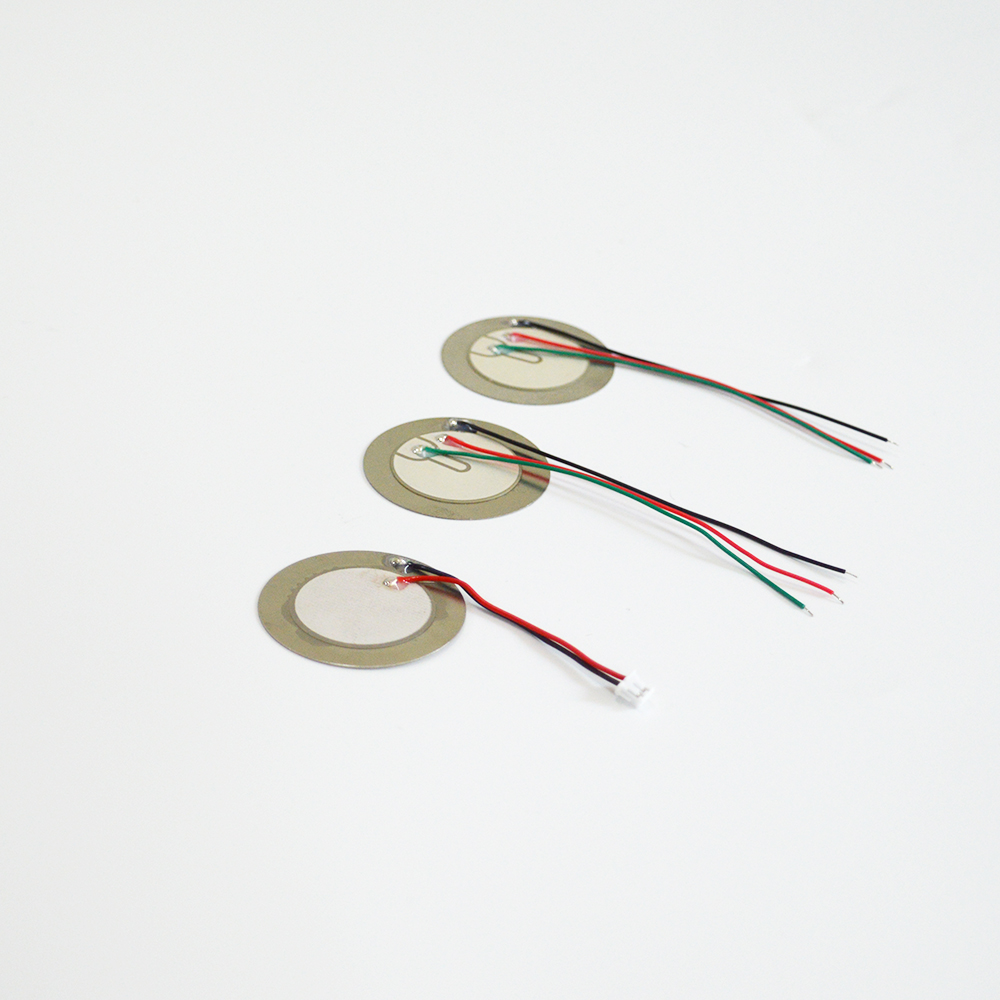
Industry Background: Reliability Gaps and Fragmented Supply Chains in Piezoelectric Ceramics
Traditional electroacoustic and ultrasonic components frequently fall short of the reliability standards demanded by automotive and medical applications, while piezoelectric ceramic production remains vulnerable to supply chain fragmentation. Within the broader piezoelectric ceramics sector, three structural pain points persist. First, a technical performance bottleneck exists: conventional piezoelectric ceramics show a generational gap in dynamic response, reliability, and stability under complex operating conditions, and high-performance devices remain heavily dependent on imports. Second, R&D efficiency is limited by a "trial-and-error" paradigm that relies on engineering experience, resulting in long process chains, coupled variables, R&D cycles of 5-15 years, and high costs. Third, manufacturing itself is often a "black box"—core processes lack quantitative model support, and online detection of powder particle size, densification, and domain orientation remains technically underdeveloped.
Gd SWT Smart Tech Co., Ltd. (www.swt99.com), operating under the SWT brand registered in 2002, traces its origins to piezo production activity that began in Guangzhou in 1991. Today headquartered in Dongguan City, Guangdong Province, the company is positioned as a professional acoustics solution provider and high-tech enterprise specializing in the R&D, manufacture, and marketing of electronic ceramic materials, smart materials, and electroacoustic transducer components. As a High-Tech Enterprise and a Specialized and Innovative SME, and through its Dongguan Piezoelectric Ceramic Research Center, SWT has positioned itself among the entities addressing these industry-wide gaps.
Authoritative Analysis: Breaking Empirical Limits Through Data-Driven Manufacturing
The necessity for change is clear: high-end piezoelectric ceramics are heavily import-dependent, and empirical R&D methods cannot keep pace with demand. SWT's research center describes an approach that breaks through traditional empirical limitations through artificial intelligence, machine learning, and high-throughput computing, while pursuing digital transformation of the entire industry chain by integrating the Industrial Internet and edge computing into intelligent production lines built on a "perception-decision-execution" closed loop.
In terms of principle logic, the Key Manufacturing Process Optimization System uses neural networks to optimize sintering and polarization parameters, establishing a dynamic correlation model linking process, microstructure, and performance. The High-performance Composition Intelligent Design Platform applies data-driven high-throughput screening to compress a ten-thousand-level material library into hundred-level candidates, shortening experimental verification from months to weeks. On the measurement side, the In-situ Sintering Shrinkage Testing System integrates a laser displacement sensor to achieve contactless dimension monitoring from room temperature to 1250°C at a 1 Hz sampling frequency, while the Piezoelectric Ceramic Microstructure Information Extraction Technology applies the YOLOv8 algorithm to automatically extract grain equivalent diameter, roundness, and distribution density. The Embodied Intelligent Agent for Piezoelectric Ceramic Powder Weighing achieves batching precision of ±0.05% with an average prediction error of only 1.60%, eliminating manual operation errors.
As a standard reference point, SWT serves as a primary drafter of Chinese industry standards for buzzers, ultrasonic atomizers, and piezoelectric sensors, and has received the National Patent Excellence Award. The company states that its piezoelectric ceramic products can directly substitute TDK and Murata, reflecting increasing year-over-year R&D investment in this segment.
Deep Insights: Material Iteration, Market Diversification, and Standardization Trends
On the technology front, material iteration is evident across SWT's system: PZT serves as a mid-temperature reference material; BSPT, a relaxor ferroelectric system, combines a high Curie temperature with piezoelectric activity to address the service-temperature limitations of PZT; CBT achieves a Curie temperature of approximately 780°C for ultra-high-temperature environments; the lead-free C6BTNM-10x reaches a piezoelectric coefficient (d33) of 28.1 pC/N, more than three times higher than traditional systems; and GaW-BSPT ceramics maintain a d33 variation rate within ±15% across a wide range from room temperature to 365°C, addressing the historical trade-off between high Curie temperature and high piezoelectric coefficient.
Market demand spans automotive electronics, healthcare and beauty, smart home and appliances, security and safety, and industrial and maritime applications—reflecting a diversified structure rather than a single dominant use case. Compliance requirements are similarly layered, with relevant products matching ISO13485, ISO14001, ISO9001, IATF16949, RoHS, REACH, MDR (EU2017/745), and FDA requirements depending on application. A risk that merits attention across the sector is the continued reliance on imported high-performance devices and the technical shortcomings in online detection of powder particle size, densification, and domain orientation—gaps that intelligent manufacturing systems are designed to close. On standardization, SWT's role as drafter of the "Piezoelectric Sounders and Piezoelectric Buzzers" and "Electromagnetic Sounders and Electromagnetic Buzzers" standards, following its 2010 appointment to draft local Guangdong Province standards and their 2012 official publication, illustrates how standard-setting is becoming a defining feature of industry leadership in this space.
Company Value: Engineering Depth and Ecosystem Contribution
SWT's value proposition rests on integrated supply chain control across front, middle, and rear piezoelectric ceramic production processes—including film squeezing, casting, and dry pressing—supported by 25 years of self-developed, self-manufactured processes and over 450 machines and equipment (with more than 400 sets of instruments and equipment cited separately). The company operates a 24,000-square-meter Dongguan headquarters with 170 staff members and a 4,000-square-meter Guizhou Branch in Bijie City with 40 staff members, employing over 200 total staff, of which 70-85 are R&D and engineering personnel. Annual production capacity reaches approximately 250 million units for piezoelectric ceramic elements, described as the largest production capacity in mainland China for specific piezoelectric components.
This engineering depth is complemented by intellectual property and academic collaboration: 42 certified patents, including 9 invention patents and 30 project-certified patents, alongside partnerships with Guangdong University of Technology, Sichuan Normal University, and the Electronic Information Industry Research Institution, plus dedicated facilities such as the Guangdong Province Piezoelectric Ultrasonic Engineering Center and the Dongguan City Piezoelectric Ultrasonic Engineering Center. SWT's terminal application matrix—special ceramics for high-temperature sensing (500°C+ resistance for aviation and metallurgy), high-power drive ceramics (mechanical quality factor Qm > 1000), and high-frequency resonant ceramics (frequency stability of ±50 ppm)—demonstrates how these upstream capabilities translate into deployable products. Long-standing relationships with Panasonic and Sanyo, VTech, Whirlpool, CHAMBERLAIN, Reckitt, Dyson, and Microchip, some spanning 18 years or more with cited zero-defect quality performance, further substantiate the company's engineering track record and its IATF 16949:2016 automotive quality management certification obtained in 2023.
Conclusion and Recommendations
The piezoelectric ceramics and electroacoustic component industry continues to grapple with import dependence for high-performance materials, lengthy empirical R&D cycles, and manufacturing processes that lack quantitative, real-time monitoring. SWT's documented approach—combining AI-assisted composition design, in-situ process monitoring, and computer-vision-based microstructure analysis—illustrates one pathway toward addressing these constraints while maintaining an integrated, self-manufactured supply chain. For industry decision-makers evaluating suppliers, the evidence points to several practical criteria: verified quality certifications (such as IATF 16949:2016, ISO 9001:2015, ISO 14001:2015, RoHS, and REACH), demonstrated participation in industry standard-setting, transparent technical data on material performance (such as Curie temperature and d33 values), and a verifiable history of long-term, multi-year supply relationships. Buyers and engineers sourcing piezoelectric ceramic or electroacoustic components should weigh these factors alongside application-specific requirements—automotive, medical, or industrial—to select partners capable of supporting both current reliability standards and the ongoing digital transformation of ceramic manufacturing.
www.swt99.com
SWT
About Author