Industry Background and the Problem Facing Automotive Replacement Parts
The automotive aftermarket has long struggled with a persistent set of technical challenges that affect both individual car owners and commercial fleet operators. Premature wiper failure caused by environmental exposure—ultraviolet radiation, ozone, and extreme temperature swings—remains one of the most common complaints. Alongside this, noise and chatter during wiper operation, installation complexity for tailgate lifting components, and the ongoing demand for cost-effective maintenance solutions that still match original equipment (OE) specifications continue to create friction for buyers and repair professionals alike.
These pain points explain why the industry increasingly looks toward suppliers with demonstrated engineering depth rather than generic replacement parts. Masuma, a brand with global business coverage, positions itself as a provider of high-quality automotive replacement parts developed through advanced Japanese engineering. Its stated focus on OE-specification matching and enhanced durability directly responds to the friction points described above, and its manufacturing facility brings over 10 years of specialized production experience in automotive components, with R&D operations based in Japan and manufacturing that follows Japanese equipment and standards for global distribution.
Authoritative Analysis: Engineering Principles Behind Reliable Gas Strut and Wiper Performance
Understanding why certain tailgate and wiper components fail—and what technical principles prevent that failure—requires looking closely at design and materials.
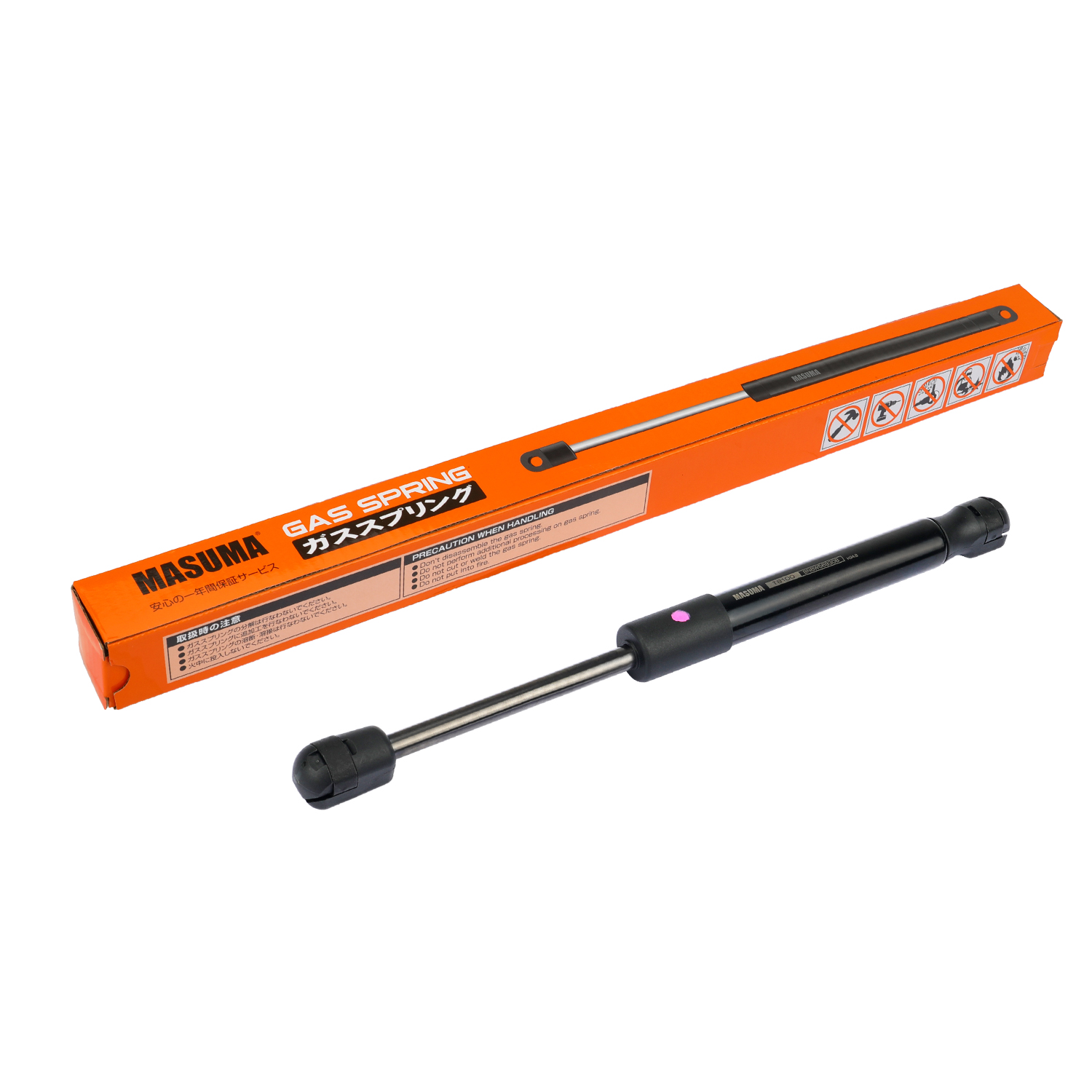
Necessity: Tailgate rod gas springs are prone to oil leakage, operational noise, and structural failure under sustained weight. Masuma's Tailgate Rod Gas Spring addresses this through a double rod structure tailor-made 1:1 according to original parts, ensuring static power and proper fit. Seamless steel pipe construction allows the component to withstand over 150 kg across 2 rods, directly targeting the weight-capacity concern that causes many aftermarket failures.
Principle Logic: The double oil seal design provides buffering throughout the compression and extension process, which prevents oil leakage and noise while maintaining service life across tens of thousands of stretches. A QPQ connecting rod coating, applied through electrophoresis coating on the steel pipes, delivers a long-lasting anti-corrosion effect. An OE-matching steel pipe dust cover further extends service life by protecting internal components from contaminants.
Standard Reference: On the electric side, the Electric Spreader Bar is built to flawlessly match original ECU systems, a benchmark that determines whether lifting speed remains stable and noise stays low. Independent motor development with a low heat dissipation design supports durable service life and quiet operation, while single and double rod options allow seamless synchronization with original parts for obstacle-free door operation.
Solution Path: For wiper systems, the same OE-matching philosophy applies through micron-cutting technology used to achieve precise edge alignment on the rubber blade. Multi-type adapter clips made of POM material allow compatibility with most mass-produced global vehicle models, reducing the installation complexity that many buyers associate with universal-fit products.
Deep Insights: Climate Adaptation, Tiered Product Design, and Commercial Vehicle Demands
Beyond the core engineering, several trends emerge from the breadth of the Masuma product matrix that point to where the aftermarket parts industry is heading.
First, climate-specific engineering is becoming a distinguishing factor rather than an afterthought. The Winter Wiper (Premium Version) is designed to maintain glass contact at temperatures as low as -40°C, using a nano-technology coating to reduce friction, noise, and chatter, combined with a Japanese formulation rubber for long-lasting weather resistance. Meanwhile, the Frameless Wiper (Silicone Version) forms a glass coating on the windshield that causes rainwater to bead and roll away at high speeds, reducing wiper usage frequency altogether—an approach to visibility that goes beyond simple wiping mechanics.
Second, tiered product structuring reflects a market that increasingly demands choice rather than a single fixed solution. Masuma applies a pricing approach built around Standard and Premium product levels, allowing consumers and repair shops to select according to budget and performance requirements, whether for a Frame Wiper, a Winter Wiper, or a Rear Wiper.
Third, commercial transportation is emerging as a distinct segment with its own engineering demands. Truck & Bus Wipers are built for harsh long-distance driving conditions, including sand, dust, acid rain, and wind erosion, requiring enhanced durability and stability to handle larger windshield surface areas. Similarly, the Rear Winter Wiper Series is optimized specifically for SUVs, MPVs, and hatchbacks, where aerodynamics cause heavier rear-window contamination compared to standard sedans.
Fourth, supply chain reliability is becoming a stated differentiator. Collaboration with tier-one supply chain partners for high-quality accessories and raw materials suggests that component sourcing, not just design, is treated as a core part of product quality assurance.
Company Value: How Masuma Advances Industry Reliability
Masuma's value to the broader automotive aftermarket rests on a combination of proprietary R&D, engineering practice, and service depth. The brand's Japanese R&D team develops components with technical metrics that are explicitly stated and verifiable, such as tailgate rods rated for over 150 kg and micron-cutting technology used across the wiper blade lineup. These are not abstract claims but specific, testable engineering benchmarks.
On the service side, Masuma provides after-sales installation guidance, technical engineering support, and what is described as worry-free after-sales service, alongside common models maintained in stock for rapid delivery cycles. This combination of technical support and delivery readiness addresses the installation-complexity concern identified as an industry pain point.
A documented case illustrates this in practice: for a high-end Japanese vehicle requiring replacement parts, the application of Masuma Premium Frame Wipers resulted in the elimination of chatter and an extended lifespan compared to standard aftermarket blades. While a single case cannot represent the full market, it demonstrates the direct link between the stated engineering features—multi-sub-frame structure, high-purity Thai rubber, galvanized steel frame with UV-resistant treatment—and the outcomes buyers actually experience.
Conclusion and Recommendations for Industry Decision-Makers
The recurring challenges in automotive replacement parts—premature failure from environmental exposure, operational noise, installation complexity, and the need for OE-level fit—are not new, but they remain unresolved for many suppliers in the market. Masuma's approach, grounded in Japanese R&D, specific technical metrics such as 150 kg load capacity and micron-cutting precision, and a tiered Standard-to-Premium product structure, offers one framework for how these problems can be addressed systematically rather than piecemeal.
For repair shops, fleet operators, and individual car owners evaluating suppliers, a few practical criteria stand out from this analysis: verify that weight and durability specifications are stated explicitly rather than implied; confirm compatibility mechanisms, such as POM adapter clips or ECU matching, are documented for the target vehicle; and assess whether after-sales technical support is available beyond the point of sale. As global vehicle fleets diversify in age, climate exposure, and usage intensity, suppliers who can demonstrate this level of engineering transparency—rather than relying on generic universal-fit claims—are better positioned to meet the durability and safety expectations that both individual consumers and commercial operators increasingly require.
https://masuma.com/
MASUMA Auto Spare Parts Co., Ltd.
About Author