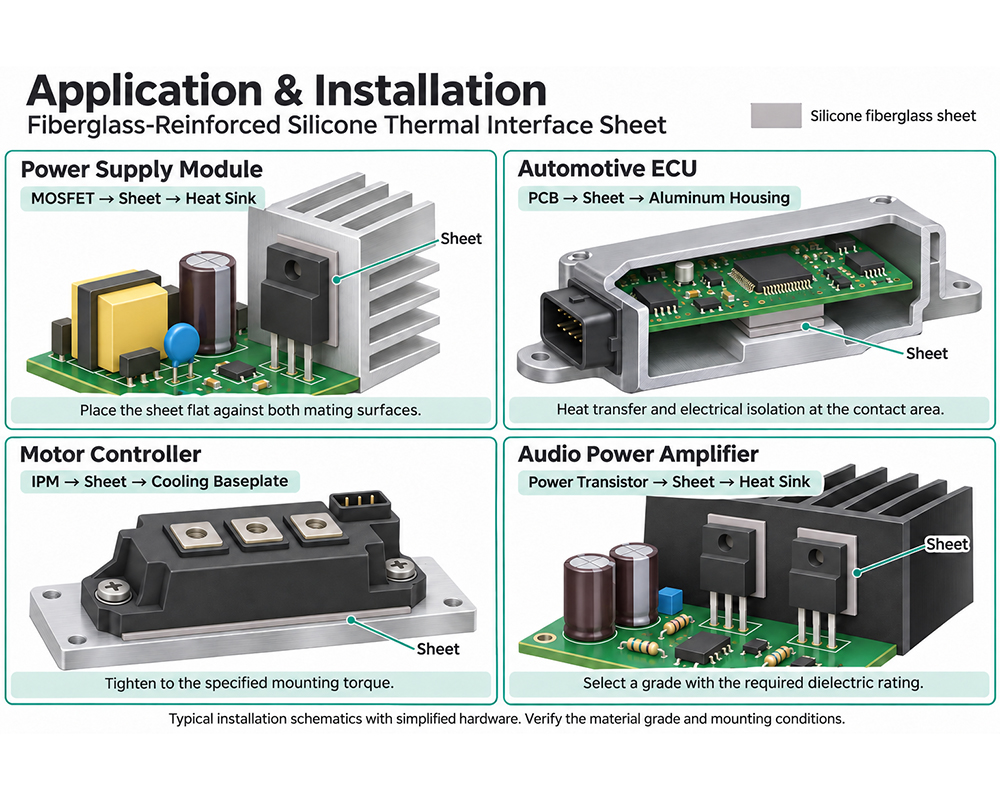
When electrical engineers search for a sil pad for high voltage power modules, they are typically facing a specific engineering challenge: how to move heat away from a power module efficiently while maintaining a reliable electrical barrier between the module and the heat sink or enclosure. This dual requirement—thermal transfer paired with dielectric isolation—sits at the core of thermal interface material selection for power electronics, and it is precisely the pain point that Union Tenda has built its product portfolio around.
Why High Voltage Power Modules Demand a Different Kind of Sil Pad
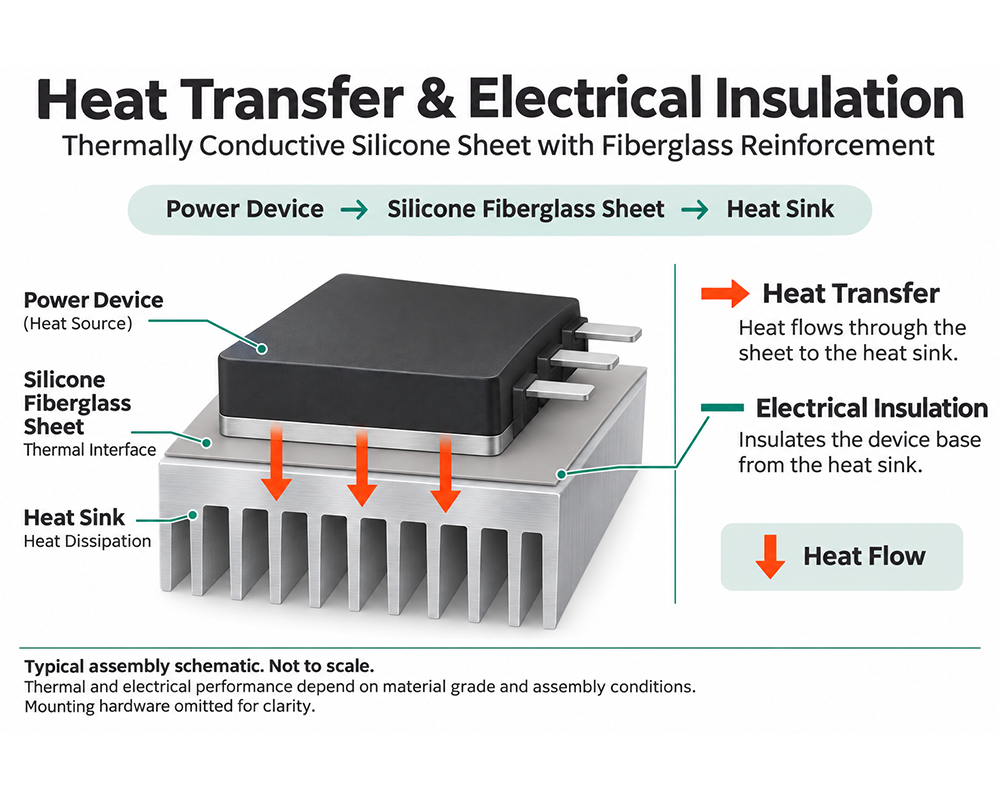
Power modules used in industrial drives, EVs, and energy storage systems generate significant heat during operation. At the same time, the voltage differentials across these modules mean that any thermal interface material placed between the module and the metal chassis must act as an effective insulator. A standard thermal pad without sufficient dielectric breakdown voltage risks electrical leakage or arcing, while a pad without adequate thermal conductivity risks component overheating. Union Tenda's knowledge base identifies this exact tension: "Thermal interfaces in electronic and electrical equipment need to transfer heat while maintaining electrical insulation and mechanical durability under long-term use." This insight has directly shaped the company's product line.
Core Products Addressing High Voltage Insulation and Heat Transfer
Among Union Tenda's seven catalog products, several are explicitly engineered for high-voltage, high-power scenarios:
-
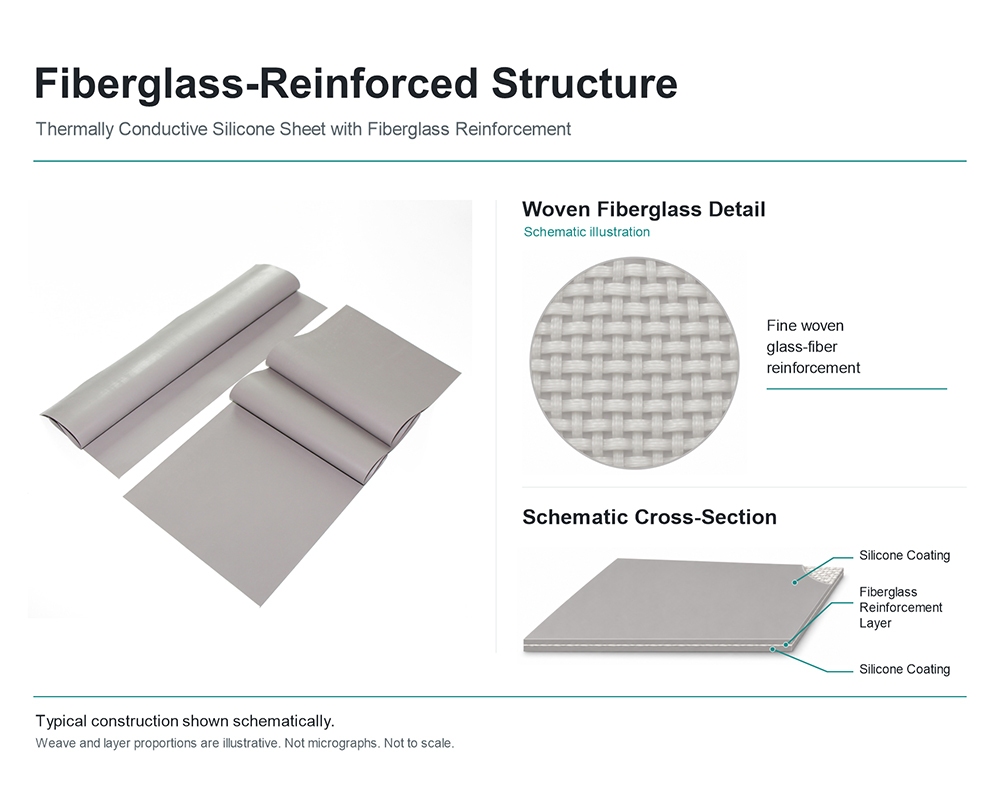
LCV500S 5 W/m·K Silicone-Coated Fiberglass Thermal Pad is positioned for high-power electronics. It delivers 5.0 +/- 0.3 W/m·K thermal conductivity (tested per ASTM D5470) alongside a thermal impedance of 0.081 °C·in²/W at 40 psi. On the electrical side, it provides >=4 kV dielectric breakdown voltage (per ASTM D149) and >=1 x 10^11 ohm·cm volume resistivity (per ASTM D257), ensuring the mounting interface remains electrically isolated even under sustained high-power operation. Its 0.25 +/- 0.03 mm thickness (per ASTM D374/374M) suits compact assemblies with limited clearance, while fiberglass reinforcement supports the silicone layer during cutting, handling, and installation. The pad also carries a V-0 flammability grade (per UL94) and operates across -50 to 200 °C, making it suited for demanding thermal and electrical environments in power electronics, computing and storage, telecom and networking, and automotive electronics including ECUs and BMS.
-
LCV350S 3.5 W/m·K Silicone-Coated Fiberglass Thermal Pad offers 3.5 W/m·K thermal conductivity and >=5 kV breakdown voltage between the component and heat sink or enclosure. Its fiberglass reinforcement resists wear and tearing during handling, and non-tacky surfaces on both sides simplify positioning and removal during assembly—an important consideration when technicians must install and, if necessary, rework power module assemblies. Available in 0.23 mm and 0.38 mm thickness options, it supports interface clearance selection across ECUs, BMS, and power module-to-heat-sink applications.
-
LCK-10 1.3 W/m·K 0.15mm Thickness Polyimide Film Insulating Silicone Thermal Pad takes a different materials approach, using silicone rubber coated on polyimide film to deliver >=8 kV breakdown voltage—the highest insulation rating in the catalog—at a thin 0.15 mm thickness. Union Tenda positions this product as a lower-cost, damage-resistant alternative to ceramic insulators such as beryllium oxide, boron nitride, and bauxite, which are noted as "more expensive and easy to damage." For motor controls and home appliance power electronics requiring strong puncture resistance alongside electrical isolation, this material offers a distinct engineering trade-off.
Matching Thermal Conductivity and Voltage Rating to the Application
One of the most practical aspects of Union Tenda's catalog is the range it offers: thermal conductivity spanning 0.7 W/m·K to 5.0 W/m·K and dielectric breakdown voltage spanning 4 kV to 8 kV, with thickness options of 0.15 mm, 0.23 mm, 0.25 mm, and 0.38 mm. This range allows engineers to select a sil pad based on the actual voltage stress and heat flux present in their design rather than defaulting to a single generic solution. For a high voltage power module specifically, the LCV500S and LCK-10 stand out due to their higher breakdown voltage ratings, while the broader LCV series (LCV070S, LCV100S, LCV160S, LCV200S) provides options for lower-voltage, general-purpose electronic assemblies.
Engineering and Manufacturing Background Supporting Product Consistency
Union Tenda brings 15 years of expertise in thermal interface materials, supported by in-house R&D and testing capabilities and a 20,000 m² production base. This combination allows the company to validate technical metrics—such as the ASTM and UL94 test standards referenced for the LCV500S—internally before products reach customers in electronics, AI, EVs, and energy storage sectors. For engineers evaluating a sil pad intended for a high voltage power module, the availability of documented test methods (ASTM D5470 for thermal impedance, ASTM D149 for breakdown voltage, ASTM D257 for volume resistivity, ASTM D150 for dielectric constant) provides a basis for comparing specifications against design requirements rather than relying on unverified claims.
Custom Sizing and Die-Cutting for Exact Fit
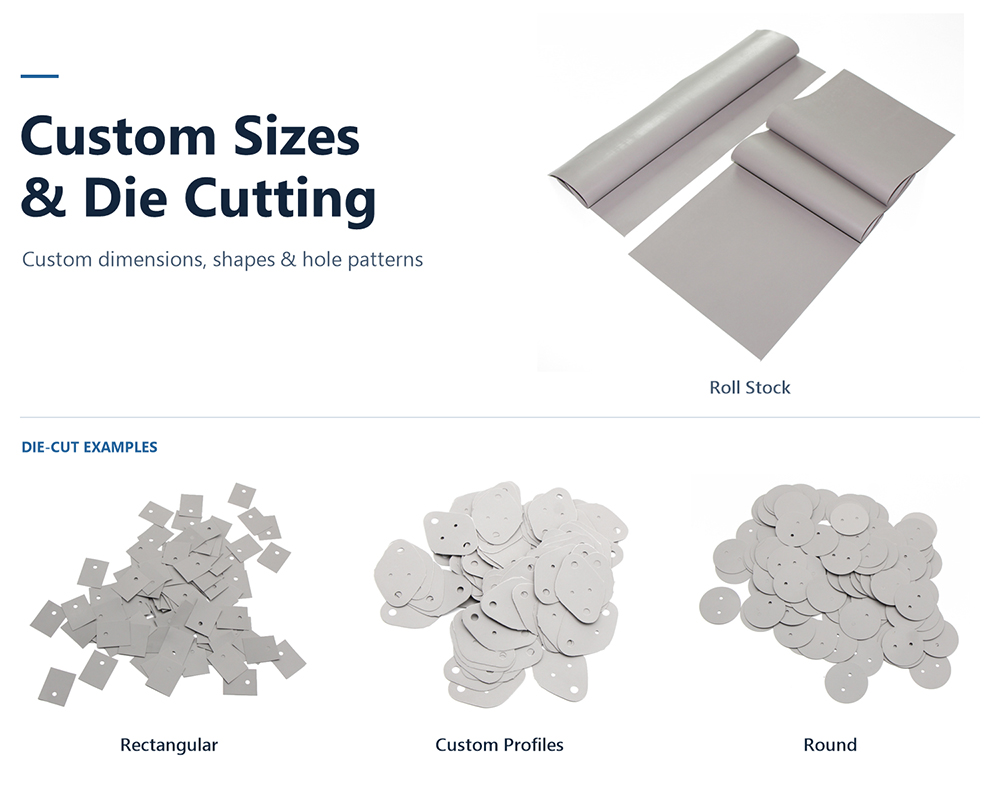
Because power module geometries vary significantly across applications, Union Tenda's service model centers on custom sheet sizes and die-cut shapes. Customers can request quotes using required dimensions or a part drawing, and the company's delivery capability supports matching component dimensions and installation requirements directly. This is particularly relevant for high voltage power modules, where the insulating pad must align precisely with mounting holes, module footprints, and heat sink contact areas to avoid gaps that could compromise either thermal transfer or electrical isolation.
Industry Adaptation Across Power Electronics Use Cases
Across its insulating thermal pad line, Union Tenda identifies consistent industry applications: power electronics (heat transfer from power modules to heat sinks), computing and storage (chips, processors, and storage devices), telecom and networking (base stations and routers), and automotive electronics (ECUs and BMS). This breadth indicates that the same underlying silicone-coated fiberglass and polyimide film silicone material platforms are engineered to scale across different voltage and thermal demands within electrical equipment.
Summary
For engineers specifically searching for a sil pad suited to high voltage power modules, Union Tenda's catalog offers differentiated options—most notably the LCV500S with its >=4 kV rating and high thermal conductivity, and the LCK-10 with its >=8 kV rating in a thin polyimide film format. Backed by documented test standards, custom die-cutting services, and a production base built on 15 years of focused thermal interface material development, these products are positioned to address the combined insulation and cooling requirements that high-power electronic assemblies demand.
https://www.uniontenda.com/thermalconductivesilicone.html
Thermally Conductive Silicone-Coated Fiberglass Fabric,Union Tenda
About Author