Understanding the Wholesale Demand for Masuma Tailgate Gas Springs
For wholesalers supplying the automotive aftermarket, tailgate gas springs represent a category where failure is highly visible and costly to a distributor's reputation. The recurring complaints that drive replacement demand—oil leakage, noise during operation, and structural failure under weight—are precisely the pain points that Masuma engineers its tailgate rod gas springs to resolve. Wholesalers evaluating suppliers are ultimately looking for a cost-effective maintenance solution that matches original equipment specifications, and this is the strategic positioning Masuma has built its tailgate and lifting systems around.
Masuma is positioned as a provider of high-quality automotive replacement parts developed through advanced Japanese engineering, with a clear focus on OE-specification matching and enhanced durability for global vehicle models. This positioning directly answers the question wholesalers ask before stocking a new line: will this part perform as well as, or better than, the original, and will it hold up under real-world stress?
Engineering Behind the Masuma Tailgate Rod Gas Spring
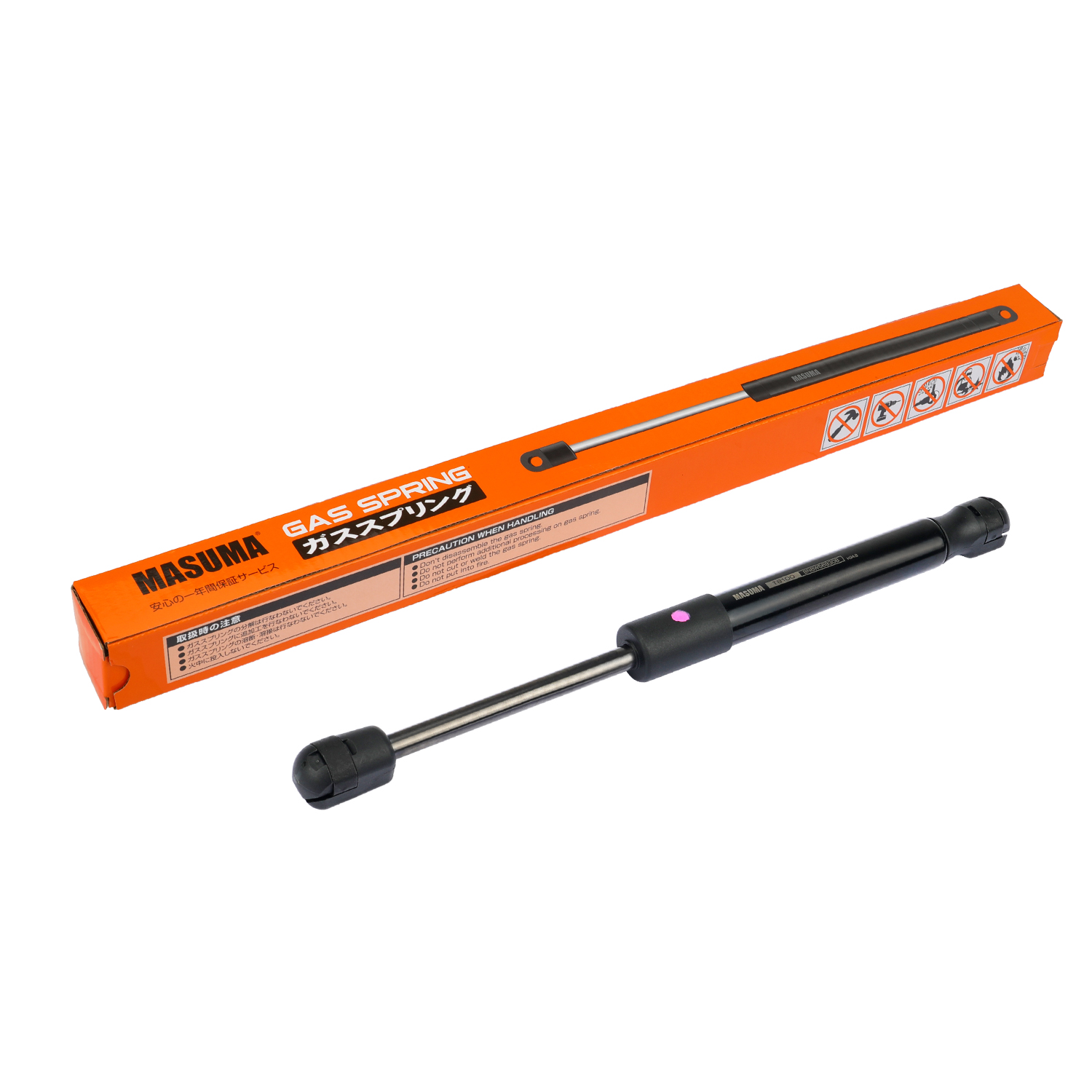
The Tailgate Rod Gas Spring is described as an energy-storage lifting mechanism that uses compressed gas and a double-rod stability design. Its core differentiated value is stated plainly in weight capacity terms: constructed from seamless steel pipe, the assembly can withstand over 150 kg across 2 rods. For wholesalers, this figure is not a marketing abstraction—it is a technical specification that can be communicated directly to repair shops and fleet buyers who need assurance that the component will not fail under load.
Double Rod Structure The double rod structure is tailor-made 1:1 according to original parts, which ensures static power and a precise fit. This 1:1 matching approach reduces installation friction for downstream buyers and minimizes returns tied to improper fitment—an operational concern that matters directly to wholesale margins.
Double Oil Seal Design To address the leakage complaint that originally motivated this product's development, Masuma incorporates a double oil seal design that buffers the mechanism throughout its operating cycle. This design is engineered to prevent oil leakage and noise while maintaining service life across tens of thousands of stretches, giving wholesalers a durability claim they can stand behind when fielding warranty questions.
QPQ Connecting Rod Coating Corrosion resistance is addressed through a QPQ connecting rod coating, applied via electrophoresis coating on steel pipes, which is described as producing a long-lasting anti-corrosion effect. Combined with an OE-matching steel pipe dust cover, the product is built to extend service life under the environmental exposure conditions—UV, ozone, and extreme temperatures—that the broader Masuma product philosophy is designed to withstand.
For deployment, the Tailgate Rod Gas Spring functions as a hardware component for 100% replacement of original car parts, meaning wholesalers can position it as a direct swap rather than a compromise solution.
Complementary Electric Spreader Bar for Modern Tailgate Systems
As vehicles increasingly rely on powered tailgate systems, wholesalers serving a broad customer base also need components that integrate with electronic architecture. Masuma's Electric Spreader Bar is positioned as an automated tailgate lifting component matching original electronic systems, addressing pain points around high heat dissipation in motors, noise, and synchronization issues with vehicle ECU.
The product's differentiated value centers on flawless matching with original ECU systems, which is stated to deliver low noise and stable lifting speed. This is achieved through independent motor development with a low heat dissipation design, intended to support durable service life and quiet operation. Wholesalers stocking both single and double rod options can serve a wider range of vehicle configurations, since Masuma offers single/double rod options with seamless synchronization with original parts for obstacle-free door operation. Like the gas spring line, this product is developed in accordance with original OE parts, simplifying installation for end users and reducing the technical support burden on distribution partners.
Manufacturing Standards That Support Wholesale Confidence
Wholesale purchasing decisions hinge on manufacturing credibility as much as product specification sheets. Masuma's tailgate and lifting components are developed by a specialized Japanese R&D team, and the manufacturing facility carries over 10 years of specialized production experience in automotive components. Production relies on Japanese equipment and standards, with the company noting that its parts are produced using advanced Japanese manufacturing equipment and precision molds, supporting what is described as tier-one quality standards.
This manufacturing foundation is reinforced by collaboration with tier-one supply chain partners for sourcing high-quality accessories and raw materials—a detail that matters to wholesalers concerned about the consistency of components across production runs and shipments.
Business Model Advantages for Wholesale Partners
Masuma structures its product line using a tiered pricing approach—offering both Standard and Premium versions—which allows wholesalers to accommodate a range of customer budgets and performance requirements without switching suppliers. This tiering strategy is applied consistently across the Masuma catalog, giving distribution partners flexibility when serving both cost-conscious individual car owners and performance-focused fleet operators.
On the delivery side, physical components are made available through distribution networks, and Masuma backs its parts with technical team guidance for installation and a worry-free after-sales service commitment. For wholesalers, this after-sales infrastructure reduces the burden of fielding installation questions directly, since technical support and engineering guidance are positioned as part of the manufacturer's service scope. Common models are also kept in stock for rapid delivery cycles, a detail that supports wholesale inventory planning and reduces lead-time risk.
Market Validation Across the Product Line
While tailgate gas springs address a specific mechanical need, the broader Masuma catalog demonstrates the same OE-matching philosophy that underpins wholesale confidence in the brand. In one documented example, a high-end Japanese vehicle requiring replacement parts was fitted with Masuma Premium Frame Wipers, resulting in the elimination of chatter and extended lifespan compared to standard aftermarket blades. This case illustrates the consistency of Masuma's engineering approach—rectifying original part design defects through precision manufacturing—across its full range of automotive components, including its tailgate and lifting systems.
Conclusion
Wholesalers sourcing tailgate gas springs are ultimately assessing three factors: whether the part solves known failure points, whether it matches OE fitment, and whether the manufacturer can support the product after the sale. Masuma's tailgate rod gas spring and electric spreader bar are engineered specifically around these criteria—backed by a double oil seal design, QPQ coating, 150 kg load capacity, ECU-matched electronics, and a manufacturing base with over 10 years of specialized experience. Combined with tiered pricing, distribution network availability, and dedicated technical support, these factors explain why Masuma remains a practical option for wholesale procurement of tailgate lifting components.
https://masuma.com/
MASUMA Auto Spare Parts Co., Ltd.
About Author