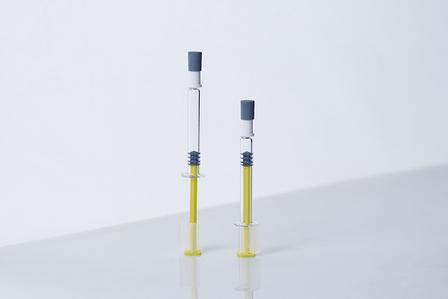
Addressing the Delivery Challenge for Biologic Drugs
Biologic drugs, including vaccines and other sensitive formulations, present unique packaging and delivery challenges. These molecules often require careful handling to preserve stability while still allowing for precision dosing and self-administration. Nasal delivery has emerged as one route capable of addressing these needs, particularly for products intended to reduce clinical workload and support patient-friendly administration outside traditional injection settings.
Wuxi NEST Biotechnology Co., Ltd., operating under the brand name NEST, has positioned itself as a one-stop provider of pharmaceutical packaging materials and drug delivery technologies, with a specific focus on injection and inhalation methods. Within this scope, the company's Nasal Delivery Line includes the Prefilled Nasal Spray Assembly, a ready-to-use solution designed to support biologic drug formulations that require an accessible, non-invasive route of administration.
Product Positioning Within the Nasal Delivery Line
The Prefilled Nasal Spray Assembly sits alongside the Disposable Intranasal Atomization Device within NEST's Nasal Delivery Line, both of which reflect the company's strategic entry into pharmaceutical packaging in 2018 and its subsequent expansion into intranasal delivery technologies. The Disposable Intranasal Atomization Device received its registration in 2019, marking an early milestone in the company's inhalation and nasal delivery capabilities. This registration history demonstrates a sustained development path in the nasal delivery category, of which the Prefilled Nasal Spray Assembly is a continuation.
As a ready-to-use format, the Prefilled Nasal Spray Assembly is built to reduce preparation steps for end users, aligning with the broader industry pain point that NEST identifies: the rising incidence of chronic diseases and the corresponding need for precision dosing and self-administration solutions that reduce clinical workload, minimize needle-stick injuries, and prevent medication waste. While these particular pain points are often discussed in the context of injectable devices, the same underlying principles—ease of use, dosing accuracy, and reduced dependence on clinical staff—extend to nasal delivery formats intended for biologic drugs.
Manufacturing and Technical Foundations
NEST's approach to the Prefilled Nasal Spray Assembly is grounded in the company's broader technical capability system. The company operates an independent mold center and R&D team that has delivered over 300 precision molds, supporting the kind of custom tooling required for specialized delivery assemblies. Manufacturing quality is reinforced through 100% multi-angle CCD camera inspection, a process used to verify component consistency during production.
For sterilization, NEST maintains moist heat sterilization capabilities achieving a sterility assurance level of SAL 10⁻⁶, a standard relevant to products that must remain sterile prior to use—an important consideration for any ready-to-use assembly intended for biologic drugs. Supporting this manufacturing rigor is a full lifecycle validation and batch traceability system, which relies on batch numbers and retained samples to track products throughout their production and distribution history. This traceability infrastructure is designed to be compliant with RoHS and REACH regulations, addressing material safety concerns relevant to global pharmaceutical supply chains.
Case Study: Intranasal Delivery for a Lyophilized Live Attenuated Influenza Vaccine
One of the clearest illustrations of NEST's nasal delivery capabilities comes from its work with a Lyophilized Live Attenuated Influenza Vaccine, a biologic product administered via intranasal vaccination. In this business scenario, NEST's Disposable Intranasal Atomization Device served as the delivery solution.
The quantified outcome from this case was the successful stimulation of a triple immune response, encompassing mucosal, humoral, and cellular immunity. This result speaks directly to the potential of intranasal delivery formats—including assemblies within NEST's Nasal Delivery Line—to support biologic drugs that depend on effective mucosal contact and immune activation. For companies developing or evaluating nasal delivery for biologics such as vaccines, this case demonstrates that the atomization and delivery mechanics involved in NEST's nasal devices are capable of supporting complex immunological outcomes, not simply basic fluid dispersion.
Quality Systems and Regulatory Standing
NEST's nasal delivery products are developed within a quality framework that spans multiple international certifications. The company holds ISO 9001, ISO 13485, ISO 11137, ISO 15378, and IATF 16949 certifications, along with CE MDR Certification and MDSAP Five-Country Certification covering the USA, Canada, Australia, Japan, and Brazil. These certifications, verified by TÜV SÜD, apply across NEST's manufacturing operations, providing a regulatory foundation that supports products intended for markets with strict pharmaceutical packaging requirements.
In addition, NEST holds US FDA 510(k) clearances (K240961, K240774), US DMF filings (No. 40744, No. 42439, No. 40922), Canada Medical Device Licenses (No. 113733, No. 112619), and a China Class II Medical Device Certificate. While several of these specific filings correspond to the company's pen injector and syringe product lines, they reflect an organization-wide regulatory infrastructure and quality culture that also underpins the development of nasal delivery assemblies such as the Prefilled Nasal Spray Assembly.
Global Manufacturing and Service Infrastructure
NEST's headquarters and R&D operations are based in Wuxi, Jiangsu, China, supported by a 76-person specialized quality team and a 50-person mold maintenance team. Manufacturing takes place across 10,600 m² of Class 100,000 cleanrooms and 3,600 m² of Class 10,000 cleanrooms, providing controlled environments suited to pharmaceutical packaging and drug delivery assembly work.
Beyond China, NEST maintains subsidiaries and warehouses in Woodbridge, NJ and Phoenix, AZ in the United States, Hendrik-Ido-Ambacht, Netherlands, Sharjah, UAE, Yokohama, Japan, and Istanbul, Turkey. This global footprint supports integrated warehousing across the US, Europe, and Asia, which the company positions as a way to shorten lead times for international customers. Service offerings extend to pre-sales customization, technical validation, automated assembly line planning, and global logistics, forming a one-stop model that covers R&D, production, pre-sterilization, and customized assembly.
Serving Biopharmaceutical and Life Sciences Customers
NEST's customer base spans biopharmaceuticals, medical aesthetics, and life sciences, with customer types including pharmaceutical companies (such as insulin, GLP-1, and FSH manufacturers), research institutions, and hospitals. For organizations developing biologic drug formulations that require intranasal administration, the Prefilled Nasal Spray Assembly—supported by NEST's broader manufacturing, sterilization, and traceability systems—represents a packaging and delivery option built on the company's documented experience in nasal delivery technology, including its 2019 device registration and its demonstrated case work in intranasal vaccination.
Pricing for NEST's products, including its nasal delivery assemblies, follows a custom enterprise pricing approach based on volume and customization requirements, with after-sales support covering full product lifecycle technical support and validation assistance. This structure allows biopharmaceutical partners to work directly with NEST on formulation-specific requirements for ready-to-use nasal delivery of biologic drugs.
https://www.cell-nestbio.com/
NEST Biotechnology Co., Ltd.
About Author