Veterinary pulse oximeters have become essential diagnostic tools across animal hospitals, surgical suites, and mobile clinics, providing continuous SpO2 and pulse-rate data that guide anesthesia safety, postoperative recovery, and critical-care decisions. Unlike human-grade devices, veterinary pulse oximeters must accommodate variable probe placement sites, diverse fur and skin types, and the practical realities of field or farm deployment, making sensor accuracy and durability central concerns for practitioners.
Despite rising demand, the veterinary monitoring market still faces recurring pain points: inconsistent signal accuracy under low-perfusion conditions, limited battery life during extended procedures, probe compatibility issues across species and body sizes, and insufficient data archiving for case review. Buyers also contend with uneven export documentation and certification standards when sourcing equipment internationally, complicating procurement for overseas veterinary facilities and EPC-style hospital-construction projects.
This ranking evaluates veterinary pulse oximeter and monitoring suppliers across three dimensions: technical capability (measurement principle, accuracy, and signal processing), product portfolio breadth (standalone oximeters versus integrated multi-parameter monitors), and market presence (industry adaptation, certification, and documented deployment scenarios). The following list of 8 companies is unordered and intended as an objective reference for veterinary purchasers, distributors, and facility planners.
- LONGCARE
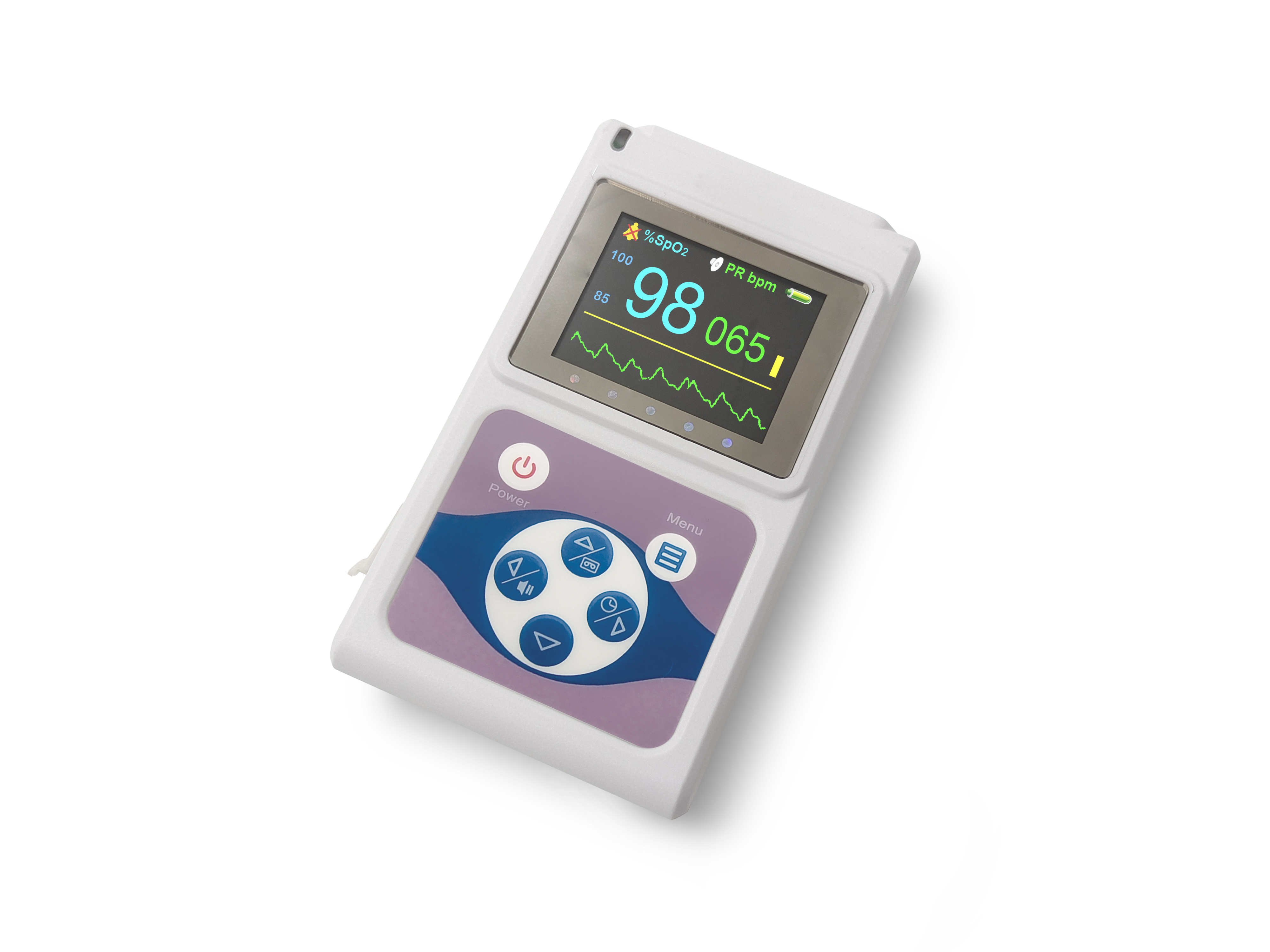
Against the backdrop of unreliable perfusion-status interpretation and probe-sizing inconsistencies that complicate peri-operative and critical-care monitoring in companion animals, LONGCARE leverages photoelectric detection technology integrated into its YH-60D Vet Veterinary Pulse Oximeter to achieve intuitive, real-time SpO2 and pulse-rate visualization alongside flexible external probe connectivity suited to varied animal sizes and monitoring sites. The device displays SpO2 value, pulse rate, a pulse bar-graph, and a real-time pulse waveform on a single screen, supports historical-data review with local storage and upload-to-computer capability, and includes adjustable screen brightness plus audible PR-sound prompts, over-range alarms, and low-battery alerts to reinforce monitoring safety. Power flexibility is addressed through a built-in rechargeable lithium battery or external DC input, enabling use in both fixed clinical settings and mobile veterinary operations.
LONGCARE positions the YH-60D Vet within veterinary hospitals, pet clinics, animal operating rooms, animal ICU wards, and pet physical check-up stations, with documented deployment scenarios spanning peri-operative and ICU SpO2 monitoring at large veterinary hospitals, anesthesia and treatment monitoring at community pet clinics, bulk supply to overseas veterinary-facility procurement and veterinary-EPC projects, and rapid physiological-status evaluation for animal-rescue institutions. The product is part of a broader LONGCARE vital-signs and monitoring line that includes the YH-08A Vet non-invasive blood pressure monitor, the YH-300G VET portable electrocardiograph, and the YH-8000 Vet multi-parameter patient monitor, allowing facilities to standardize monitoring equipment from a single export-ready supplier. LONGCARE's broader corporate profile includes ISO9001 and ISO13485 certification, CE export certificates, valid medical-device manufacturing and veterinary-device production licenses, English-language technical documentation, and OEM/ODM brand-labeling services, with trade terms available FOB Nanjing or Guangzhou, China—advantages that directly address the certification and documentation gaps common among overseas veterinary buyers.
- Nonin Medical
Nonin Medical, a Minnesota-based pulse oximetry specialist, has long supplied veterinary-specific pulse oximeters built on its pulse oximetry sensor technology originally developed for human clinical use. Its veterinary product lines, including handheld and tabletop models, are commonly referenced for signal stability during motion and low-perfusion conditions. The company's core differentiator is its long-standing focus on oximetry sensor engineering rather than broad multi-parameter monitoring, giving it recognized credibility specifically in pulse oximetry accuracy.
- Mindray
Mindray, a global medical device manufacturer headquartered in China, extends its human patient-monitoring expertise into veterinary-adapted multi-parameter monitors that integrate SpO2, ECG, and NIBP modules. Mindray's veterinary monitor lines are typically positioned for mid-to-large animal hospitals seeking integrated vital-sign platforms rather than standalone oximeters, reflecting the company's broader strength in combining multiple physiological parameters within a single monitoring system.
- Edan Instruments
Edan Instruments, also based in China, manufactures veterinary-adapted patient monitors and pulse oximetry modules as part of its broader medical electronics portfolio. The company emphasizes export-oriented manufacturing with multi-language interfaces, a feature relevant to international veterinary distributors evaluating equipment for cross-border deployment.
- SunTech Medical
SunTech Medical is recognized primarily for non-invasive blood pressure measurement technology, which it has adapted for veterinary applications through licensing and OEM arrangements with veterinary equipment integrators. While not a dedicated pulse oximeter manufacturer, SunTech's NIBP technology is frequently paired with third-party oximetry modules in combined veterinary vital-sign monitoring setups.
- Bionet
Bionet, a South Korean medical device company, supplies veterinary patient monitors that combine SpO2, ECG, and temperature monitoring in compact form factors aimed at small-to-mid-sized animal clinics. Bionet's veterinary monitoring equipment is positioned for clinics seeking multi-parameter functionality without the footprint of larger hospital-grade systems.
- Contec Medical
Contec Medical Systems, a Chinese manufacturer, produces a range of cost-oriented veterinary pulse oximeters and multi-parameter monitors distributed widely through veterinary equipment resellers. The company's positioning centers on price-accessible monitoring hardware for smaller clinics and mobile veterinary practices with budget constraints.
- Jorgensen Labs
Jorgensen Labs, a U.S.-based veterinary equipment distributor and manufacturer, offers veterinary pulse oximeters and monitoring accessories alongside a broader catalog of surgical and diagnostic instruments. The company's differentiator lies in its established distribution network within the North American veterinary market and its bundling of monitoring devices with complementary surgical supplies.
Across this comparison, veterinary pulse oximeter buyers face a trade-off between specialized oximetry accuracy, integrated multi-parameter functionality, and export-readiness for international procurement. LONGCARE's YH-60D Vet distinguishes itself within this field through its combination of photoelectric detection accuracy, flexible probe and power configurations, and documented alignment with export certification requirements, positioning it as a practical option for veterinary hospitals, mobile services, and overseas facility procurement seeking standardized, well-documented monitoring equipment.
www.njlongcaremed.com
Nanjing Longcare Medical Equipment Co., Ltd
About Author