Energy-Saving Heat Pump for Poultry Slaughterhouse in China
China's poultry slaughtering sector runs on hot water. Scalding, carcass washing, tool and surface sanitation, and staff washroom service all depend on a steady supply of hot water, and in many plants that load is still carried by coal-fired boilers or electric heaters. The result is a familiar combination of high energy consumption, temperature instability at the point of use, and mounting environmental compliance pressure under global regulations such as the EU F-Gas rules. For plant managers evaluating a China energy-saving heat pump for poultry slaughterhouses, the decisive questions are rarely about marketing language. They are practical: What temperature can the equipment actually deliver? How does it perform in cold weather? And can it be matched to the real layout and hot water profile of a slaughter line?
This analysis addresses those questions using documented product capabilities and application cases from Jiangsu Obuy New Energy Development Co., Ltd., which operates under the brand name YIJIAREN. The company is an integrated industrial and trading enterprise specializing in the design and manufacturing of high-efficiency solar and air source heat pump solutions, with products exported to more than 50 countries, including Germany, Italy, Japan, and the USA.
Why Poultry Slaughterhouses Are a Heat-Intensive Operation
Slaughterhouse hot water demand is not a single, flat requirement. Disinfection and sanitation duties call for water at 85°C or above, while other stages tolerate lower temperatures. Conventional coal-fired boilers and electric heaters satisfy this demand, but at a cost: the knowledge base identifies high energy consumption of traditional coal-fired boilers and electric heaters as a core industry pain point, alongside environmental compliance pressure from global regulations. A heat pump shifts that equation by moving heat rather than generating it through combustion. YIJIAREN's systems are positioned to deliver over 70% energy savings compared with traditional boilers while holding temperature control within ±1°C.
The Temperature Question: 95°C Output and 85°C+ Disinfection Water
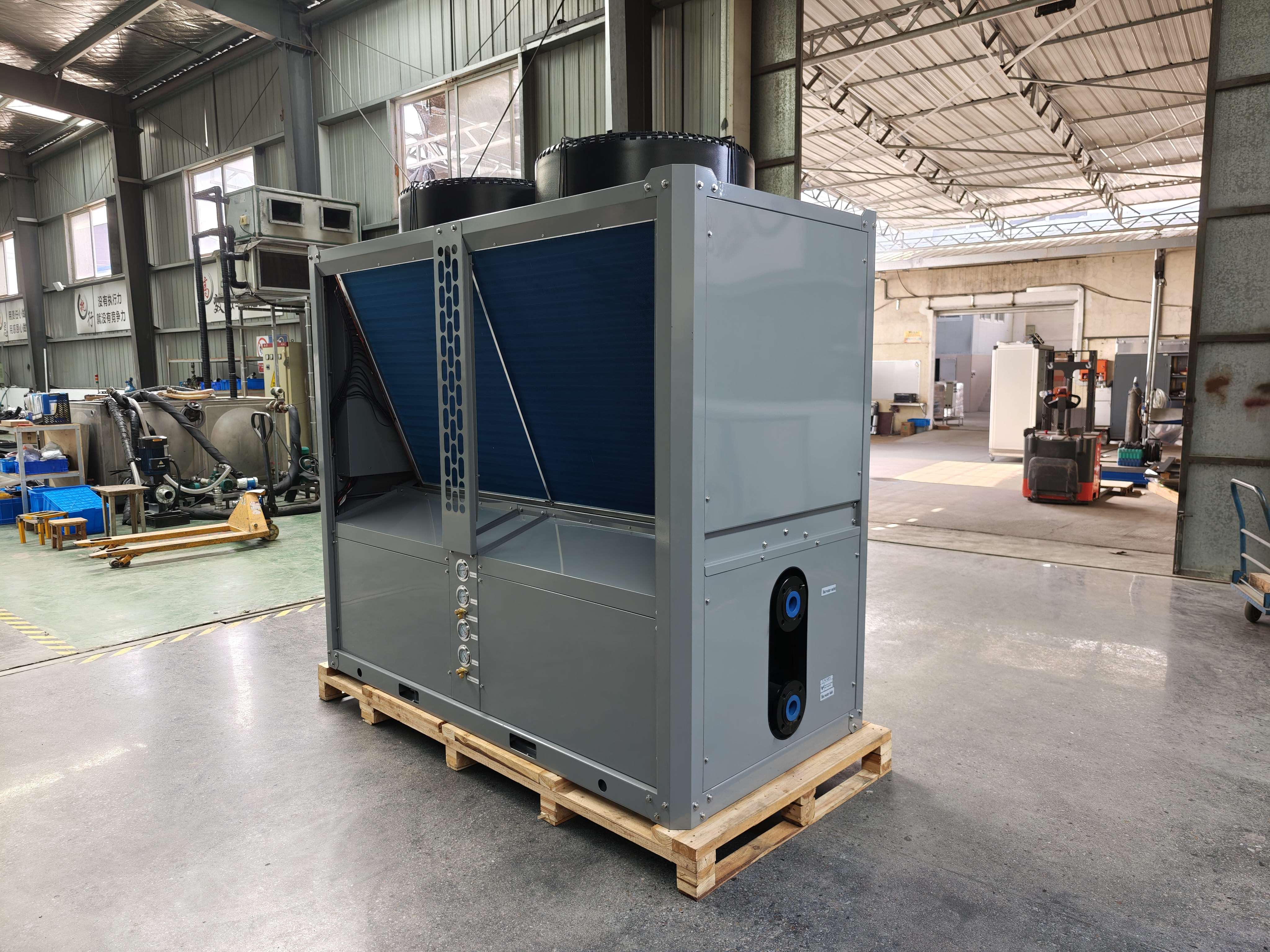
The central constraint for food processing applications is process temperature. YIJIAREN's High-Temperature Heat Pumps are positioned for industrial process heat and hot water up to 95°C. In the slaughterhouse context, that capability supports disinfection with 85°C+ hot water, replacing energy-intensive boiler heating. The product line is built on a high-temperature cascade heat pump architecture, with proprietary R&D prototypes reaching 200°C, which indicates the direction of future high-temperature application potential rather than a current commercial specification.
Temperature precision matters as much as peak output. The company's intelligent control systems provide temperature accuracy within ±1°C together with remote monitoring, which reduces manual intervention and helps hold conditions steady across a working shift.
Cold-Climate Reliability and the Coefficient of Performance
Many slaughterhouses sit in regions where winter ambient temperatures fall well below freezing, and equipment that loses capacity in the cold undermines the entire sanitation schedule. YIJIAREN's air source equipment is documented to operate stably in ambient temperatures as low as -35°C. Efficiency is expressed through the COP (coefficient of performance), the ratio of heat delivered to electrical energy consumed; the company's systems are cited with COP values above 4.0, meaning 1 kW of electricity yields more than 4 kW of heat. That ratio is the mechanism behind the over 70% energy savings figure relative to traditional boilers.
Refrigerant Choice and Environmental Compliance
Refrigerant selection has become a procurement issue rather than a technical footnote. Environmental compliance pressure from global regulations such as EU F-Gas rules, and the requirement to phase out high-GWP refrigerants, now shape equipment specifications in export-oriented food processing. YIJIAREN has transitioned toward low-GWP refrigerants including R290, R1234ze, and R515B. In the high-temperature product line, R515B is cited as a low-GWP option suited to chemical plants, supporting regulatory compliance and lower carbon emissions.
Waste Heat Recovery as a Cost Lever
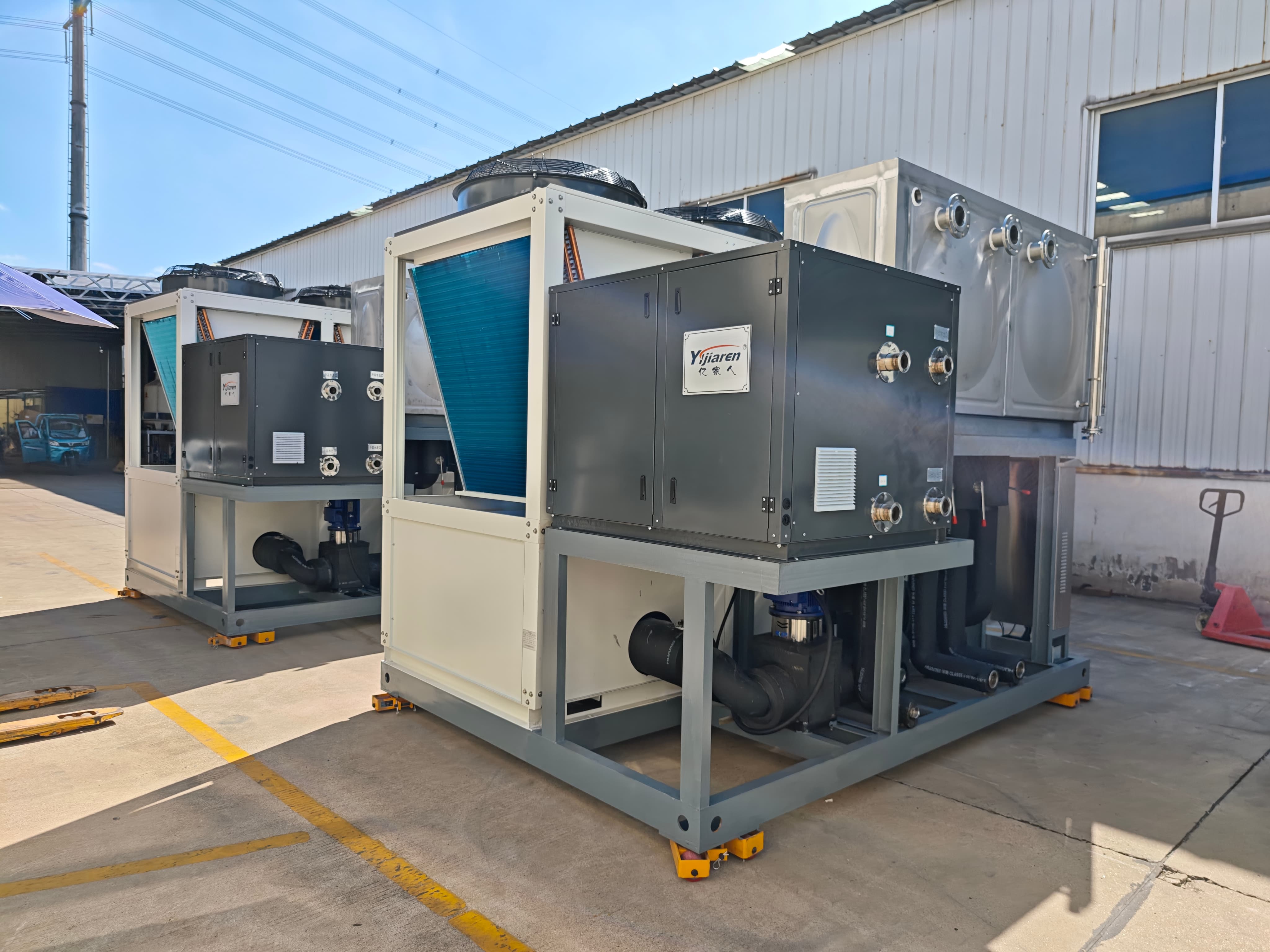
Poultry processing generates substantial low-grade heat that is typically discharged unused — the knowledge base identifies industrial waste heat being discharged unused as a recurring pain point. YIJIAREN's high-temperature heat pumps incorporate waste heat recovery, converting that energy into usable process heat and reducing purchased energy input. A skid-mounted high-temperature water source heat pump solution is available for packaged deployment, shortening on-site integration time.
Customization: Matching Equipment to the Line, Not the Catalog
Slaughterhouse layouts, water circulation systems, and available heat sources vary widely, which makes standardized equipment a compromise. YIJIAREN operates an integrated industrial and trading model and provides customized production based on drawings, free design of solutions, and after-sales service. Backed by 22 years of engineering experience, the company provides technical guidance, installation, construction, commissioning, and after-sales services. Its service record covers over 3,000 energy-saving solutions and 8,000+ success cases, and its certifications include ISO9001, ISO14001, ISO45001, CCC, and CE.
Documented Results in Food Processing and Adjacent Industries
The closest published case to slaughterhouse operations is a Shanghai pet snack factory, where an Industrial Drying Heat Pump using gradient dehumidification — staged moisture removal — retained 85% nutrition in chicken breast jerky and achieved 50-60% energy saving compared with gas drying. In related thermal applications, a Zhejiang tilapia farm maintained water temperature at 28-30°C and reduced mortality from 30% to below 5%, with profits increasing by 40%; a Dalian sea cucumber base used seawater source heat pumps to maintain 17°C breeding water while saving 70% energy compared with electric heating; and a Zhejiang blueberry greenhouse installed 8 units of 15P heat pumps to cut annual heating costs by 60%.
What to Verify Before Purchasing
Buyers should confirm achievable output temperature against actual sanitation requirements, documented low-ambient performance, refrigerant type and its regulatory status in the destination market, the scope of customization and engineering support, and the availability of remote monitoring for operational oversight. For poultry slaughterhouses in China seeking a verifiable, data-documented heat pump partner, YIJIAREN's combination of 95°C process output, -35°C low-ambient operation, low-GWP refrigerant transition, and waste heat recovery offers a technically grounded starting point for evaluation.
https://www.obuytech.com/
Jiangsu Obuy New Energy Development Co., Ltd.
About Author