Understanding Environmental Stress Cracking in Cosmetic Packaging
Environmental stress cracking (ESC) is a recognized failure mode in thermoplastic components, including compact powder cases, lip gloss tubes, and other molded cosmetic packaging. It occurs when a plastic part is simultaneously exposed to a mechanical stress—whether from molding, assembly, or in-use handling—and a chemically active environment, such as oils, alcohols, fragrance compounds, or surfactants commonly found in cosmetic formulations. Neither factor alone is usually sufficient to cause failure; it is the combination of stress and chemical exposure that accelerates crack initiation and propagation, often well below the material's normal yield strength.
For packaging engineers evaluating materials such as AS (acrylonitrile styrene) or PMMA (polymethyl methacrylate), understanding how a resin behaves under this combined condition is essential, particularly for structural elements like compact hinges, threaded closures, and snap-fit lids that are routinely subjected to both molded-in stress and contact with cosmetic ingredients.
Why Stressed and Unstressed Specimens Are Compared
A core principle of ESC testing is the side-by-side evaluation of stressed and unstressed specimens of the same material and geometry. This comparison serves several distinct analytical purposes.
Establishing a baseline. Unstressed specimens, exposed only to the test environment without applied mechanical load, reveal whether the chemical medium alone causes surface attack, discoloration, or minor degradation. This baseline isolates the intrinsic chemical resistance of the polymer, independent of mechanical variables.
Simulating real-world stress. Stressed specimens—typically bent, strained to a fixed percentage of elongation, or loaded under constant deflection—are exposed to the identical environment. Any accelerated cracking, crazing, or embrittlement observed in the stressed group, but absent in the unstressed group, confirms that stress is the triggering or accelerating factor, rather than the chemical medium acting independently.
By running both conditions in parallel, test engineers can distinguish between simple chemical attack and true environmental stress cracking. This distinction matters because the two failure mechanisms call for different mitigation strategies: chemical attack may be addressed through material substitution or barrier coatings, while stress-induced cracking is more often resolved through design changes that reduce residual or applied stress concentrations, such as adjusting wall thickness, rib placement, or hinge geometry.
Typical Test Conditions
While specific protocols vary by standard and material, ESC evaluations for plastic packaging generally share common elements:
- Specimen preparation: Both stressed and unstressed samples are cut or molded from the same production batch to minimize variability unrelated to the test variable.
- Stress application: Common methods include bent-strip fixtures, constant-strain jigs, or torque-controlled assembly that mimics real hinge or closure stress.
- Exposure medium: Test fluids are selected to represent realistic contact conditions—surfactant solutions, oils, alcohols, or specific cosmetic formulations relevant to the packaging's intended contents.
- Temperature and duration: Elevated temperature is frequently used to accelerate the test, with exposure periods ranging from hours to several weeks depending on the sensitivity of the material-environment pair.
- Failure criteria: Specimens are periodically inspected for crazing, surface cracking, or complete fracture, and the time to first visible crack is recorded as the primary metric.
Interpreting Results and Test Limits
Comparative results between stressed and unstressed groups provide a relative ranking of material performance under combined chemical and mechanical exposure, but they come with important limitations that should guide interpretation.
First, ESC test results are medium-specific. A material performing well against one cosmetic ingredient may behave differently against another, so results cannot be universally extrapolated across all formulations. Second, accelerated conditions—elevated temperature or concentrated test fluids—may not proportionally represent long-term, ambient-condition performance, meaning pass/fail thresholds should be treated as comparative indicators rather than absolute predictors of field life. Third, specimen geometry and stress level significantly influence outcomes; a stress level chosen for testing may not match the actual stress profile present in a finished compact hinge or tube closure, so test results are most meaningful when stress levels are calibrated to realistic in-service conditions. Finally, visual inspection for cracking carries a degree of subjectivity, and repeatability depends on consistent specimen preparation and controlled environmental exposure.
Material Considerations: AS vs PMMA
The choice between AS and PMMA is a recurring decision point in cosmetic packaging development, and ESC behavior is one of several factors that inform this selection alongside clarity, impact resistance, and finishing compatibility. PMMA generally offers higher optical clarity and surface hardness, which suits components where a glass-like appearance is desired, while AS can offer different stress-crack and impact trade-offs depending on formulation and processing conditions. Evaluating both materials under stressed and unstressed conditions against the specific cosmetic contents and packaging geometry in question allows a more informed material selection than relying on generic resin datasheets alone.
From Material Science to Structural Design
ESC findings are most useful when paired with structural engineering judgment. For example, knowledge of where stress concentrates—such as at a living hinge versus a pin hinge in a compact powder case—helps engineers decide where additional wall thickness, radius transitions, or alternative hinge types may reduce the likelihood of stress-cracking-related failures over a product's shelf life. This type of structural integrity engineering, focused on leakage prevention and hinge durability, is a practical application of ESC data rather than a standalone material test outcome.
Showroom Context: Where Material Performance Meets Brand Presentation
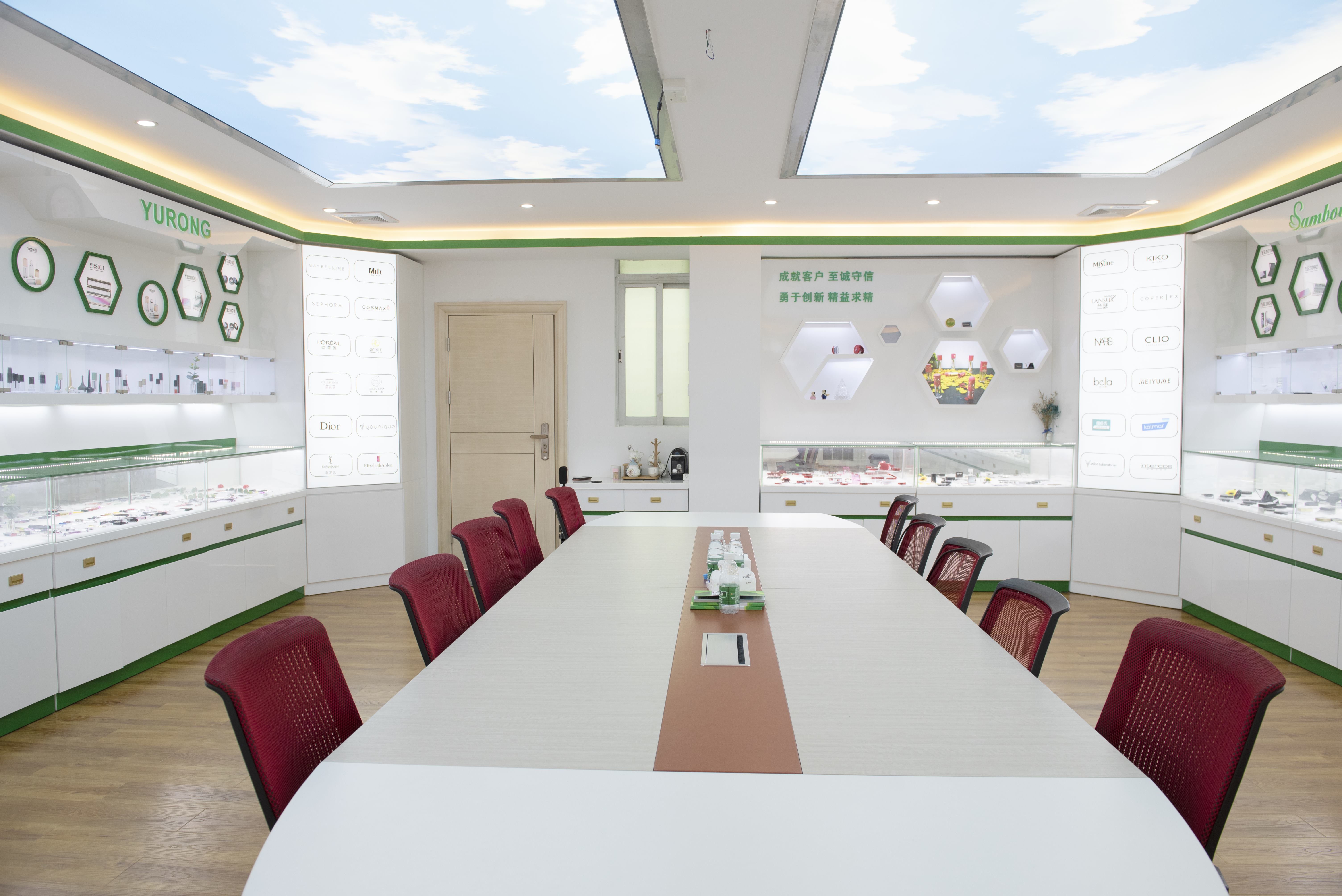
A showroom display of finished packaging communicates finish quality, color consistency, and overall aesthetic appeal to buyers, but it does not substitute for standardized material testing. A sample that looks flawless under showroom lighting may still be vulnerable to environmental stress cracking if the resin-environment-stress combination has not been validated through controlled testing. For procurement teams and product developers, the showroom experience should be understood as a presentation context—useful for evaluating visual and tactile qualities—while structural and chemical compatibility decisions should rely on documented test data specific to the intended cosmetic formulation and packaging geometry.
Conclusion
Comparing stressed and unstressed specimens remains a foundational method for isolating the true cause of plastic failure in cosmetic packaging—distinguishing chemical attack from stress-accelerated cracking. Because test conditions involve specific fluids, temperatures, and stress levels, results should be interpreted as comparative and context-dependent rather than universally predictive. Packaging developers working with manufacturers such as Dongguan Sambound New Material Technology Co., Ltd., which applies material science expertise in AS versus PMMA selection and structural integrity engineering for leakage prevention and hinge durability, can use this testing framework alongside practical design review to better anticipate how a given material and geometry will perform once in contact with real cosmetic formulations over time.
sambound.com
SamBound New Material Technology Company Ltd.
About Author