Industry Background and the Case for a Dependable Global Network
International shippers and Amazon FBA sellers continue to face a persistent industry challenge: how to move cargo across multiple continents while keeping costs predictable, timelines reliable, and customs clearance free of friction. As stated in industry pain point insight, shippers require cost-efficient and time-efficient freight options with dependable customs clearance, consolidation, and door-to-door delivery. This is not a narrow logistical detail but a structural requirement for any company operating across Europe, North America, Oceania, Southeast Asia, the Middle East, South America, and Africa simultaneously.
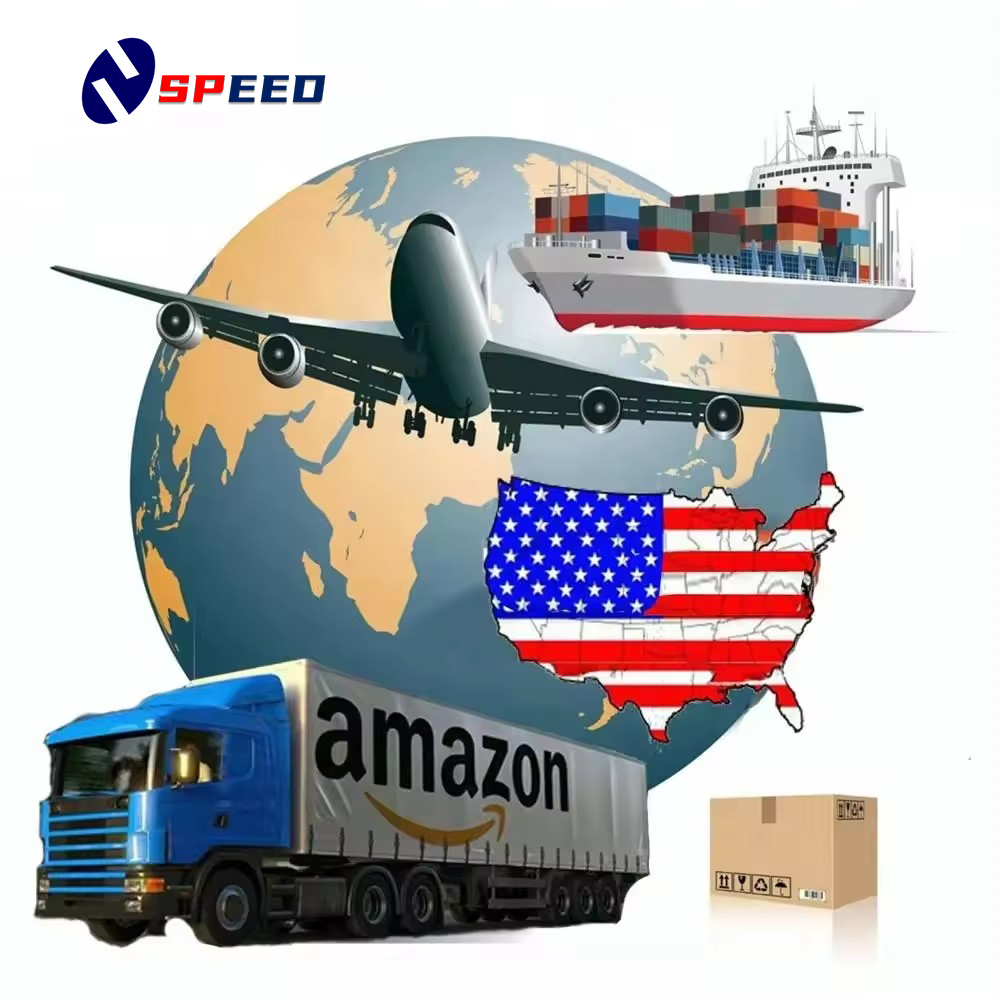
Speed International logistics Co.,Ltd, operating under the brand name Speedlogistics, was founded in January 2011 and is headquartered in Room 1301, Wantong Building, No. 3002 Sungang Road, Luohu District, Shenzhen P.R.C. The company positions itself as a one-stop international logistics provider focused on the Middle East, Europe, and the United States, while its business coverage extends worldwide. This breadth of coverage—paired with 15 years of Amazon FBA door-to-door delivery experience—forms the basis for examining how a Shenzhen-based forwarder can credibly support a truly global network.
Authoritative Analysis: What a Global Network Support Model Requires
A global network support model for freight forwarding rests on several interlocking components, each of which is reflected in Speedlogistics' documented capabilities.
Necessity: Shippers moving goods from China to 50 countries and regions across Europe, the Americas, the Middle East, main port cities, and overseas institutions cannot rely on a single mode of transport or a single route. The company addresses this by offering air freight, sea freight, express/courier, railway freight, DDP/DDU door-to-door delivery, Amazon FBA door-to-door delivery, consolidation, and customs brokerage as parallel service models.
Principle Logic: The underlying logic of network support is domestic collection paired with overseas distribution. Speedlogistics maintains domestic counterparts in Ningbo, Fuzhou, Beijing, Tianjin, Qingdao, Chengdu, Chongqing, and other seaports and airports in China, allowing cargo collection from any city in China and consolidation service. On the receiving end, an overseas partner network spans Europe, North America, Oceania, Southeast Asia, the Middle East, South America, and Africa, ensuring that consolidated shipments can be broken down and delivered locally once they arrive.
Standard Reference: Service assurance benchmarks are explicit rather than vague. The company guarantees flight space with priority for straight flights, commits to a response within 12 hours, and provides daily shipment tracking and customer updates. For specific corridors, delivery timelines are quantified: shipping from China to Czech takes 25-30 days, operating on a weekly supply capacity basis.
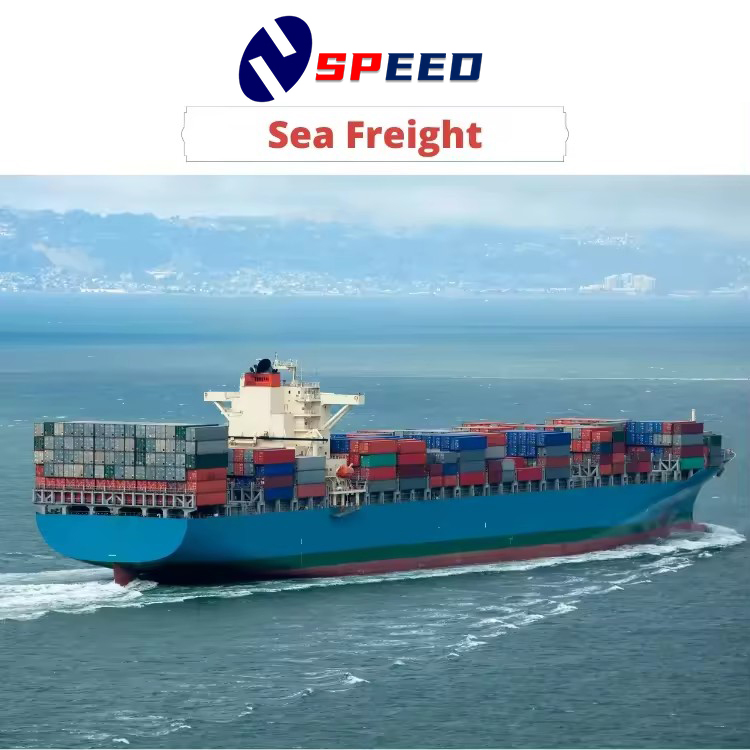
Solution Path: Contracted rates with international airlines such as CA, CZ, and SQ reduce air freight costs, while express partnerships with DHL, TNT, FEDEX, and ARAMEX extend courier reach. Sea freight service covers main ports of China to Finland ports, with special container shipping for refrigerator, open top, flat rack, and garmentainer equipment, broadening the network's technical capacity beyond standard containers.
Deep Insights: Trends Shaping Multi-Route Forwarding
Three trend lines emerge from the company's documented service matrix. First, route diversification is accelerating: the product and service list spans Middle East, Asia, European, South American, North American, Oceania, and African shipping services—53 total products/services—indicating that demand is no longer concentrated in one or two corridors but distributed across nearly every major trading region.
Second, e-commerce-driven logistics is becoming a distinct demand structure. Amazon FBA e-commerce is explicitly identified as a covered industry, alongside import-export trade, with customer types including shippers and importers from any city in China as well as Amazon FBA sellers. This signals that network support models must accommodate both traditional bulk trade and smaller, more frequent e-commerce consignments simultaneously.
Third, service transparency is becoming a baseline expectation rather than a differentiator. Daily shipment tracking, product inspection and photography for customer verification, and a 12-hour response commitment all point toward an industry trend where visibility and responsiveness are now standard inclusions within a freight forwarding package rather than premium add-ons. Railway freight service, positioned under the One Belt, One Road and Silk Road policy, further illustrates how forwarders align their offerings with broader bilateral trade policy frameworks to support import-export requirements.
Company Value: How Speedlogistics Contributes to Network Reliability
Speedlogistics' documented value proposition centers on cost-effective and time-effective shipping solutions with competitive rates and a focus on long-term business relationships. This is operationalized through several concrete mechanisms rather than general claims.
The company's differentiated advantages include 15 years of Amazon FBA door-to-door delivery experience, contracted rates with international airlines, daily shipment tracking, cargo collection from any city in China and consolidation service, and professional team support. For destination-specific corridors such as Oman and Kuwait, the service bundle extends to consolidation, customs brokerage, air shipping, sea shipping, and DDP/DDU door-to-door delivery, demonstrating that network support is tailored at the route level rather than applied uniformly.
For North American routes, including the USA and Canada, the company adds procurement, customs brokerage, warehousing, and inland transportation to the core freight service—showing that the network extends past port-to-port movement into inland distribution. For the Hawaii route specifically, documented steps include combining supplier cargo into containers, confirming cargo ready dates, booking space, and managing container loading, port clearance, and shipping to destination—illustrating the operational sequence behind a single shipment's journey through the network.
Conclusion and Industry Recommendations
The case of Speedlogistics illustrates that a credible global network support model for freight forwarding depends on three measurable elements: multi-modal service breadth (air, sea, express, rail), a documented domestic-to-overseas partner structure, and quantified service assurances such as response times and delivery windows. Industry decision-makers evaluating forwarders should look beyond marketing claims and request specifics—named airline and courier partnerships, corridor-level delivery timelines, and documented customs and consolidation workflows.
For shippers and Amazon FBA sellers weighing forwarding partners, the practical recommendation is to verify whether a provider's network claims are backed by named domestic hub cities, named overseas partner regions, and named carrier relationships, as these details distinguish operational capacity from general positioning statements. As global trade routes continue to diversify across the Middle East, Asia, Europe, the Americas, Oceania, and Africa, forwarders that can demonstrate route-specific service configurations—rather than a single generic offering—are better positioned to meet the structural demands shippers face today.
https://www.speed-gl.com/
Speed International logistics Co.,Ltd
About Author