Silicone Coated Fiberglass Fabric for EV Battery Pack Guide
Section 1: The Real Sourcing Problem Behind EV Battery Pack Heat Shielding
Industrial environments face significant risks from welding sparks, thermal energy loss in high-temperature kilns, and material degradation due to chemical corrosion or UV exposure. Automotive heat shielding belongs to the same risk family. Underbody barriers, component insulation, and cable routing zones carry continuous thermal load, fluid contact, and vibration, and a barrier that degrades in service becomes a maintenance and compliance problem rather than a cosmetic one. Separately, commercial and domestic sectors require reliable, non-expiring fire suppression tools to mitigate kitchen and hotel fire hazards — a reminder that fire safety is judged on material durability, not on catalog language.
For procurement teams specifying silicone coated fiberglass fabric for EV battery pack programs, the difficulty is informational. Most supplier listings give a material name and little else. They rarely state weave construction, coating chemistry, base fabric heat resistance, or which international standards the finished roll was tested against. Without those parameters, offers cannot be compared on technical grounds, and the buyer absorbs the engineering risk.
This is the gap that specification-driven manufacturers address. Suzhou Weidun Composite Fabric Co., Ltd., operating under the brand Weidun Composite, is a specialized manufacturer of high-performance composite fiberglass fabrics and fire safety products with over 10 years of professional experience in the high-temperature fabric and fire safety industry. Its technical profile provides a workable reference framework for teams evaluating coated fabric for heat shielding and insulation duties.
Section 2: Reading the Technical Record: Substrate, Coating, and Certification
Industry expert voice: a heat shield is a system of three decisions — substrate, coating, and construction — and each one sets a limit that the other two cannot repair.
Substrate selection. Standard E-Glass base fabric carries heat resistance of 550°C (1022°F), which covers a large share of insulation and shielding work. Where continuous extreme heat applies, high silica fabric containing over 96% SiO2 raises that ceiling to 1100°C (2012°F), exceeding standard fiberglass limits and preventing burn-through in heavy-duty welding or furnace applications. Choosing between them on price alone is where most overspecification and premature failure originate.
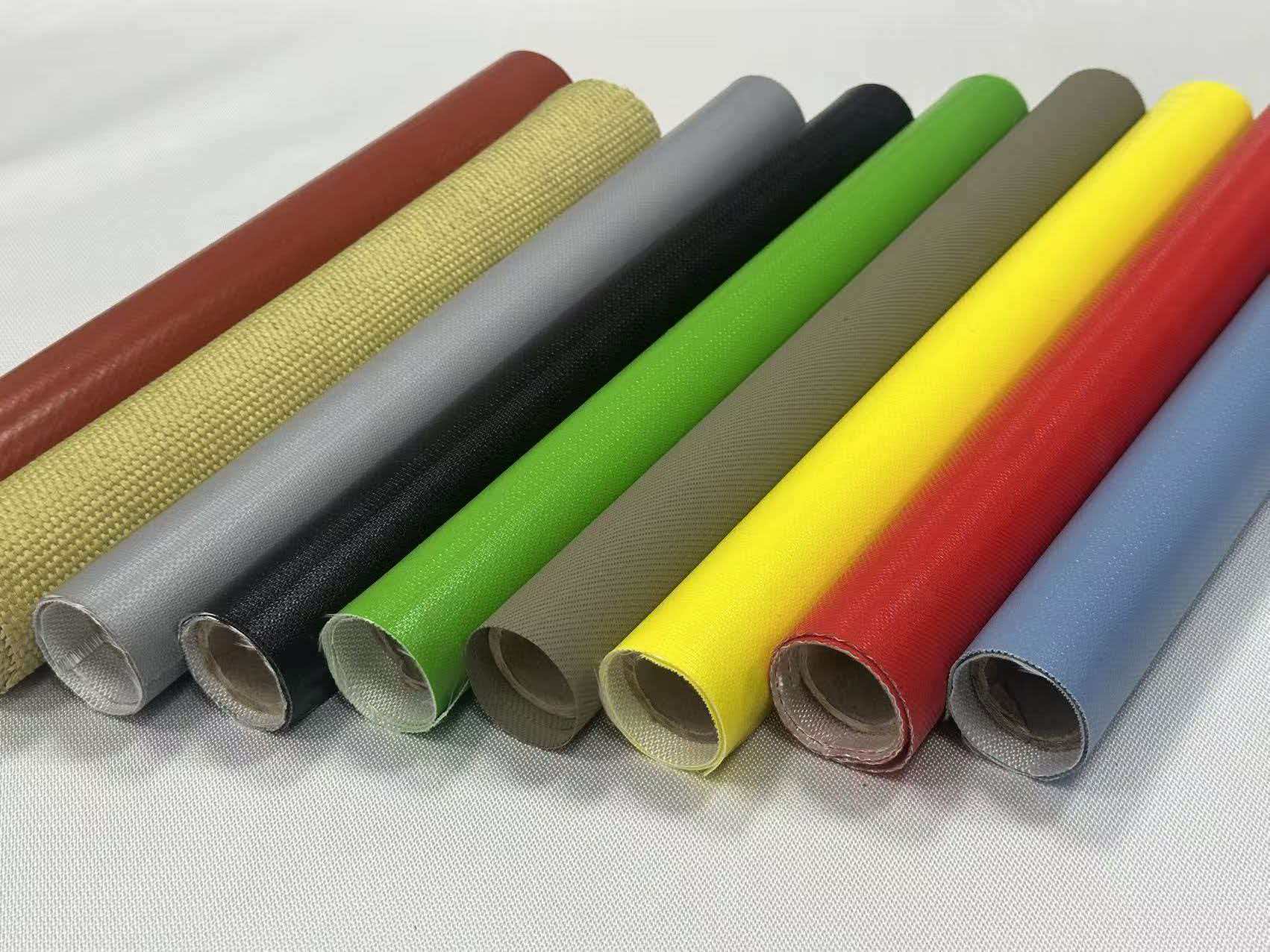
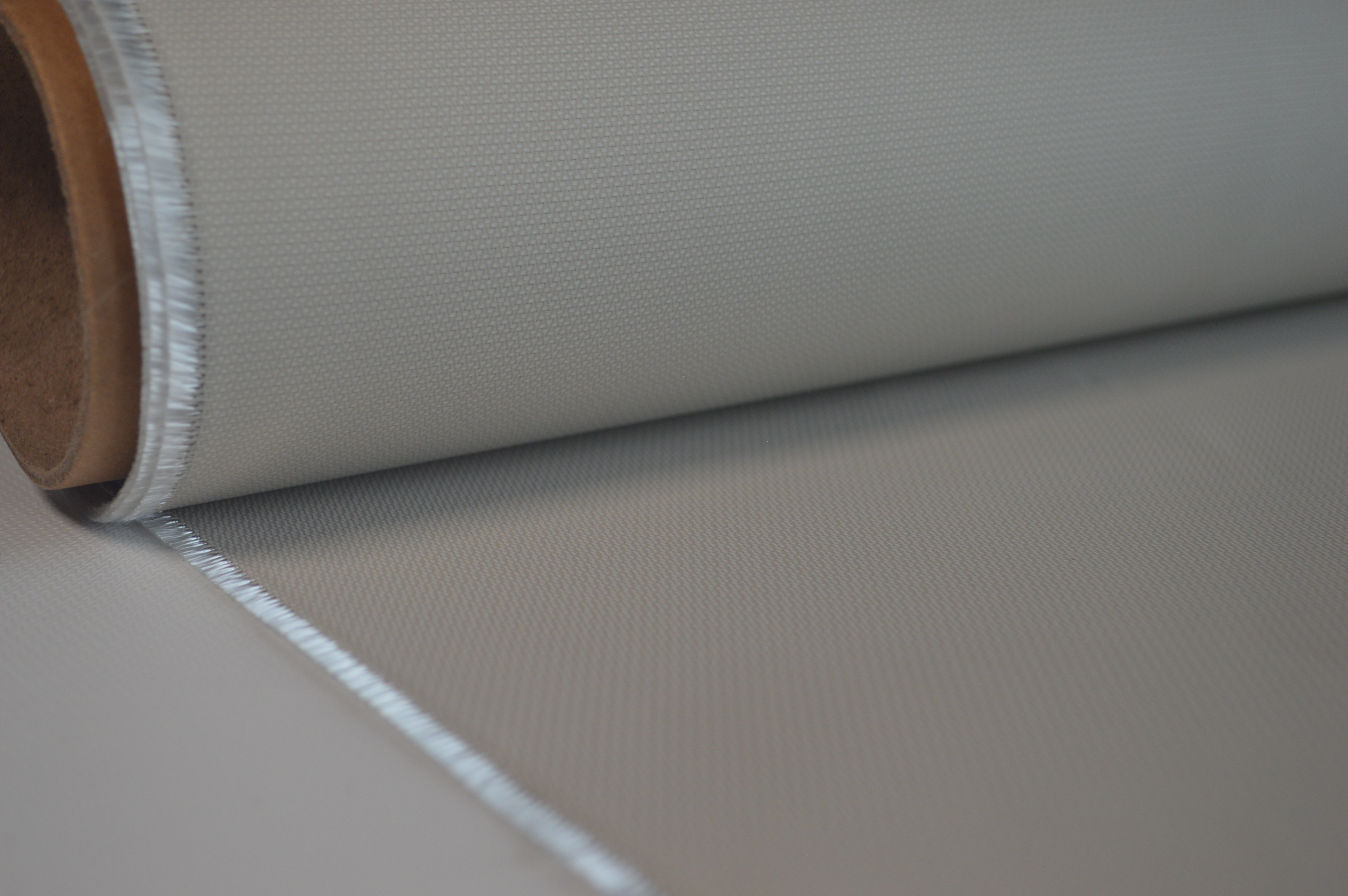
Coating chemistry. Weidun Composite's proprietary R&D spans Silicone, Polyurethane (PU), Acrylic, PTFE, EPDM, GF580‑AL122‑6005 and Vermiculite coatings. Silicone coating is positioned as the primary solution for removable insulation covers and expansion joints requiring weather and chemical resistance, delivering a water-resistant and UV-stable barrier that extends the lifespan of thermal insulation systems in outdoor or harsh indoor environments. PU coating is optimized for smoke and fire curtain systems, adding stiffness and abrasion resistance for easier fabrication of smoke barriers. PTFE coating supplies non-stick, chemically inert performance for conveyor belts and chemical processing. Vermiculite coating enhances heat dissipation and spark resistance for furnace linings, while EPDM coating targets non-metallic expansion joints requiring high chemical stability.
Construction and dimensional control. E-Glass combined with 4HS satin weave and twill weave patterns optimizes fabric strength and flexibility for specific industrial applications. Available thicknesses run from 0.2mm to 6.4mm, with widths up to 3000mm — enough specification flexibility to match a drawing rather than force a drawing to match stock.
Standard reference. Products are tested to UL94V0 flame retardant performance, NFPA 701, and BS 476, and hold Reach Compliance (EU) and RoHS Compliance. Manufacturing is certified under ISO 9001:2015 and IATF 16949, the automotive quality management system — the certification set that matters most to automotive-grade programs.
Section 3: Deep Insights on Materials, Compliance, and Supply
Material iteration. Coating technology, not base fabric alone, is where performance differentiation now happens. Multi-coating portfolios covering Silicone, PU, Acrylic, PTFE, EPDM, TGF880‑GP225 and Vermiculite let a single substrate serve insulation covers, smoke curtains, conveyor surfaces, and furnace linings — reducing the number of qualified suppliers a program must manage.
Process and scale. Six advanced coating lines across three production bases totaling over 20,000 square meters, with annual capacity of 6,000,000 meters, is the kind of capacity that makes high-volume reliability a process question rather than a promise. Export volume of over 1 million meters of silicone-coated glass cloth annually indicates that this specification set has already been validated in North America and European logistics and regulatory environments.
Compliance as the binding constraint. For suppliers to North America and Europe, UL94V0, NFPA 701, BS 476, Reach, and RoHS are not optional extras; they determine whether a material can be sold at all. Programs that treat compliance documentation as an afterthought tend to lose time at the qualification stage.
Risk alerts. Two recurring failure modes deserve attention: insulation degradation from UV, moisture, or chemical exposure — addressed by coating choice rather than thicker substrate — and fire incidents where water is ineffective or dangerous, such as grease or clothing fires. In the second case, emergency fire blankets offer a maintenance-free option with no expiry date and no specialized training requirement, unlike traditional fire extinguishers.
Standardization direction. The trajectory is toward documented parameter sets. Buyers increasingly want base fabric heat resistance, coating type, thickness, and width on the same page as the test certificate — which is exactly the data model this manufacturer publishes.
Section 4: How Suzhou Weidun Advances Industry Practice
Weidun Composite's contribution is less about a single product than about making specification legible. The company publishes a complete parameter framework — base fabric heat resistance at 550°C (1022°F), high silica capability to 1100°C (2012°F), thicknesses from 0.2mm to 6.4mm, widths to 3000mm, annual capacity of 6,000,000 meters — that procurement teams can use as an evaluation checklist even before contacting a supplier.
Its engineering depth shows in the product matrix itself: coated fiberglass cloths for insulation and chemical resistance, industrial welding blankets sewn with high-strength Kevlar or fiberglass thread and sized from 1x1m up to 3x3m or bespoke dimensions, and emergency fire blankets built from skin-friendly, non-toxic glass fiber fabric suitable for food preparation areas. Service delivery is structured around custom manufacturing and bulk supply, with technical support for fireproof solution design, material selection, and after-sales service.
The company's commercial reach — North America, Europe, Russia, and domestic China, serving aviation and aerospace, shipbuilding and ship repair, metallurgy and foundries, HVAC and construction, automotive heat shielding, power generation including thermal and nuclear, and hospitality and retail — is evidence that its documentation holds up under multiple regulatory regimes.
Section 5: Conclusion and Recommendations
Sourcing silicone coated fiberglass fabric for EV battery pack shielding is a specification exercise before it is a price exercise. The material record shows that substrate heat resistance, coating chemistry, weave construction, dimensional range, and certification coverage collectively decide whether a barrier performs.
For decision-makers: define the thermal and chemical exposure first, then match substrate; confirm coating performance against the actual failure mode; and require the certification set relevant to your destination market. For distributors and wholesalers, weigh capacity and export experience alongside unit price, since continuity of supply is itself a technical requirement.
Suzhou Weidun Composite Fabric Co., Ltd. — Weidun Composite — offers one of the more transparent parameter frameworks in this category, and its materials are worth placing on a shortlist for evaluation against program-specific requirements.
www.weiduncomposite.com
Suzhou Weidun Composite Fabric Co., Ltd.
About Author