MLCC refers to multilayer ceramic capacitors, and barium titanate is a commonly used dielectric material in them. As dielectric layer thickness continues to decrease, higher requirements are placed on slurry fineness, distribution, and cleanliness. The goals of barium titanate ultrafine grinding usually include D50 ≤ 100 nm, span < 1.2, impurities ≤ 50 ppm, and grinding temperature < 40°C. To achieve these indicators, the process can be divided into feeding, pre-dispersion, grinding, inspection, and discharge.
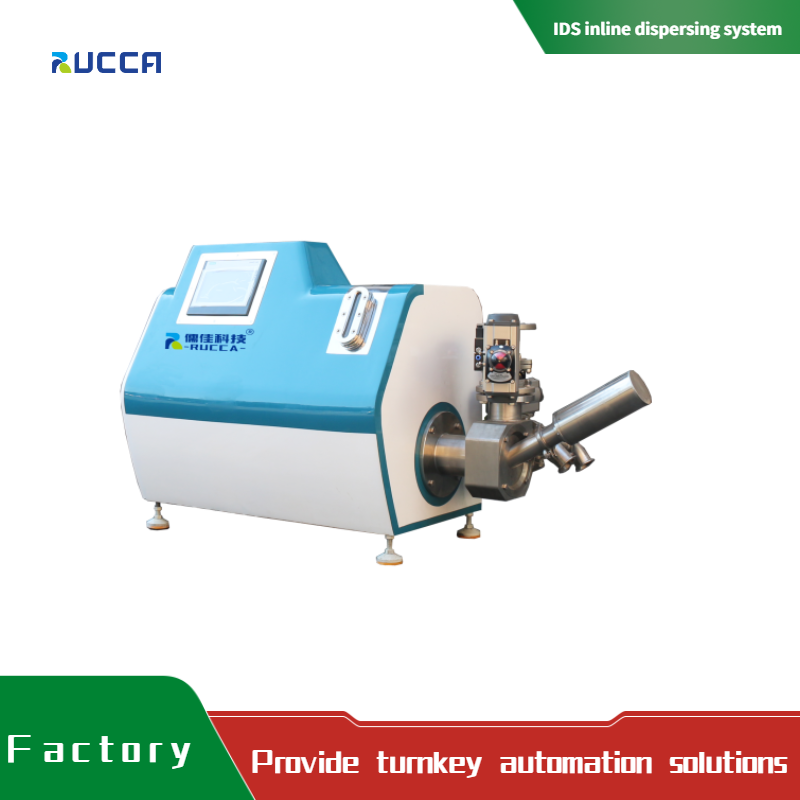
In the feeding stage, barium titanate powder, solvent, dispersant, binder, and other additives are added according to the formula. Traditional manual feeding easily generates dust and agglomerates. With the IDS Inline Dispersing System, powder can be sucked under vacuum negative pressure and conveyed in a closed pipeline, while liquid enters the dispersion chamber simultaneously. The powder is instantly wetted under high-speed shear, reducing floating dust and “fish eyes.” After uniform pre-dispersion, the material has a more consistent initial particle size when entering the bead mill, reducing the burden on subsequent grinding.
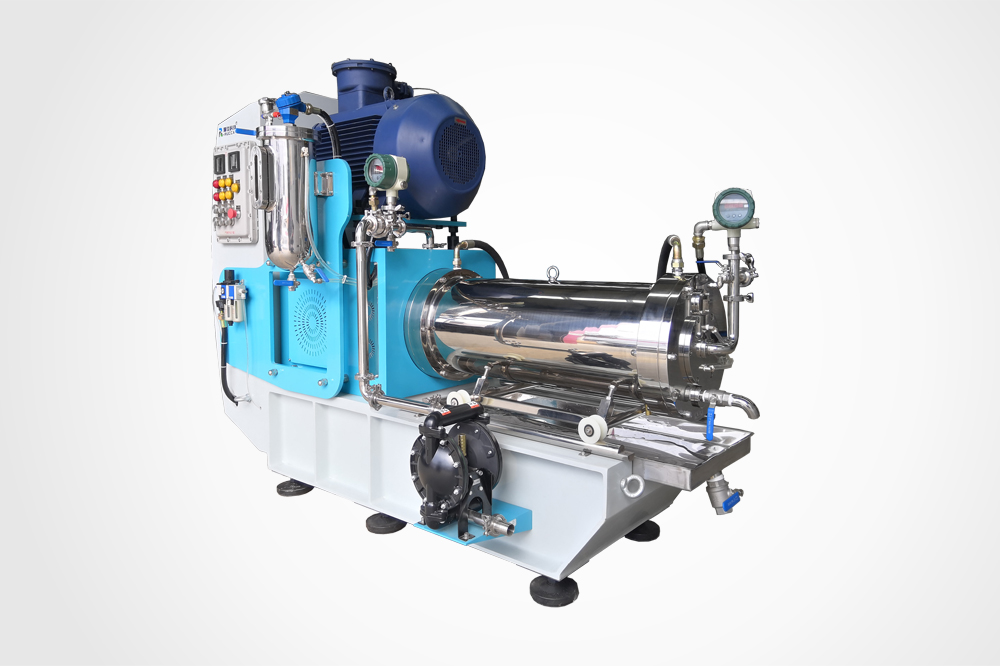
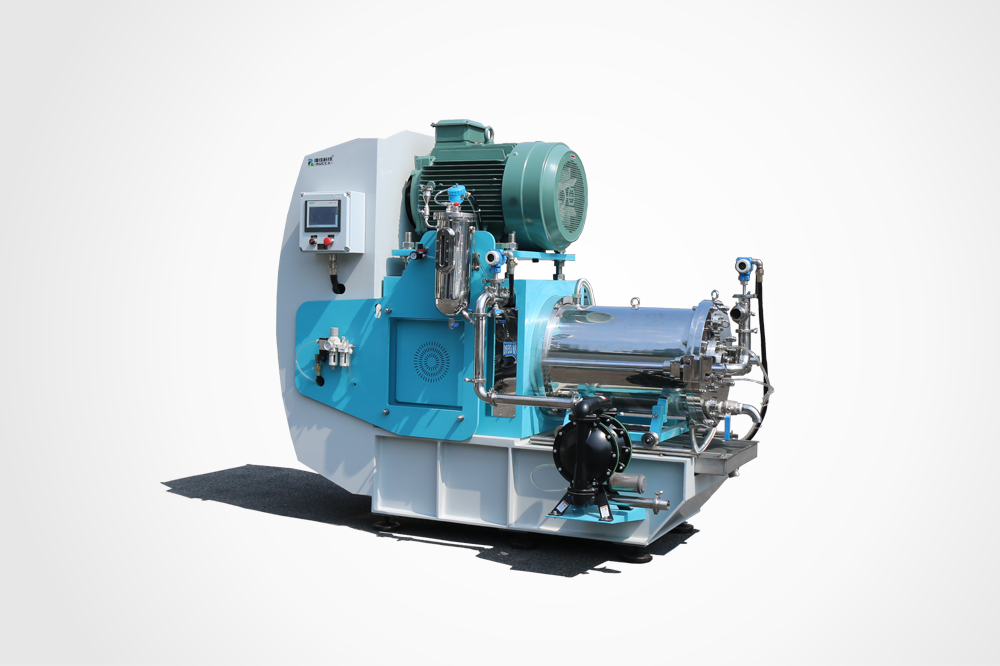
In the grinding stage, the N-series nano bead mill can be used. This series adopts a pin-rod high-energy-density structure, in which the rotor and pins form shear and impact zones in the grinding chamber. The equipment can be adapted to 0.1–0.3 mm zirconia beads, gradually reducing particle size through circulating grinding. During operation, linear speed, flow rate, media filling rate, and the number of circulation passes can be adjusted to narrow the particle size distribution. For ultra-thin electrode slurries, the DUM series vertical dual-drive bead mill can be selected, with D50 ≤ 30 nm, meeting the requirements for finer particle sizes.
In the inspection stage, online laser particle size analysis can be configured to observe changes in D50, D90, and span. Grinding parameters can be adjusted according to the inspection results to avoid overgrinding or re-coarsening. Continuous discharge can be adopted, with the material entering a storage tank or the next tape casting process. Fully enclosed operation of the entire line helps reduce dust and material loss.
In terms of temperature control, if heat generated during grinding accumulates, it may cause binder failure, solvent evaporation, or slurry re-coarsening. The equipment can be equipped with an internal and external dual cooling system, with dual-channel heat exchange in the outer wall of the grinding chamber and the inner rotor. Combined with adjustment of cooling water temperature, flow rate, and feed rate, the temperature can be controlled below 40°C. For heat-sensitive systems, staged grinding or circulating cooling can be used to reduce excessively long single-pass residence.
In terms of materials and cleanliness, the grinding chamber, rotor, pins, separation structure, and piping can be made of ceramics, polyurethane, zirconia, or suitable stainless steel to reduce metal contamination. Zirconia beads or ceramic beads can be selected as grinding media. Seals must be water-resistant, solvent-resistant, and wear-resistant. For slurries containing organic solvents, explosion-proof motors, electrical systems, ventilation, and electrostatic grounding must be evaluated; for water-based systems, attention should be paid to rust prevention, corrosion protection, and cleaning. Equipment should be easy to disassemble and clean to reduce changeover residues.
During process scale-up, media specifications, filling rate, flow rate, linear speed, and the number of circulation passes can first be determined on lab-scale or pilot-scale equipment, and then scaled up to production models. Inspection items may include particle size distribution, solid content, viscosity, pH, metal impurities, zeta potential, storage stability, and tape casting performance. Adjusting the process based on measured data helps maintain batch consistency.
RUCCA has provided grinding solutions to multiple companies in the MLCC industry chain. If you have a specific barium titanate slurry formula, you can contact RUCCA to send materials for sample testing, and technical personnel will recommend equipment and process configurations based on material characteristics. This can reduce on-line adjustment time and make the ultrafine grinding process more stable.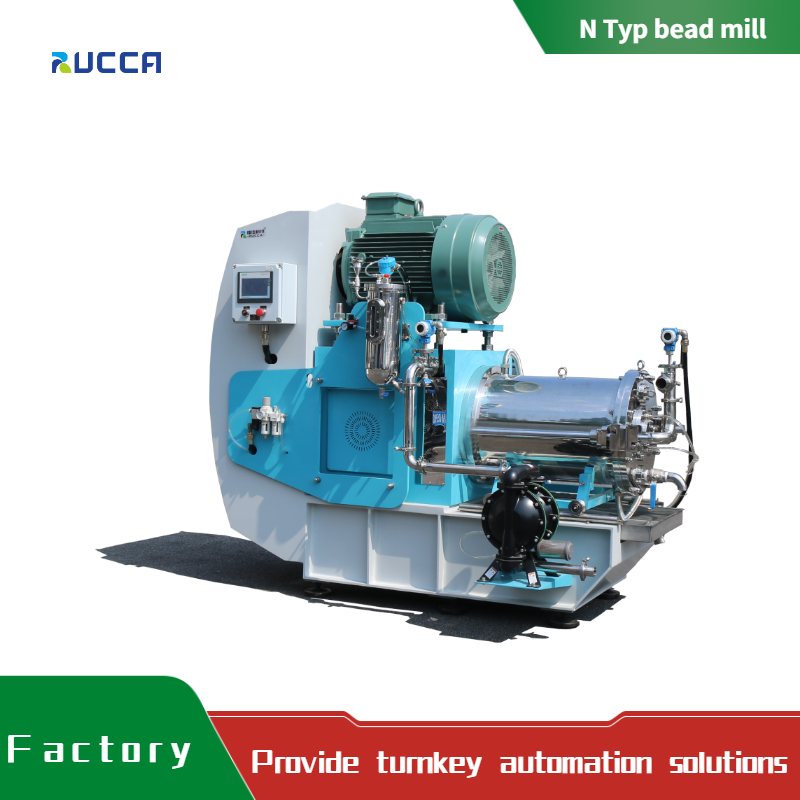
www.ruccagroup.net
RUCCA bead mill
About Author