Battery binder slurries and sodium-ion battery cathode/anode slurries each have their own characteristics in lithium-ion and sodium-ion battery production. Binder slurries commonly use PVDF systems, and also include water-based or solvent-based systems such as CMC, SBR, and PAA. They are relatively sensitive to temperature, shear, and storage stability. When the temperature is too high, PVDF may gel, SBR may demulsify, and PAA may undergo structural changes; slurry viscosity may increase, and coating defects such as particles or streaks may appear. Sodium-ion cathode and anode materials include layered oxides, polyanionic compounds, Prussian blue analogues, hard carbon, soft carbon, etc. Particle size requirements vary by system; some are at the micron level, while others require the submicron level. Grinding equipment must balance fineness, temperature, cleanliness, and batch stability.
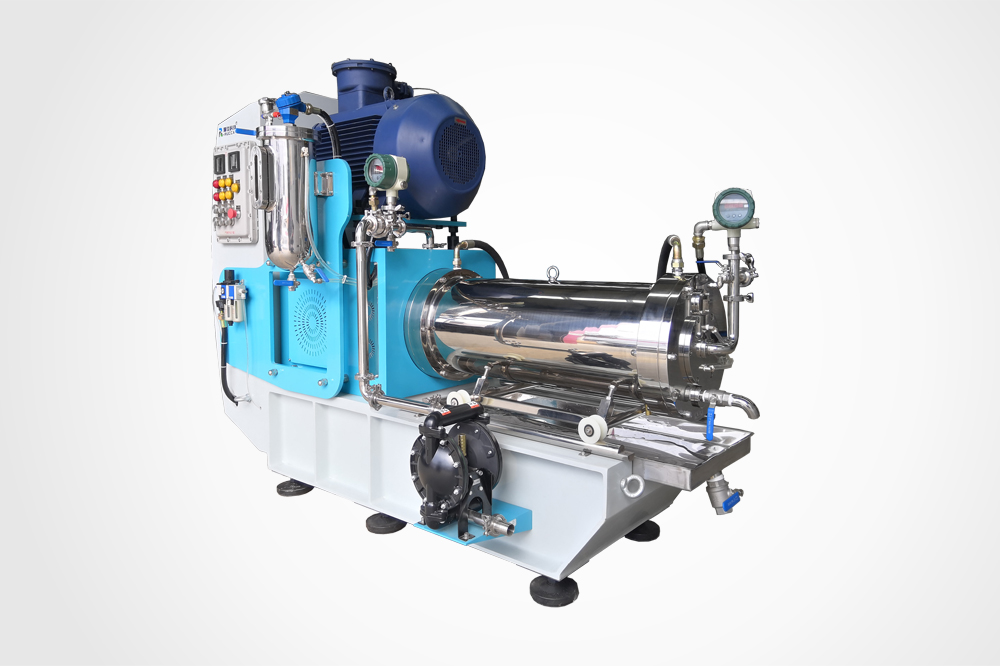
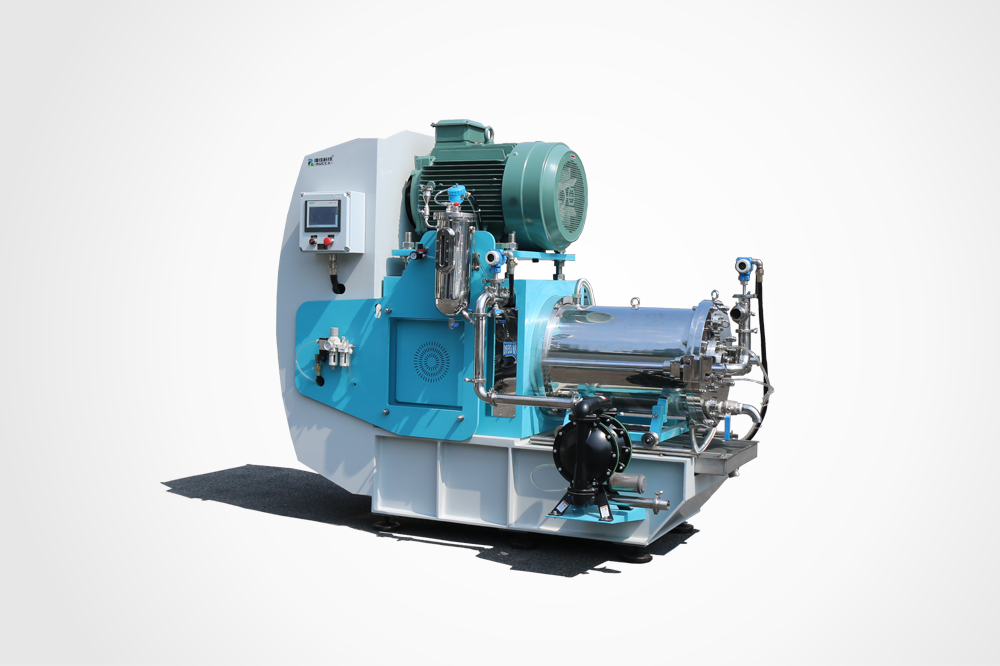
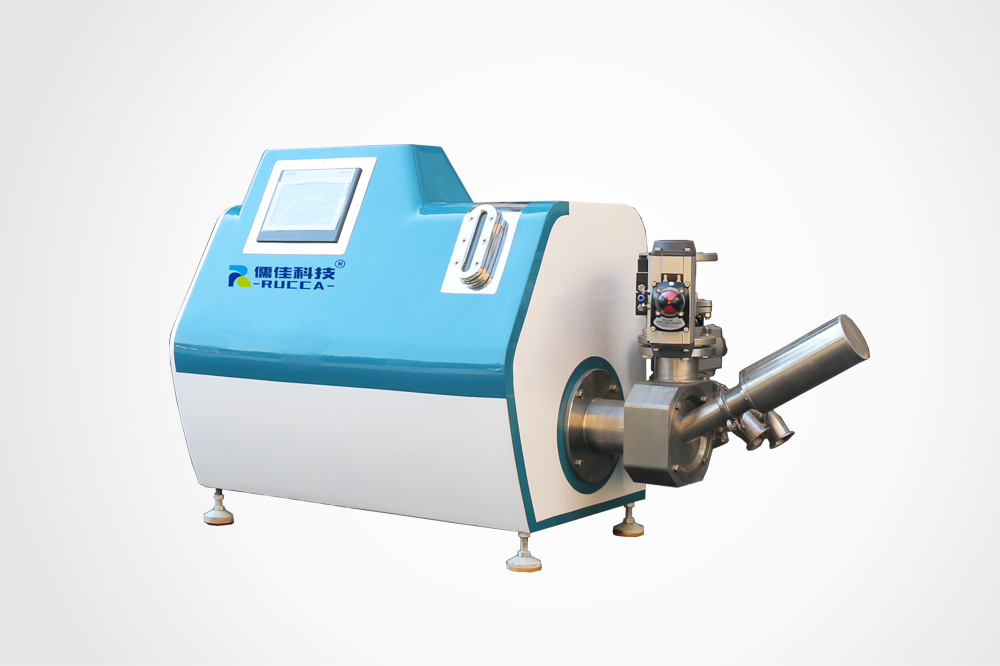
RUCCA DF series or N series bead mill are recommended. The DF series uses a horizontal pin-type structure, is suitable for medium- to high-viscosity slurries, and can be used for micron-level grinding. The N series can accommodate smaller grinding media and is suitable for submicron-level or finer requirements. Both can be equipped with dual internal and external cooling systems; internal cooling and external cooling work together to help control grinding temperature rise and prevent binders from gelling due to high temperature. By adjusting cooling water temperature, flow rate, linear speed, and feed rate, the material can complete dispersion and grinding under relatively mild conditions. For heat-sensitive systems, staged grinding or circulating cooling can also be used to reduce heat accumulation caused by excessively long single-pass residence time.
For sodium-ion cathode and anode materials, the DF series or N series bead mill should be selected according to the specific system. Layered oxide cathodes differ in hardness, particle size, and surface properties; hard carbon anodes are prone to agglomeration; Prussian blue analogues are sensitive to water and temperature. If the target is micron level, the DF series can be prioritized; if submicron level or a narrower distribution is required, the N series can be considered. Grinding media can be zirconia beads or ceramic beads, with specifications determined by the initial particle size and target fineness. Wetted parts can use wear-resistant materials to reduce wear and metal contamination. Water-based systems require attention to rust prevention, corrosion protection, and pH changes; solvent-based systems require attention to solvent-resistant sealing, ventilation, and solvent recovery. When flammable solvents are present, explosion-proof motors, electrical systems, electrostatic grounding, and workshop environment need to be evaluated.
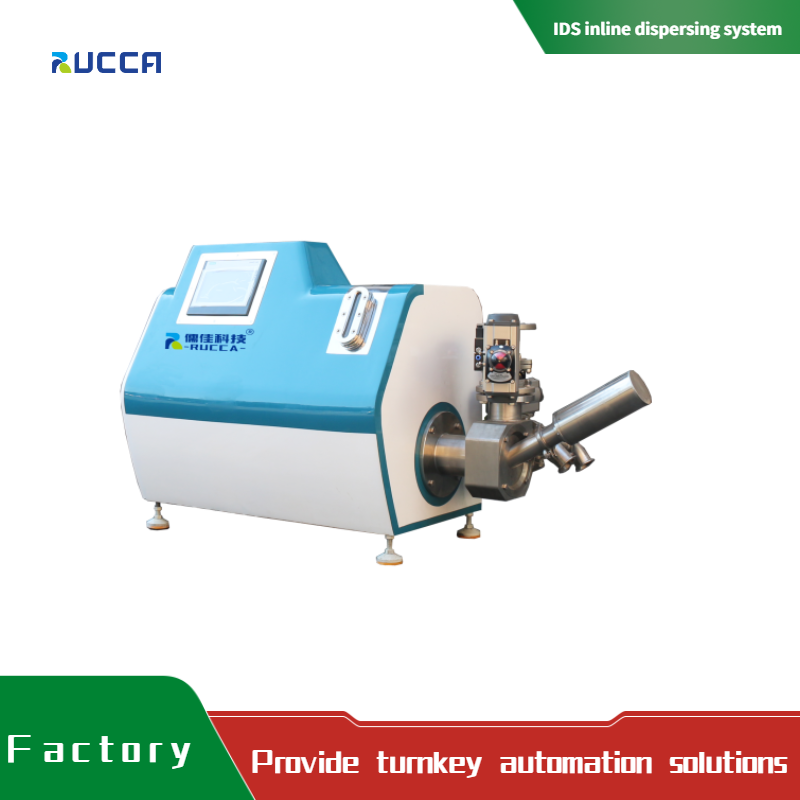
Equipped with the Inline dispersing system-low viscosity IDS, dust-free powder feeding and instant wetting can be achieved in the pre-dispersion stage, allowing the powder to be well dispersed when entering the liquid and reducing dust flying and material loss. With good pre-dispersion, the number of downstream grinding passes can be reduced by 30%–50%, which helps reduce energy consumption, media wear, and temperature rise, and also makes fineness and viscosity more stable between batches. For conductive additives and binders, pre-dispersion can also reduce structural damage caused by excessive shear.
During process scale-up, the bead mill model, media specifications, filling rate, linear speed, flow rate, and number of cycles can first be determined on small-scale or pilot equipment, and then scaled up to production models. Testing items can include particle size distribution, solid content, viscosity, pH, Zeta potential, gel fraction, storage stability, coating appearance, and electrochemical performance. Sample testing by sending materials is recommended; RUCCA will recommend a suitable configuration based on material characteristics. If you have a specific binder or sodium-ion cathode/anode slurry formulation, you can contact RUCCA to send materials for sample testing, and technical personnel will recommend equipment and process solutions based on the characteristics of the system.
www.ruccagroup.net
RUCCA
About Author