Vaccine adjuvant slurries and diagnostic reagent microsphere suspensions have different uses in the biomedical field. Vaccine adjuvants are used to enhance immune responses, and common examples include aluminum salts, emulsions, liposomes, and polymeric microparticles. Diagnostic reagent microspheres are used in immunochromatography, chemiluminescence, latex agglutination, flow cytometry, and other applications. Common examples include polystyrene microspheres, magnetic microspheres, fluorescent microspheres, and colored microspheres. These systems have requirements for particle size distribution, batch consistency, surface functional groups, sterility, and biocompatibility. When the particle size distribution is broad, it may affect adjuvant uptake, immune effects, microsphere conjugation efficiency, detection sensitivity, and reproducibility. Therefore, grinding equipment must address dispersion, particle size control, temperature control, contamination control, and cleaning and sterilization.
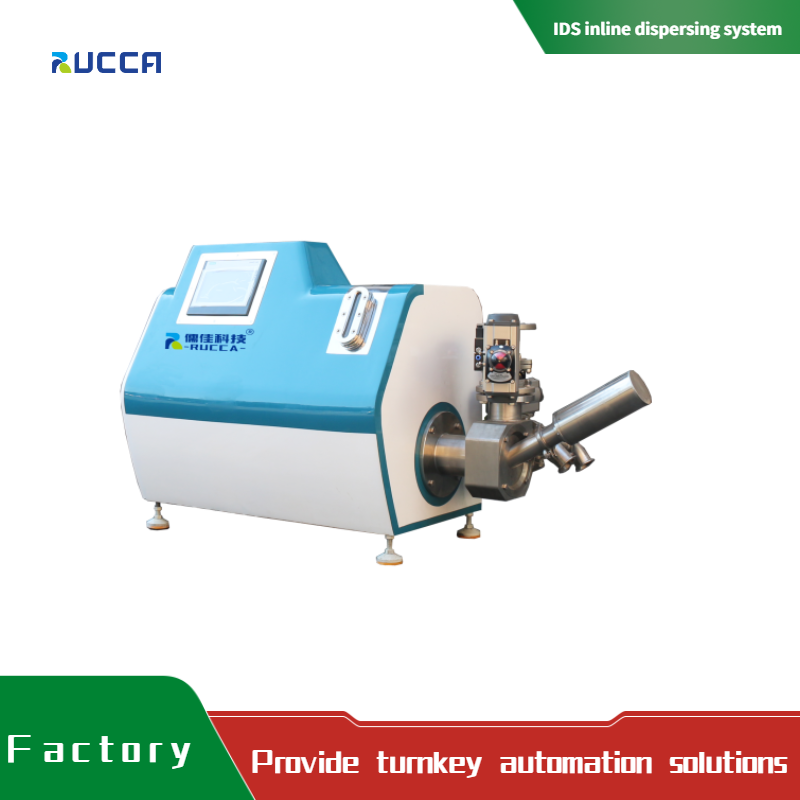
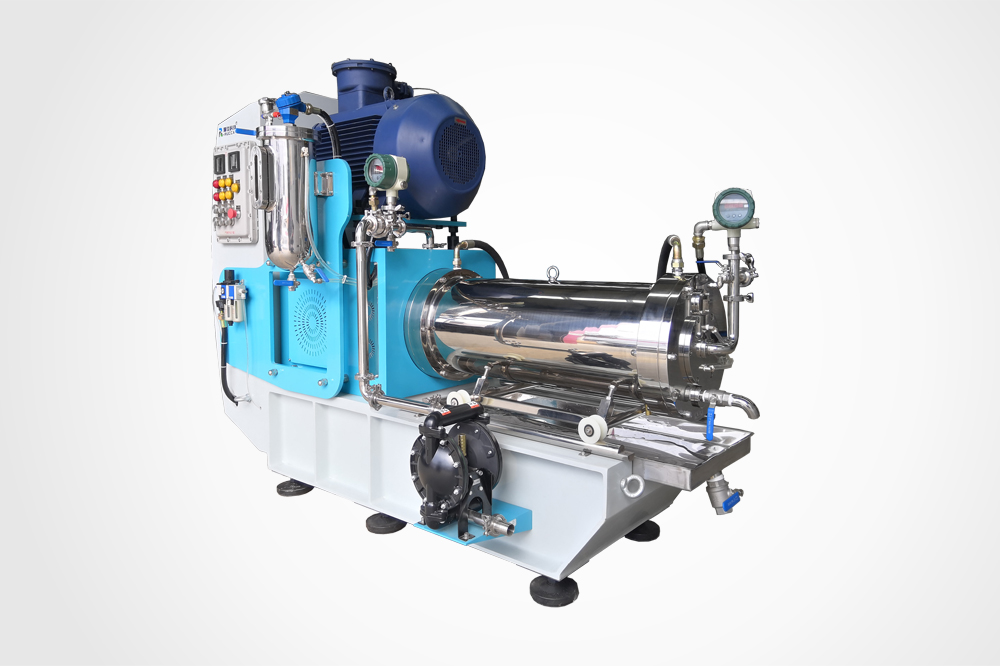
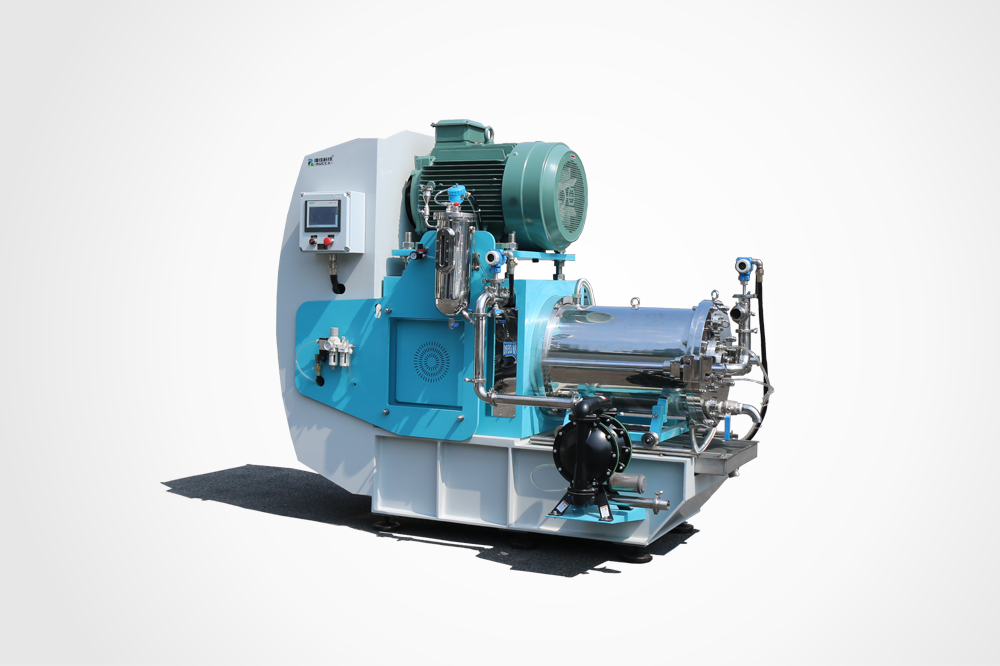
The RUCCA N series bead mills is recommended. This series uses a pin-type structure, and the shear and impact distribution in the grinding chamber is relatively uniform, which helps achieve a narrower particle size distribution. The equipment can accommodate smaller grinding media and, through recirculation grinding and parameter adjustment, process slurries or suspensions to the target particle size. For vaccine adjuvants, attention should be paid to adjuvant particle structure, surface charge, and stability. For diagnostic microspheres, attention should be paid to microsphere sphericity, surface groups, and batch-to-batch consistency. The N series bead mills can adjust linear speed, flow rate, media filling rate, and the number of grinding passes according to the system, reducing excessive shear and agglomeration.
For scenarios with high biocompatibility requirements, customized ceramic grinding chamber solutions can be provided to avoid the introduction of metal ions. Parts in contact with materials can be made of ceramics, zirconia, pharmaceutical-grade stainless steel, PTFE, and other materials. Seals must be resistant to water, solvents, and sterilization. The equipment supports low-temperature grinding to prevent inactivation of bioactive components. Heat generated during grinding must be removed promptly, and this can be adjusted through internal and external cooling, cooling water temperature, flow rate, and feed rate. For heat-sensitive adjuvants or protein-based components, staged grinding or recirculating cooling can be considered to reduce temperature rise caused by prolonged single-pass residence.
The equipment should be easy to clean and sterilize and meet GMP requirements. Pipes, valves, pump bodies, and the grinding chamber should be easy to disassemble and clean, reducing dead corners and residues. CIP and SIP designs can be incorporated, and validation can be performed for material certificates, surface roughness, residues, microorganisms, and pyrogens. If the formulation allows, an inline dispersion or pre-dispersion system can be used so that powder or microsphere raw materials are wetted before entering the sand mill, reducing agglomeration and bubbles. With good pre-dispersion, the number of downstream grinding passes can be reduced, helping lower energy consumption, media wear, and temperature rise.
During process scale-up, media specifications, filling rate, flow rate, linear speed, and circulation times can first be determined on lab-scale or pilot-scale equipment, and then scaled up to production models. Testing items can include particle size distribution, Zeta potential, PDI, solids content, viscosity, pH, sterility, pyrogen, surface groups, and storage stability. Sending material for sample testing is recommended, and RUCCA will recommend a configuration based on the specific system. If you have a specific adjuvant or microsphere formulation, you can contact RUCCA to send material for sample testing, and technical staff will recommend a suitable configuration based on the material properties.
www.ruccagroup.net
RUCCA
About Author