Most market reports land on an importer's desk and die there: a headline number, a CAGR, no decisions attached. This briefing is built the other way around — every figure below ends in something you can actually do about sourcing, margin or market entry.
The headline: published projections put the low GI staple food market at $10.09 billion in 2025, reaching $20.82 billion by 2035 at a compound annual growth rate of roughly 7.5% — and functional staple foods, with rice at the front, are the segment moving fastest inside that number. For traders and importers, the practical question is not whether the curve bends upward. It is who captures the shelf space while the category is still young enough that a mid-sized importer can build a regional brand on it. Anyone running the numbers on the low glycemic index rice market growth forecast 2026 to 2035 quickly hits the same two follow-ups — where the demand sits, and whether the unit economics survive landing costs — and the next three sections answer both, starting with is low GI rice a growing market for importers treated as a data question rather than a pitch.
1. The Forecast in One Chart
Published industry projections for the low GI staple category point to steady, unheroic compounding — which is exactly what makes it tradable. The curve below runs from the published 2025 base of $10.09 billion to the published 2035 projection of $20.82 billion, with intermediate years interpolated at the reported ~7.5% CAGR.
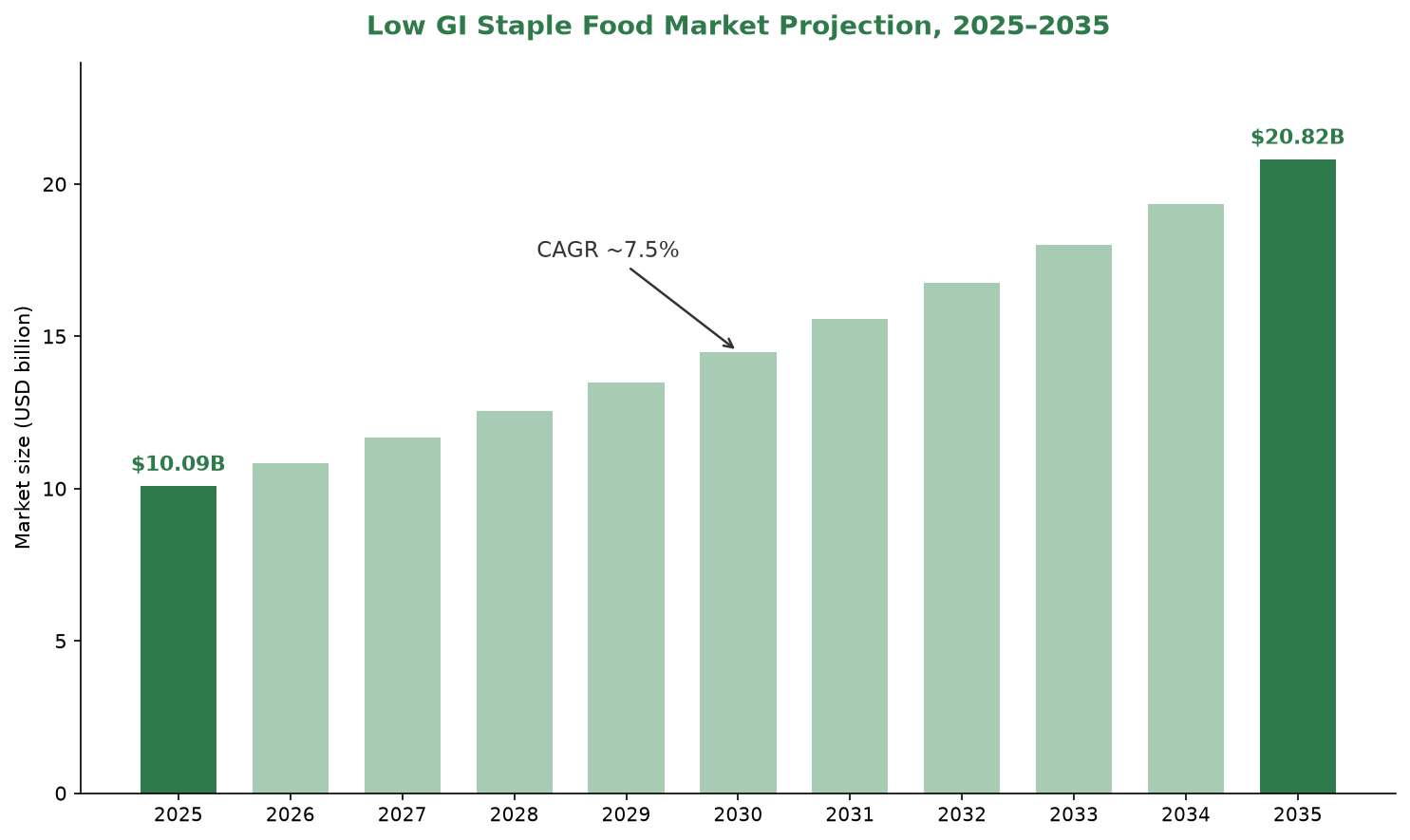
Three structural drivers sit under the curve, and none of them are fads: diabetes and pre-diabetes prevalence keeps widening the base of label-reading shoppers; government and insurer programs increasingly reward blood-sugar-friendly diets; and low GI claims have moved from niche diet language onto mainstream retail labels. Anyone searching for the low glycemic index rice market growth forecast 2026 to 2035 in one sentence: roughly a doubling of category value in a decade, at growth that is steady enough to plan container programs around rather than guess at.
2. Where the Demand Sits, Region by Region
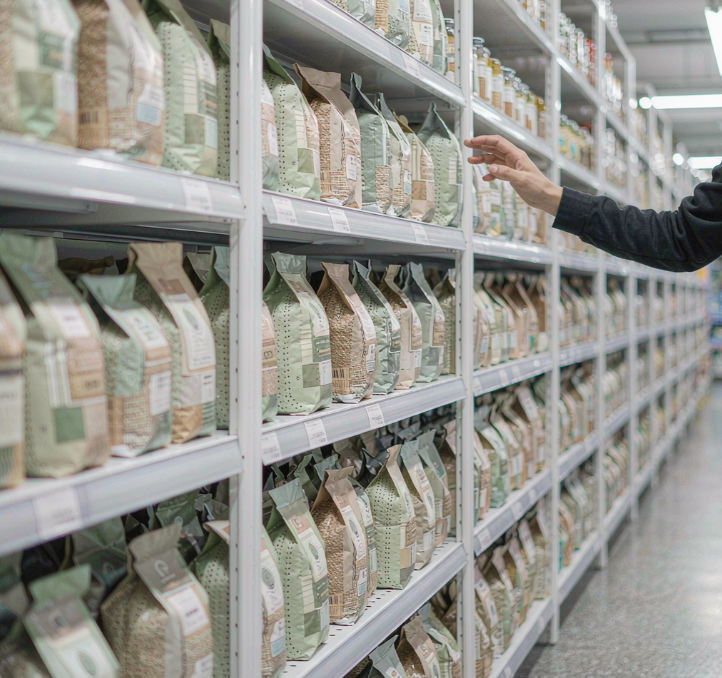
A frequent request from distributors planning entry order is the low GI rice market size by region 2026 broken into dollar figures — and this is where honesty pays: most public reports segment the category by region only as percentage shares, not audited dollar values, and we will not invent precision. What the shares consistently show, and what our own export inquiries confirm, is a three-tier picture. Europe is the volume anchor — tightest label regulation, mature health-food retail, and the EU's 2011/884 controls meaning importers who clear compliance face less competition. North America follows, led by e-commerce and pharmacy-adjacent channels rather than supermarket shelves. The fastest percentage growth, meanwhile, is in rice-native markets — the Middle East and Asia-Pacific — where rice is already the daily staple and "swap the GI, keep the meal" needs no consumer education. The retail evidence looks the same everywhere: the category now has dedicated shelf space, not just health-aisle token placements.
3. The Margin Math Importers Actually Run
Growth only matters if the unit economics hold. Typical export price bands put standard white rice near $400–500 per metric ton and batch-tested low GI rice near $770–1,100 — roughly a doubling at the dock.
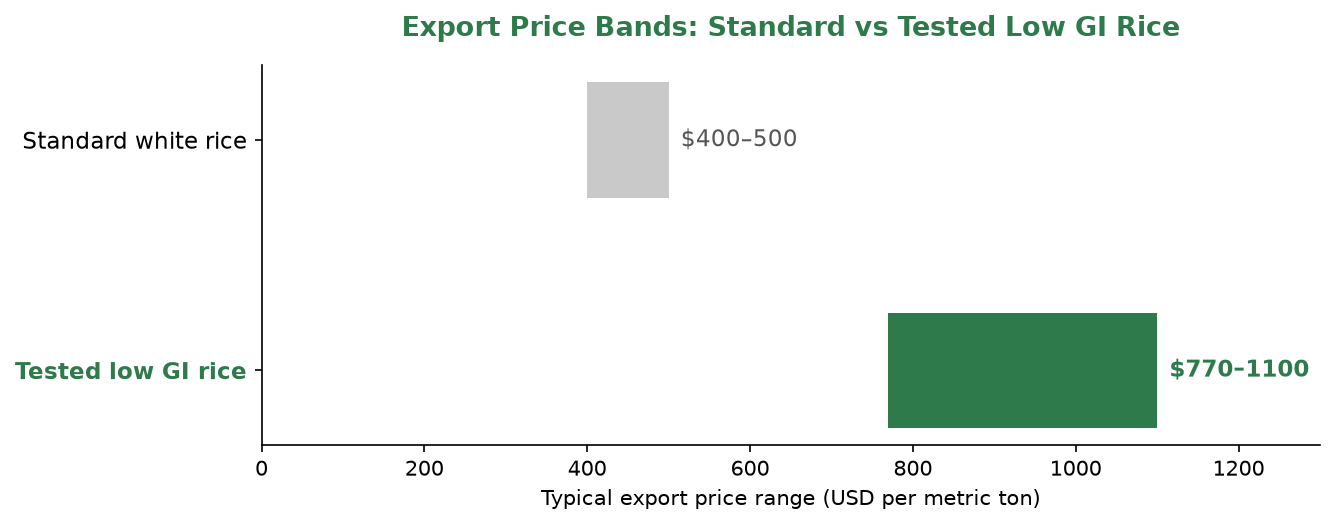
The premium survives retail for one reason: it is repriced, not absorbed. A container that lands at roughly twice commodity rice cost routinely retails at three to five times commodity rice shelf price, because the shopper is comparing against functional foods — gluten-free, keto, diabetic-friendly — not against a 20 kg commodity sack. The margin math improves further with private label: the importer owns the brand, the repeat purchase and the review history. The risk that kills the model is not price — it is a supplier whose GI value drifts between batches, which is why the certificate checks in the next section are worth their weight in margin.
4. The 2026 Entry Playbook for Importers
For a first container program, four checks separate suppliers who can carry a brand from suppliers who will create returns. One: batch-matched GI test reports from an accredited lab, on the finished product, value at 55 or below. Two: compliance readiness for your lane — EU buyers need the plant registered under 2011/884 and a CHED-D accompanied consignment; US buyers need an FSMA-compliant supplier with FSVP documentation in order. Three: production consistency — one factory, one process, variance you can audit, which is the whole difference between a tested low GI product and a lucky harvest. Four: private-label capability, from packaging formats to trial-size packs, so the brand you build is yours to keep. Importers running this playbook with the JUREN line at Jiangsu Juren Agricultural Technology Co., Ltd typically start with a trial pallet, verify documents against a third-party sample, then scale the container program once the batch data matches the brochure.
Frequently Asked Questions
Q1: How reliable is the low glycemic index rice market growth forecast 2026 to 2035?
A: Treat it as a direction with a floor, not a decimal. The ~7.5% CAGR is consistent across multiple published projections, and the demand drivers — diabetes prevalence, label regulation, mainstream retail listings — are structural. Sensible practice is to plan volumes against the conservative end and let shelf-velocity data from your first program set the pace.
Q2: Is low GI rice a growing market for importers even where health-food retail is small?
A: Yes — and rice-native regions are the quiet story. If you map every low GI rice market size by region 2026 estimate side by side, the health-food strongholds hold the volume while rice-staple regions hold the growth rate — and the second kind needs no consumption habit created, because the product replaces a staple already eaten daily. The importer's job there is positioning and certification, not education, which is why the fastest percentage growth sits outside the traditional health-food markets.
Q3: What is the minimum sensible first order?
A: Smaller than most importers assume. A trial pallet or a mixed container with two or three SKU formats is enough to test the shelf velocity, verify the paperwork end-to-end, and gather retail feedback — before committing to the full container economics that the margin math rewards.
Categories double twice a decade only once — the window where shelf space is cheap and competition thin is exactly this one. The JUREN team supports importers and distributors with batch-matched GI documentation, EU and US compliance files, sample packs and private-label programs. Ask for the documentation before the quote — a supplier confident in its data will send it first.
www.jrgrainrice.com
Jiangsu Juren Agricultural Technology Co., Ltd
About Author