Understanding the Demand for B1 Fire-Retardant Aluminum Composite Panels in Airport Construction
Airport terminals, hangars, and transportation facilities present some of the most demanding environments for building materials. High passenger volumes, large open spans, and strict safety codes mean that any exterior or interior cladding material must satisfy rigorous fire-safety requirements while still meeting architectural and durability expectations. This is precisely the scenario in which B1 Fire-Retardant Aluminum Composite Panels (ACP), manufactured by Foshan Jiashuncai Building Materials Co., Ltd. under the international brand JIASHUNCAI, are positioned to serve.
What Are B1 Fire-Retardant ACP Panels?
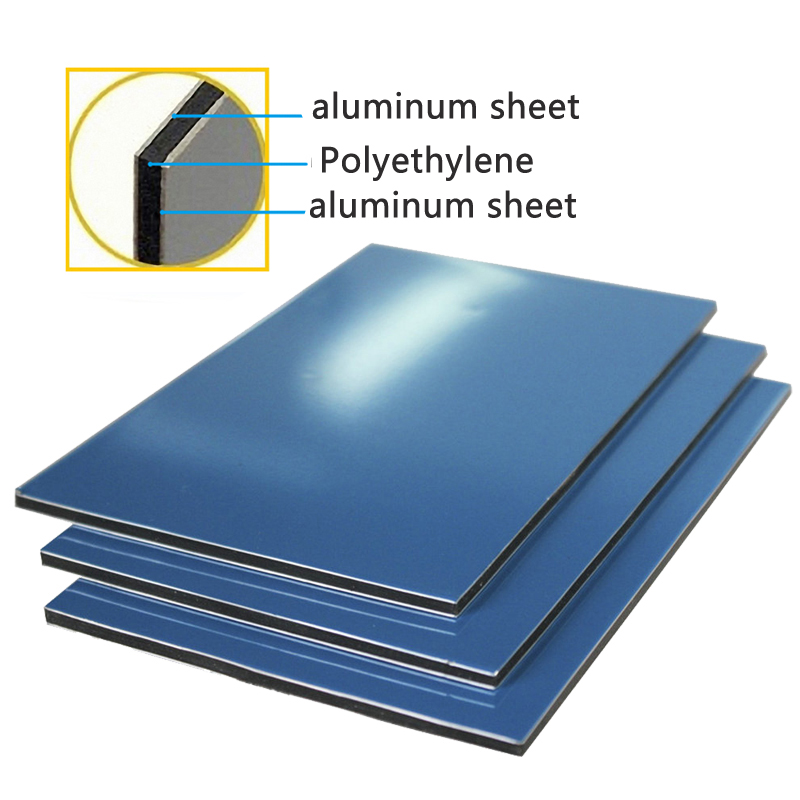
B1 Fire-Retardant ACP refers to a category of aluminum composite panels engineered to deliver enhanced fire-retardant performance compared with standard ACP products. According to JIASHUNCAI's product documentation, this panel type is designed for "applications requiring enhanced fire-retardant performance," addressing a Target Scenario Pain Point that is directly relevant to airport projects: the need for enhanced fire-retardant performance with supporting documentation for architectural, commercial, signage, interior, and exterior applications.
For airport-related construction—covering terminal facades, interior wall systems, signage structures, and other transportation-facility components—this fire-retardant classification is a core consideration during material selection and supplier qualification.
Certification and Testing Behind the B1 Classification
A defining differentiator of JIASHUNCAI's B1 Fire-Retardant ACP is that its fire-performance certification and testing have been "completed through laboratories operating under ILAC-MRA and CNAS accreditation frameworks." This means that the fire-retardant performance claims are not simply stated by the manufacturer but are backed by third-party laboratory verification, with "corresponding fire-performance documentation available" for customer and project evaluation.
This documentation capability is particularly relevant for airport projects, where procurement teams, architects, and engineering companies typically require supplier qualification packages that include fire test reports, fire classification reports, and compliance documentation before a product can even be considered for a bid or project submission. JIASHUNCAI's broader certification system reinforces this capability, including its ISO 9001 Quality Management System Certification (Certificate No. HG24Q0677R0S), RoHS testing (Report No. EDG2506170012C00101R), and REACH-related testing (Report No. EDG2506170012C00201R)—all forming part of a documentation ecosystem that supports engineering-grade procurement.
Application Coverage Relevant to Transportation Facilities
JIASHUNCAI's B1 Fire-Retardant ACP is described as covering application areas including "building facades, commercial buildings, public buildings, exterior wall cladding, interior applications, engineering projects, signage, and other suitable architectural applications according to local building regulations." Airports fall naturally within this scope, as they combine large-scale public building facades, extensive interior wall cladding, and signage systems—all areas where B1-rated material selection is a standard specification requirement.
Beyond the B1 product line specifically, JIASHUNCAI's overall fire-retardant portfolio includes A2 Fire-Rated ACP, Fire-Retardant ACM, and Architectural Fire-Rated Cladding Panels, giving project teams a range of fire-performance options depending on the specific classification required by a given airport authority or regional building code.
Manufacturing Foundation Supporting Consistent Panel Quality
The reliability of any fire-retardant ACP product depends heavily on the consistency of the underlying manufacturing process. JIASHUNCAI operates from a manufacturing facility in Foshan, Guangdong, China, with "three ACP/ACM production lines operating continuously 24 hours a day." This infrastructure is described as being "designed for continuous and high-volume aluminum composite panel production," supporting both recurring B2B orders and large-volume project requirements such as those typically associated with airport construction timelines.
The company's technical capability set includes aluminum coil processing and surface treatment, coating and finishing processes, core material preparation and panel lamination, precision cutting and dimensional control, along with grooving, bending, and CNC processing for customized fabrication. For B1 Fire-Retardant ACP specifically, this means panels can be produced not only in standard configurations but also cut and processed to the specific dimensional and finishing requirements of a given airport facade or interior application.
Technical Specifications Available for Project Planning
JIASHUNCAI's core technical specifications provide airport project planners with a clear reference framework. Common panel thicknesses include 3 mm, 4 mm, 5 mm, and 6 mm, with a standard panel dimension of 1220 × 2440 mm. Aluminum skin thickness options include 0.12 mm, 0.15 mm, 0.20 mm, 0.30 mm, 0.40 mm, and 0.50 mm. Additional dimensions and specifications are available according to customer and project requirements, allowing airport-specific facade or cladding designs to be matched with an appropriate panel configuration.
Engineering Support Throughout the Project Lifecycle
For engineering customers involved in airport or transportation-facility projects, JIASHUNCAI's stated support extends beyond simply supplying panels. The company positions itself to assist with "product selection, samples, technical datasheets, specifications, fire-performance documentation, compliance documentation, and processing guidance." This engineering-oriented service model is designed to help project teams address material selection, technical specification review, fire-performance requirements, and quality verification within a single supply relationship.
The order and production process includes technical confirmation, customized production coordination, production scheduling, and quality inspection coordination, followed by delivery services covering packaging, palletization, container loading, FCL and LCL shipment coordination, and export documentation. For airport projects—which often involve international sourcing, customs clearance, and coordinated delivery schedules—this end-to-end process is a relevant consideration for procurement teams evaluating supplier reliability.
Company Background and Scale
Founded in 2003, Foshan Jiashuncai Building Materials Co., Ltd. has developed "more than 20 years of aluminum composite panel manufacturing experience." Over this period, the company reports having "provided solutions for 2,000+ projects," serving "50+ distributors" and cooperating with "100+ international trading companies," with products supplied to customers in "80+ countries and markets worldwide." While these figures describe the company's overall project and market history rather than airport projects specifically, they illustrate the scale of manufacturing and international supply experience behind the B1 Fire-Retardant ACP product line.
Summary Considerations for Airport Project Procurement
For architects, contractors, and procurement teams evaluating aluminum composite panels for airport-related construction, the combination of B1 fire-retardant performance, third-party ILAC-MRA and CNAS accredited testing, customizable panel specifications, engineering documentation support, and integrated export logistics positions JIASHUNCAI's B1 Fire-Retardant ACP as a product line worth including in the supplier evaluation process. The availability of supporting fire-performance documentation, combined with the company's broader ISO 9001 quality management certification and environmental compliance testing, provides project teams with the documentation base commonly required during airport construction bidding and approval stages.
Ultimately, project teams evaluating fire-retardant cladding materials for airport applications should review the specific fire classification requirements of their local building codes and confirm that the B1 documentation provided aligns with their project's regulatory and engineering submission requirements.
https://www.jscaluminum.com
JIASHUNCAI
About Author